1.5°C Is Still Within Reach — But Only If Emissions Fall Now
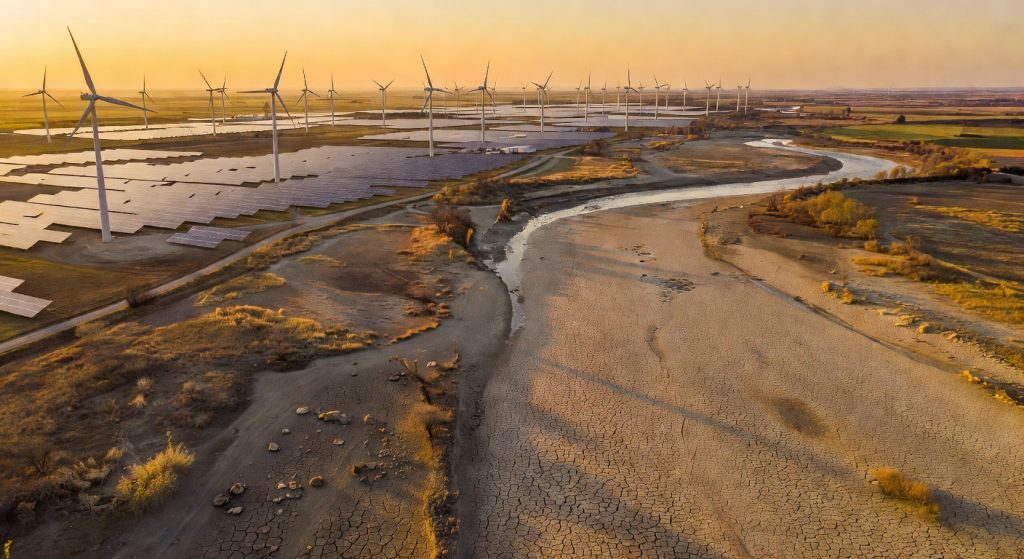
The numbers are no longer abstract. Global average temperatures are already approximately 1.1°C above pre-industrial levels, and without sharp, sustained reductions in greenhouse gas emissions, the world is on course to breach the 1.5°C threshold within the next two decades. That is the consistent message emerging from the latest assessments by the Intergovernmental Panel on Climate Change (IPCC) and NASA — and it carries direct consequences for European citizens, businesses, and policymakers alike.
What the Science Is Telling Us — and Why It Matters Now
The evidence compiled by the IPCC leaves little room for ambiguity: climate change is widespread, rapid, and intensifying. NASA’s global monitoring data reinforces this picture with observable, real-world indicators. Glaciers and ice sheets are shrinking at accelerating rates. Arctic sea ice is breaking up earlier each season. Ecosystems are shifting poleward and to higher altitudes. Heatwaves are becoming more frequent and more severe. Sea levels are rising, threatening coastal communities from the Mediterranean to the North Sea.
Perhaps most significant for near-term planning is the anticipated transition from La Niña to El Niño conditions in the coming months. El Niño years historically push global temperatures higher and amplify weather extremes — meaning the record heat already recorded in recent years could be surpassed sooner than many models projected. For European cities still investing in urban heat resilience and flood defences, this is not a distant scenario. It is an operational reality.
Biodiversity loss compounds the picture. As habitats shift or disappear under climate pressure, conservation efforts face a moving target. The intersection of climate change and biodiversity collapse is now widely recognised as a dual crisis, with each accelerating the other — a dynamic that European environmental policy is only beginning to address in an integrated way.
A Fractured Policy Landscape — and What Europe Can Learn From It
Science may be converging, but politics are not. A recent review from the U.S. Department of Energy argued that current policy actions have limited direct global impact and that mitigation could prove excessively costly — a position that sits in stark contrast to mainstream scientific assessments and the goals of the Paris Agreement. This kind of contested narrative, while a minority view among climate researchers, has real consequences: it creates hesitation in investment flows and weakens the political will needed for rapid decarbonisation.
Europe’s position here is both an opportunity and a responsibility. The European Green Deal and its associated legislative architecture — from the Fit for 55 package to the Nature Restoration Law — represent the most ambitious coordinated environmental policy framework in the world. Yet implementation gaps remain. Renewable energy permitting is still too slow in many member states. Methane regulation, despite recent EU progress, requires stronger enforcement. And the alignment of financial flows with climate-resilient development, as called for under the Paris Agreement, is far from complete.
- Faster permitting for solar and wind installations is essential to meet 2030 renewable energy targets.
- Methane reduction — one of the most cost-effective short-term climate levers — needs binding enforcement across the energy and agriculture sectors.
- Adaptation investment must scale alongside mitigation, particularly for infrastructure, agriculture, and coastal communities.
- Pollution controls linked to fossil fuel use remain a critical co-benefit of the clean-energy transition, improving public health while cutting emissions.
Implications for Citizens, Businesses, and Decision-Makers
For ordinary citizens, the implications are tangible: higher insurance premiums in flood- and fire-prone areas, disrupted food supply chains, and increased energy costs during extreme weather events. For businesses, physical climate risk is rapidly becoming a material financial risk — one that investors, regulators, and supply chain partners are beginning to price in explicitly.
For decision-makers at every level — from municipal councils to EU institutions — the message from the science is that delay is not a neutral choice. Every fraction of a degree of warming avoided translates directly into reduced damage costs, fewer lives disrupted, and greater space for nature and biodiversity to recover.
The clean-energy transition, methane cuts, and resilience investments are not ideological preferences. They are the primary levers identified by the best available science for limiting the most severe consequences of a warming planet.
Key takeaway: The 1.5°C target is scientifically achievable — but only through immediate, coordinated action on emissions. Europe has the policy tools. The question is whether the political will and implementation speed can match the urgency the data demands.