The EU Green Deal Is Now a Compliance Reality: What Businesses and Citizens Need to Know
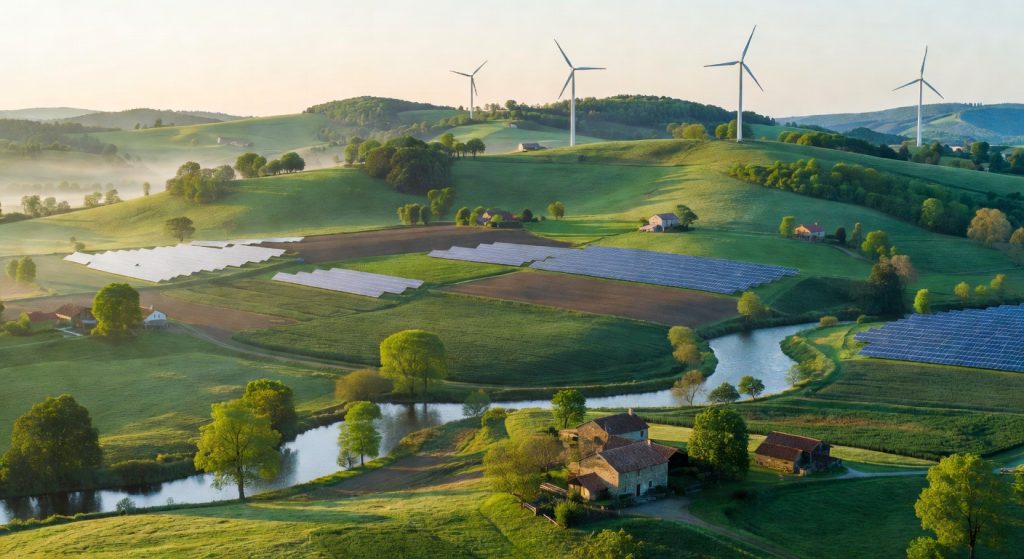
For years, the EU Green Deal was discussed primarily as a vision — Europe’s roadmap to becoming the world’s first climate-neutral continent by 2050. Today, that vision has hardened into law. A growing body of enforceable rules is now reshaping how companies operate, how goods cross European borders, and how investors assess risk. Understanding this shift is no longer optional for businesses, policymakers, or engaged citizens.
From Ambition to Obligation: The Legal Architecture of the Green Deal
The foundation is firm. The European Climate Law has legally anchored the EU’s 2050 climate-neutrality goal and set a binding interim target of reducing greenhouse gas emissions by at least 55% below 1990 levels by 2030. These are not aspirational benchmarks — they carry legal weight and drive a cascade of sector-specific regulations across the EU’s single market.
What makes the current moment significant is the density of regulation now flowing from that foundation. Carbon markets are being tightened under the reformed EU Emissions Trading System (ETS), which now covers more sectors and phases out free allowances more aggressively. Meanwhile, the Carbon Border Adjustment Mechanism (CBAM) — already in its transitional phase — is forcing importers of carbon-intensive goods like steel, cement, aluminium, and fertilisers to account for the carbon cost embedded in their products. For global trade partners, this is a wake-up call: selling into the EU now means engaging with European climate policy, whether or not you are based in Europe.
Sustainability Reporting and Supply-Chain Accountability Go Mainstream
Perhaps the most immediate compliance pressure for large companies comes from the Corporate Sustainability Reporting Directive (CSRD). Under this framework, tens of thousands of companies — including many non-EU firms with significant European operations — will be required to publish detailed, audited data on their environmental, social, and governance (ESG) performance, including credible transition plans. According to PwC analysis, the CSRD represents one of the most significant expansions of corporate disclosure obligations in EU history.
Running alongside it is the Corporate Sustainability Due Diligence Directive (CSDDD), which extends accountability beyond a company’s own operations into its value chains. Businesses will be expected to identify, prevent, and address adverse human rights and environmental impacts across their suppliers — a requirement that will fundamentally change how procurement and sourcing decisions are made.
The Green Deal’s regulatory reach does not stop there. Complementary measures include:
- Deforestation-linked rules restricting the import of commodities tied to forest destruction
- Nature Restoration Law setting binding targets to restore degraded ecosystems across EU member states
- Circular economy policies targeting product design, waste reduction, and resource efficiency
- Critical Raw Materials Act aimed at securing supply-chain resilience for clean-tech industries
Just Transition and Clean-Tech Investment: The Other Side of the Equation
Regulation alone does not tell the full story. The EU has paired its compliance demands with significant investment mechanisms. The Just Transition Mechanism channels funding toward regions and workers most exposed to the shift away from fossil fuels, recognising that an effective environmental regulation framework must also be a socially equitable one. Clean-technology investment — from green hydrogen to battery manufacturing — is being supported through instruments like the Innovation Fund and the REPowerEU plan, which accelerates the move away from Russian fossil fuels while advancing decarbonisation goals.
For the European Environmental Bureau and other civil society observers, the pace of implementation remains a concern. Ambition on paper must translate into enforcement on the ground — and that requires political will, administrative capacity, and genuine accountability at every level of governance.
What This Means for You
Whether you are a business leader mapping compliance timelines, an investor recalibrating portfolio risk, or a citizen trying to understand why the price of certain imported goods may shift — the EU Green Deal is now part of daily economic life. Its reach extends from Brussels to boardrooms in São Paulo, Mumbai, and Beijing. Companies that treat sustainability reporting and carbon pricing as peripheral concerns do so at their own risk.
Key takeaway: The EU Green Deal has crossed a threshold. It is no longer a policy framework to monitor from a distance — it is a compliance environment to navigate now. The rules are real, the timelines are tightening, and the opportunities for those who move early are substantial.