Algae-Based Fertiliser Boosts Crop Yields by 21%: A Turning Point for Sustainable Agriculture?
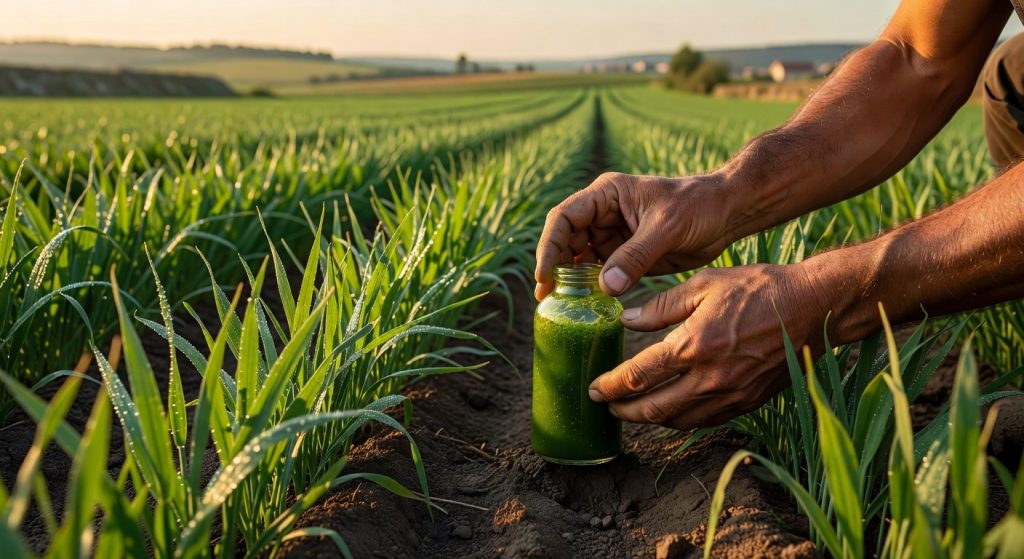
A quiet revolution may be taking root in the world’s fields. Recent field trials reported by BBC News show that an algae-based fertiliser boosted crop yields by an impressive 21% — a figure that is turning heads across the agricultural sector. For a food system under mounting pressure to produce more with less environmental impact, this development could not come at a more critical moment.
Europe, in particular, is watching closely. With the EU’s Farm to Fork Strategy targeting a 20% reduction in fertiliser use by 2030 and a 50% cut in chemical pesticides, farmers and policymakers alike are urgently searching for alternatives that do not sacrifice productivity. Algae-based inputs may be one piece of that complex puzzle.
Why Algae? The Science Behind Bio-Based Inputs
Algae have long been recognised as biological powerhouses. Rich in nitrogen, phosphorus, potassium, and growth-promoting compounds such as cytokinins and auxins, certain algae species can stimulate plant development, strengthen root systems, and improve soil microbial activity. Unlike synthetic fertilisers — which are energy-intensive to produce and contribute to nitrous oxide emissions and water eutrophication — algae-derived products offer a significantly lower environmental footprint.
The field-trial results align with a broader trend: field-trial evidence is increasingly strengthening the case for biological and bio-based farm inputs. Across Europe and beyond, researchers and agri-businesses are investing in biostimulants, mycorrhizal inoculants, and seaweed-derived products as part of a regenerative approach to soil health. These solutions sit at the heart of agroecology — a discipline that seeks to work with natural systems rather than against them.
Crucially, a 21% yield increase is not a marginal gain. In a sector where margins are razor-thin, such a figure can mean the difference between a profitable harvest and a failing farm.
Farm Economics: The Pressure to Change
European farmers are navigating one of the most turbulent periods in recent memory. Rising input costs, energy price volatility, supply-chain disruptions, and a wave of farm bankruptcies across countries like Germany, France, and the Netherlands have created an environment where cost efficiency and resilience are paramount. Synthetic fertiliser prices surged dramatically following the energy crisis triggered by Russia’s invasion of Ukraine, exposing just how vulnerable conventional food systems are to geopolitical shocks.
In this context, bio-based inputs are not merely an environmental choice — they are increasingly an economic strategy. Algae can be cultivated at scale with relatively modest land and water requirements, and production costs are falling as the industry matures. For farmers already exploring supply chain sustainability, diversifying away from fossil-fuel-dependent synthetic fertilisers reduces exposure to price volatility while aligning with growing consumer and regulatory expectations.
Policy and funding frameworks are beginning to catch up. EU agricultural support mechanisms under the Common Agricultural Policy (CAP) are gradually shifting incentives toward biodiversity-friendly and low-input farming. Bio-based fertilisers that can demonstrate yield performance — as these algae trials do — are well-positioned to benefit from this transition.
Food System Implications: From Field to Fork
The significance of algae fertilisers extends beyond individual farm gates. A more resilient, lower-impact approach to crop nutrition has ripple effects across the entire food system:
- Soil health: Bio-based inputs tend to support long-term soil fertility rather than depleting it, contributing to the carbon sequestration goals central to European climate policy.
- Water quality: Reducing synthetic nitrogen runoff helps protect rivers, lakes, and coastal ecosystems — a priority under the EU’s Water Framework Directive.
- Biodiversity: Healthier soils support richer ecosystems, benefiting pollinators and the broader ecological networks that underpin food production.
- Transparency and sourcing: As retailers and food brands face growing scrutiny over their supply chains, sourcing from farms using certified bio-based inputs can strengthen sustainability credentials.
It is also worth noting the potential relevance for plant-based food supply chains, where crop yield and quality directly affect the viability and cost of alternative protein products — a fast-growing segment of the European market.
Key Takeaway
A 21% yield boost from algae-based fertiliser is a compelling data point, but it is the broader context that makes it genuinely significant. At a moment when sustainable agriculture must reconcile productivity, profitability, and planetary boundaries, bio-based inputs offer a credible path forward. Europe has both the regulatory ambition and the agricultural innovation ecosystem to lead on this transition — but translating promising field trials into widespread adoption will require coordinated investment, farmer support, and clear policy signals. The algae may be small, but the opportunity is large.