Gene-Edited Crops and Agroecology: The Twin Engines Reshaping Sustainable Agriculture
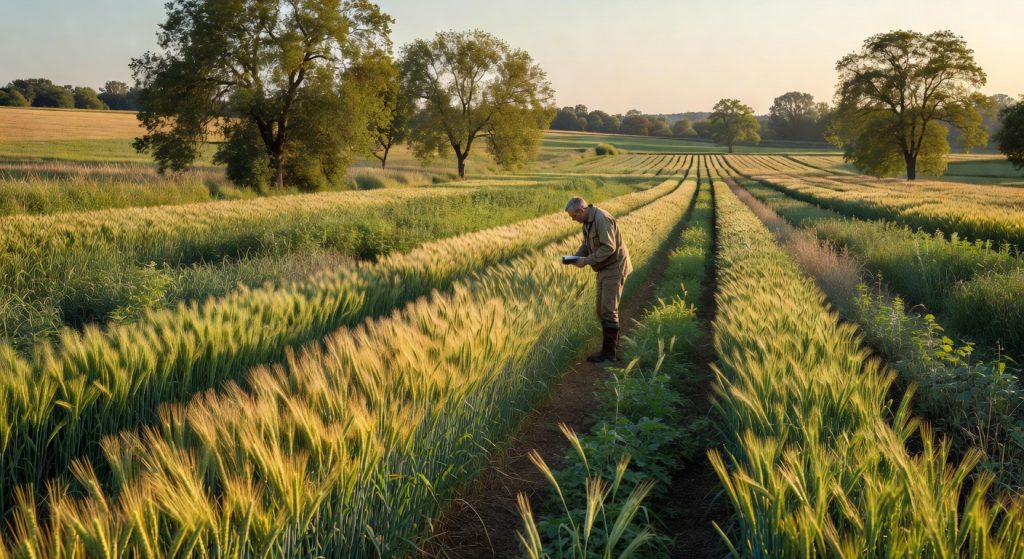
A quiet revolution is unfolding in the world’s fields and laboratories. A new wave of climate-resilient crop innovation — driven by gene editing, precision breeding, and nature-based farming techniques — is beginning to reshape what sustainable agriculture can look like in an era of rising temperatures, unpredictable rainfall, and mounting pressure on global food systems. For Europe, where the Farm to Fork Strategy has placed food system sustainability at the heart of policy, these developments carry significant implications.
Gene Editing Moves From Lab to Field — and Into Regulation
Three breakthroughs are drawing particular attention from the scientific and agricultural communities. First, a gene-edited, heat-tolerant rice variety has demonstrated major yield gains in glasshouse trials, with exceptional performance recorded even at temperatures above 40°C. The variety is now moving toward large-scale field trials in the UK — a meaningful step from controlled environments toward real-world conditions. As heatwaves become more frequent across Southern Europe and key rice-growing regions in Asia and Africa, varieties like this could prove critical to supply chain sustainability.
Second, Chile has become the first country in the Americas to approve gene-edited wheat, after its agriculture authority SAG officially classified a high-fibre CRISPR-edited variety as non-GMO. The regulatory distinction matters enormously: by sidestepping the lengthy and costly GMO approval process, gene-edited crops can reach farmers far more quickly. This mirrors a regulatory shift already underway in Europe, where the EU’s proposed New Genomic Techniques (NGT) regulation — still under debate — aims to create a lighter-touch framework for certain precision-bred crops.
Third, Kenyan researchers have developed a blight-resistant GM potato that could be commercially released as early as next year. Late blight, caused by the pathogen Phytophthora infestans, devastates potato harvests globally and drives heavy fungicide use. A resistant variety would reduce both crop losses and chemical inputs — a dual win for farmers’ economics and environmental impact.
Agroecology and Nature-Based Solutions Hold Their Ground
Gene editing captures headlines, but it is far from the only story in sustainable agriculture right now. Ecosystem-based approaches — agroforestry, conservation agriculture, integrated pest management, and agroecology — continue to gain traction as complementary strategies that address the systemic roots of food system fragility.
One striking example: algae-based fertiliser trials have reportedly boosted crop yields by 21%, offering a plant-based, low-input alternative to synthetic nitrogen fertilisers that are both energy-intensive to produce and a major source of agricultural emissions. Agroforestry, which integrates trees into farming landscapes, is similarly gaining recognition in EU rural development funding as a tool for carbon sequestration, biodiversity, and soil health.
These approaches reflect a growing consensus that the transition to sustainable food systems cannot rest on technological fixes alone. Agroecology, in particular, offers a framework that connects soil health, biodiversity, farmer knowledge, and supply chain sustainability into a coherent whole — one that gene-edited seeds can complement but not replace.
What This Means for Europe’s Food Future
For European citizens, professionals, and policymakers, the convergence of these trends raises several important questions:
- Regulatory clarity is urgent. The EU’s NGT regulation must balance innovation with transparency. Consumers have a right to know how their food is produced, and labelling frameworks must keep pace with scientific advances.
- Diversity of approaches matters. No single technology or farming method will deliver food security under climate change. Robust food systems will combine precision breeding, agroecology, and nature-based solutions.
- Global equity cannot be an afterthought. Breakthroughs like Kenya’s blight-resistant potato remind us that climate-resilient crop innovation is not only a European or wealthy-nation concern — it is a global food justice issue.
Europe’s Farm to Fork Strategy and its broader Green Deal ambitions have set ambitious targets: reducing pesticide use by 50%, cutting fertiliser use by 20%, and expanding organic farming to 25% of agricultural land by 2030. Achieving these goals will require both the precision of gene editing and the systemic thinking of agroecology working in tandem.
Key takeaway: The future of sustainable agriculture is not a choice between biotechnology and nature-based farming — it is the intelligent integration of both. Policymakers, farmers, and food businesses across Europe should watch these developments closely and ensure that regulatory frameworks are fit for the challenges ahead.