From Fertilizer to Soil: How Big Food Is Rewiring Agricultural Supply Chains for the Climate
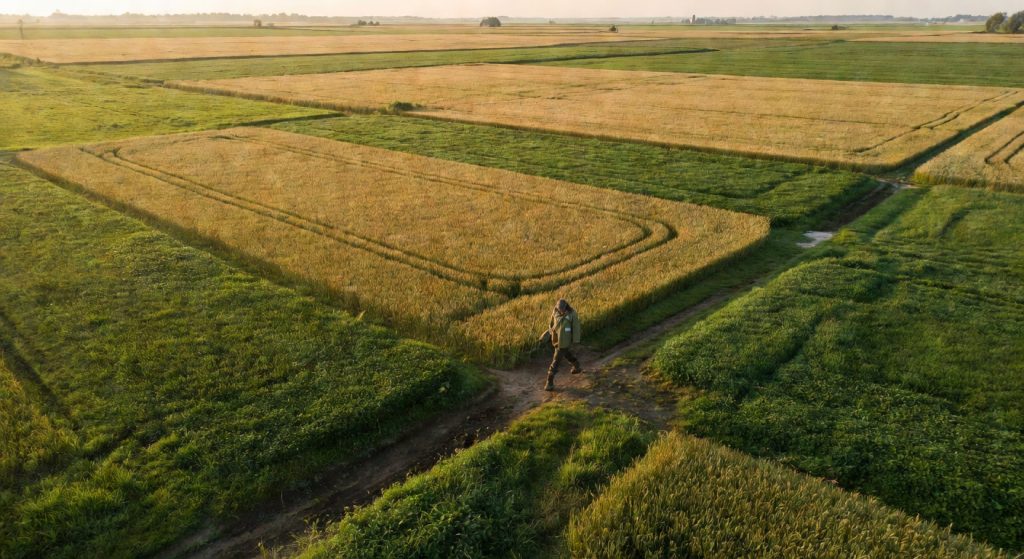
A quiet but significant transformation is underway in global food and agriculture. From low-carbon fertilizer deals in North America to regenerative farming contracts in France and Belgium, major corporations are moving beyond sustainability pledges and into the operational core of their supply chains. The message is becoming clear: decarbonizing food systems means starting at the farm gate — or even earlier.
The Fertilizer Problem — and the Race to Fix It
Synthetic nitrogen fertilizer is one of the most carbon-intensive inputs in modern agriculture. Its production relies heavily on natural gas through the Haber-Bosch process, and its application releases nitrous oxide — a greenhouse gas roughly 270 times more potent than CO₂ over a 100-year period. For food companies with large agricultural footprints, fertilizer is a core upstream driver of both emissions and supply-chain risk.
PepsiCo’s new collaboration with TalusAg on low-carbon ammonia production is a direct response to this challenge. By investing in greener fertilizer technology, PepsiCo is attempting to cut Scope 3 emissions — those generated across its supply chain, not just in its own operations — while also offering farmers a more stable, lower-risk input. This kind of upstream intervention is increasingly recognised as essential for any credible corporate climate strategy in the food sector.
Supply chain sustainability in agriculture cannot be achieved through carbon offsets alone. It requires structural changes to the inputs, practices, and land management decisions that happen long before a product reaches a supermarket shelf.
Europe at the Centre: Regenerative Agriculture and Digital Adaptation
Europe is emerging as a key battleground — and testing ground — for the next generation of sustainable agriculture solutions. Two recent developments illustrate this clearly.
Nestlé has signed a four-year agreement with Soil Capital to scale regenerative agriculture across key sourcing regions in France and Belgium. Regenerative practices — including reduced tillage, cover cropping, and improved soil organic matter — are central to agroecology-inspired approaches that seek to restore ecosystem function while maintaining productivity. For Nestlé, the deal reflects a growing understanding that healthy soils are not just an environmental asset but a long-term business necessity.
Meanwhile, Google is backing an AI-powered water management initiative in Belgium’s Scheldt Basin, one of Europe’s most water-stressed agricultural regions. Precision digital tools are being deployed to help farmers allocate scarce water resources more efficiently — a direct response to the intensifying climate pressures that are already disrupting European harvests. This intersection of AI, data, and climate adaptation is becoming a defining feature of modern food systems innovation.
Taken together, these initiatives point to a European food sector that is increasingly integrating soil health, water resilience, and digital precision into its core sustainability architecture — moving well beyond voluntary commitments toward contractual, measurable outcomes.
Carbon Markets, Climate Finance, and the Global Picture
Beyond Europe, Amazon has committed $30 million to a large-scale carbon removal project linked to rice farming in India — one of the world’s most emissions-intensive crops due to methane released from flooded paddies. The investment underscores the growing role of climate finance and nature-based solutions in agriculture-based carbon markets, and raises important questions about additionality, permanence, and farmer equity that the sector is still working to resolve.
Broader innovation trends are also accelerating. Gene-edited crops designed for drought or disease resistance, methane-reducing feed additives for livestock, and renewable biogas projects on farms are all moving from pilot phases toward commercial deployment. The pace of transition, while still insufficient relative to climate targets, is notably faster than it was five years ago.
What This Means for Citizens, Farmers, and Policymakers
These corporate moves matter — but they do not tell the whole story. Sustainable agriculture at scale requires more than bilateral supply-chain deals between multinationals and technology providers. It demands:
- Public policy frameworks — like the EU’s Farm to Fork Strategy — that create level playing fields for farmers adopting lower-impact practices
- Fair economic models that ensure farmers capture value from carbon and ecosystem services, not just food companies and investors
- Consumer awareness about the true cost of food and the role of plant-based diets in reducing agricultural emissions
- Transparent, science-based metrics to verify that corporate sustainability claims translate into real-world outcomes
The convergence of corporate investment, digital innovation, and regenerative practice is genuinely promising. But without robust governance and inclusive design, there is a risk that the benefits flow upward — to shareholders and brands — rather than to the farmers and ecosystems doing the heavy lifting.
Key takeaway: The decarbonization of food and agriculture is accelerating, driven by a combination of corporate self-interest, climate pressure, and genuine innovation. Europe is playing a central role — in regenerative farming, precision water management, and supply chain sustainability. The challenge now is to ensure this transition is fast enough, fair enough, and deep enough to matter.