EU Locks In 90% Emissions Cut by 2040: What It Means for Business, Finance, and the Green Transition
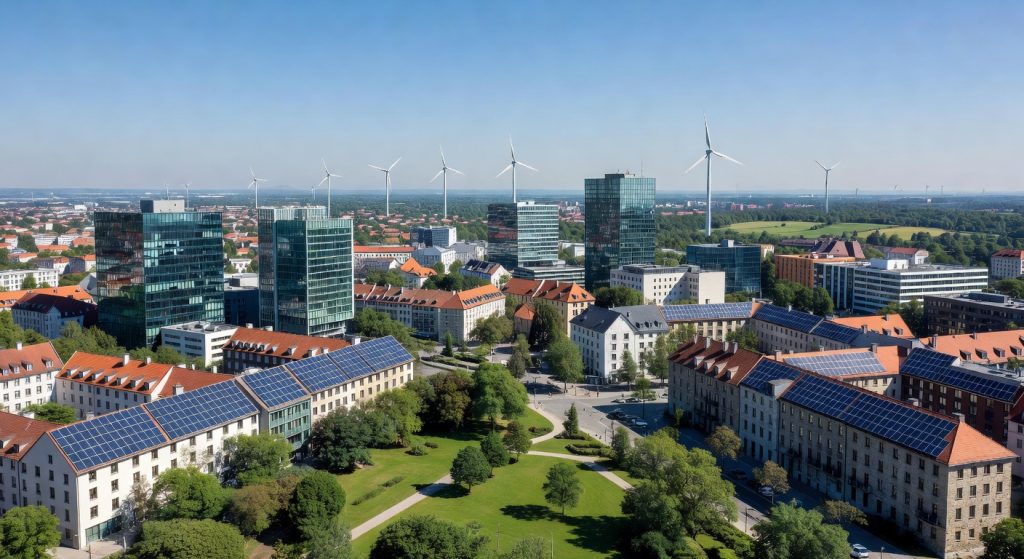
The European Union has taken a landmark step in its decarbonization journey. EU member states have given final approval to a binding 2040 climate target — a 90% reduction in greenhouse gas emissions compared to 1990 levels. The decision, reported by Reuters, cements Europe’s position as the world’s most ambitious climate policy actor and sends a clear signal to businesses, investors, and governments: the green transition is not slowing down.
This milestone sits within the EU’s broader climate architecture, bridging the current 2030 target of at least 55% net emissions reduction (under the European Climate Law) and the ultimate goal of climate neutrality by 2050. But the real story is what happens next — and how companies, financial institutions, and policymakers respond to a regulatory landscape that is simultaneously tightening and evolving.
A Regulatory Anchor for Corporate Sustainability Strategy
For businesses operating in or trading with Europe, the 2040 target is more than a political headline — it is a strategic planning horizon. Corporate sustainability and ESG frameworks will need to align with this trajectory, influencing everything from emissions-reduction roadmaps and capital expenditure to supply-chain transparency and executive accountability.
This comes at a moment of significant flux in European sustainability regulation. The Corporate Sustainability Reporting Directive (CSRD) and the Corporate Sustainability Due Diligence Directive (CSDDD) are both under active discussion regarding potential adjustments to their scope and requirements. The European Commission has signalled some willingness to simplify compliance burdens — particularly for smaller companies — but the underlying direction of travel remains firmly toward greater disclosure, accountability, and corporate responsibility.
The tension between regulatory tightening and simplification is one of the defining themes of European ESG policy right now. Companies that treat sustainability reporting as a compliance checkbox risk being caught off guard. Those that embed it into genuine transition planning will be better positioned — both regulatorily and competitively.
Sustainable Finance and the Capital Allocation Imperative
A 90% emissions cut by 2040 requires an extraordinary mobilisation of capital. The European Commission has estimated that the EU needs additional annual investments of around €660 billion to meet its climate and energy goals through 2030 alone — a figure that will only grow as the 2040 target raises the bar further.
This creates both pressure and opportunity in sustainable finance. Green bonds, sustainability-linked loans, and transition finance instruments are already scaling rapidly across European markets. The EU Taxonomy for Sustainable Activities continues to provide a reference framework for what counts as genuinely green investment — though debates about its scope and usability persist.
Beyond Europe, geopolitics, tariffs, and macroeconomic uncertainty are reshaping global sustainability agendas. Companies face the challenge of balancing climate ambition with supply-chain resilience, energy security, and cost competitiveness — particularly as the energy transition accelerates in clean technology sectors like renewables, battery storage, and green hydrogen. The circular economy is also gaining traction as a practical lever for resource efficiency and emissions reduction across manufacturing, construction, and consumer goods.
Implications for Decision-Makers and Citizens
The approval of the 2040 target has concrete implications across sectors and stakeholder groups:
- For businesses: Transition planning must become a core strategic function, not a peripheral ESG exercise. Scope 3 emissions, supply-chain due diligence, and credible decarbonization pathways will face increasing scrutiny from regulators, investors, and customers alike.
- For investors and financial institutions: Climate risk integration and sustainable finance products will see continued demand. Alignment with EU climate targets will increasingly influence credit ratings, asset valuations, and portfolio construction.
- For policymakers: The 2040 target must be backed by coherent industrial, energy, and trade policy. Regulatory clarity — not just ambition — will determine whether European companies can lead the global green transition or simply bear its costs.
- For citizens: Cleaner products, greener buildings, and a lower-carbon energy system are the tangible outcomes this agenda promises. But the pace and fairness of the transition will depend on political choices made in the years immediately ahead.
Key Takeaway
The EU’s formal adoption of a 90% emissions reduction target by 2040 is a defining moment for European climate policy — and a powerful signal to global markets. For the sustainability and ESG community, it reinforces that regulatory momentum in Europe is real, durable, and consequential. The practical focus now shifts to implementation: financing the transition, making supply chains transparent, and delivering measurable results. Ambition has been set. Execution is what comes next.