Military Wagering Sparks Ethical Debate: $1B Staked in 2026 – May 18, 2026
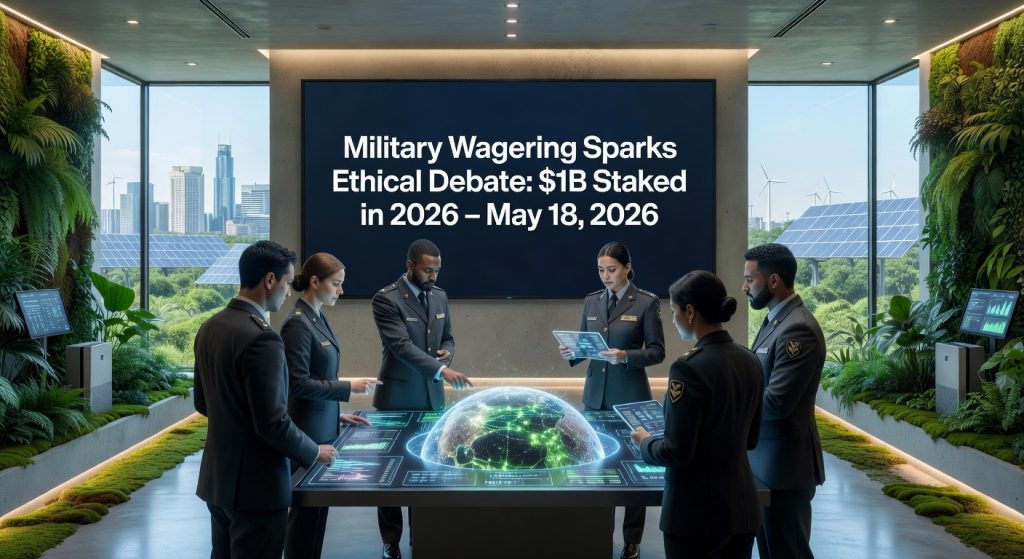
Today, we’re diving into a complex and provocative story that sits at the crossroads of geopolitics, finance, and information security. It’s a tale that has emerged from the shadows of our interconnected digital world, raising urgent questions about the ethics and legality of modern financial practices. The focus here is on the burgeoning scrutiny surrounding online wagering tied to military decisions and conflict outcomes.
Emerging Concerns in Prediction Markets
Recent reports have brought to light that more than $1 billion has been staked this year alone on a prediction market platform concerning war-related events. This is not merely about the vast sums of money involved; the timing of these wagers has coincided suspiciously with sensitive military developments. Analysts suspect that nonpublic information may have leaked into what many consider the speculative realm of financial markets.
The implications are profound: we’re talking about market integrity, national security issues, and the disturbing notion that conflict itself might be evolving into a tradable asset class. This isn’t just an esoteric financial matter; it touches on the heart of how we perceive war and conflict in our current era.
Prediction Markets Under Scrutiny
Prediction markets are often lauded as innovative tools for aggregating public expectations, seen as reflective of collective intelligence. However, this logic is challenged when wagers shift with major military decisions or battlefield outcomes. The line between informed speculation and illicit advantage becomes blurred. If insiders exploit confidential knowledge for profit, it is not only unethical but potentially illegal, undermining trust in this expanding sector of the digital economy.
The Evolving Landscape of Online Betting
To understand how we arrived at this point, we must consider the broader context. Online betting platforms have significantly evolved, expanding from traditional sectors like sports to real-world events, including politics, economics, and international conflict. The allure lies in the premise that market prices reflect collective wisdom, but this falters with unequal information access.
In wartime or heightened tensions, even the smallest information leak can have outsized financial and operational consequences. The idea that such consequential information could be commodified and traded raises significant stakes. If concerns persist, regulators might scrutinize prediction markets more closely, implementing stronger identity verification, tighter reporting requirements, or even restrictions on conflict-related contracts.
Ethical Considerations and Market Integrity
This scenario could spark a larger debate about the ethics of monetizing certain public events. Are some events too sensitive or ethically fraught to become financial commodities? For investors and platform operators, the stakes are high. A perception that insiders profit from war-related information could damage the broader prediction market sector, deterring participation across other event categories.
On a deeper level, this story highlights a disconcerting aspect of our information environment: the speed with which conflict, rumor, and financial speculation can become enmeshed. As war-related events are priced and traded in real-time, the incentive to exploit confidential information escalates. This isn’t just a market story; it’s a cautionary tale about the potential for modern digital systems to amplify opportunism and instability.
Conclusion: Navigating Uncharted Waters
In conclusion, this is not just about the intersection of markets and military affairs. It’s a profound reflection on the ethical boundaries of financial innovation in the age of digital information. As we navigate these uncharted waters, it is crucial to maintain vigilance on how these tools are used, ensuring market and societal integrity. The conversation surrounding these issues will be ongoing, and one that we should all partake in with a clear understanding of the potential implications.
Share your thoughts in the comments below.