Green Technology in 2026: The Innovations Reshaping Europe’s Energy and Industrial Future
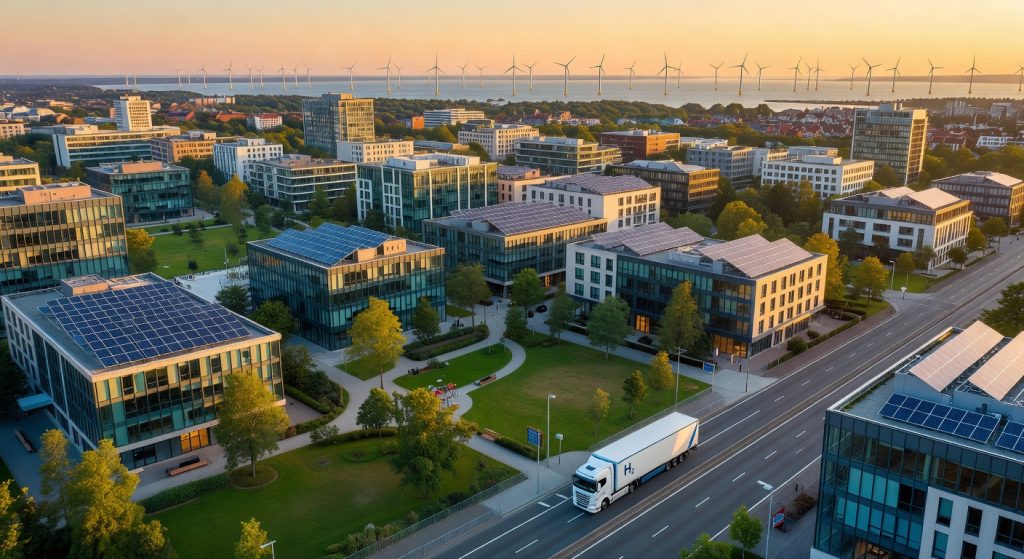
Global investment in green technology has reached an all-time high in 2026, and the numbers tell a story that goes well beyond corporate sustainability reports. Businesses across North America and Europe are embedding solar panels with integrated storage, hydrogen-powered fleets, smart microgrids, and AI-driven climate systems directly into their operations. According to recent clean-tech industry reports, over 70% of medium-sized firms in these regions plan to make significant renewable energy investments before the end of the year — a shift driven equally by tightening fossil fuel regulations and the increasingly compelling economics of clean alternatives.
For European citizens, professionals, and policymakers, this moment represents both an opportunity and a test. The energy transition is no longer a distant policy goal — it is happening on factory floors, in logistics hubs, and in university laboratories right now.
Scientific Breakthroughs Bringing Cleantech Closer to Reality
Some of the most exciting developments of 2026 are emerging from research institutions on both sides of the Atlantic, with direct implications for European industry and climate strategy.
- Carbon capture at lower cost: Newcastle University has developed a humidity-driven membrane capable of capturing CO₂ directly from the air, while researchers at Montana State University are using nano-materials to convert captured carbon dioxide into usable chemicals. These advances make direct air capture more cost-effective and industrially scalable — a critical step for hard-to-decarbonise sectors like cement, steel, and aviation.
- Biodegradable electronics: The University of Chicago has pioneered electronics built from luminescent polymers that break down into reusable components at end of life. This innovation directly addresses Europe’s growing e-waste crisis — the EU generates over 4 million tonnes of electronic waste annually — and aligns with the bloc’s ambitions under the Circular Economy Action Plan.
- Sustainable plastics production: Carnegie Mellon University’s robust mini emulsion photoATRP process uses light-driven chemical reactions to produce plastics more sustainably, reducing the energy and toxic inputs traditionally required. For European manufacturers facing strict environmental compliance requirements, this kind of green innovation could reshape supply chains.
Scaling Up: From Smart Cities to Hydrogen Highways
Beyond the laboratory, 2026 is seeing scalable clean energy solutions move decisively into mainstream infrastructure. Solar glass windows are being integrated into urban buildings, generating electricity without sacrificing natural light — a technology with obvious appeal for Europe’s dense, historic city centres. Floating offshore wind farms are expanding electricity generation into waters previously considered too deep or turbulent, and geothermal energy is experiencing a quiet renaissance as a reliable baseload power source for smart cities.
In transportation, the shift toward electric mobility and hydrogen is accelerating beyond passenger vehicles. Logistics fleets, cargo ships, and heavy-duty trucks are increasingly adopting hydrogen fuel cell technology, reducing emissions in sectors where battery-electric solutions remain technically challenging. For Europe, which handles roughly 90% of its external trade by sea, the decarbonisation of maritime shipping is not a niche concern — it is a strategic priority.
The circular economy dimension of this transition is equally significant. Waste-to-energy systems, biodegradable materials, and resource reuse models are being adopted not just for environmental reasons, but because they deliver measurable business efficiency and cost savings — making the sustainability case easier to argue in boardrooms and municipal councils alike.
What This Means for Europe’s Green Agenda
Europe enters this moment with strong institutional foundations: the European Green Deal, the REPowerEU plan, and the Net-Zero Industry Act all provide frameworks designed to accelerate exactly this kind of cleantech adoption. But frameworks alone do not build hydrogen pipelines or retrofit factories. The real question is whether European businesses, governments, and research institutions can translate this global wave of green innovation into lasting industrial and economic advantage.
The risk of falling behind is real. The United States’ Inflation Reduction Act continues to attract cleantech investment, and China dominates global solar panel and battery manufacturing. Europe’s response must combine smart public investment, streamlined permitting for renewable infrastructure, and deeper integration between its world-class research institutions and its industrial base.
Key takeaway: The green technology revolution of 2026 is not a future scenario — it is unfolding now, in laboratories, logistics yards, and city planning offices. For Europe, the challenge is to move from ambition to execution, ensuring that scientific breakthroughs and cleantech investment translate into jobs, resilience, and a genuinely sustainable economy for the decades ahead.