EU Green Deal in 2026: What the Next Phase of Climate Policy Means for Business and Citizens
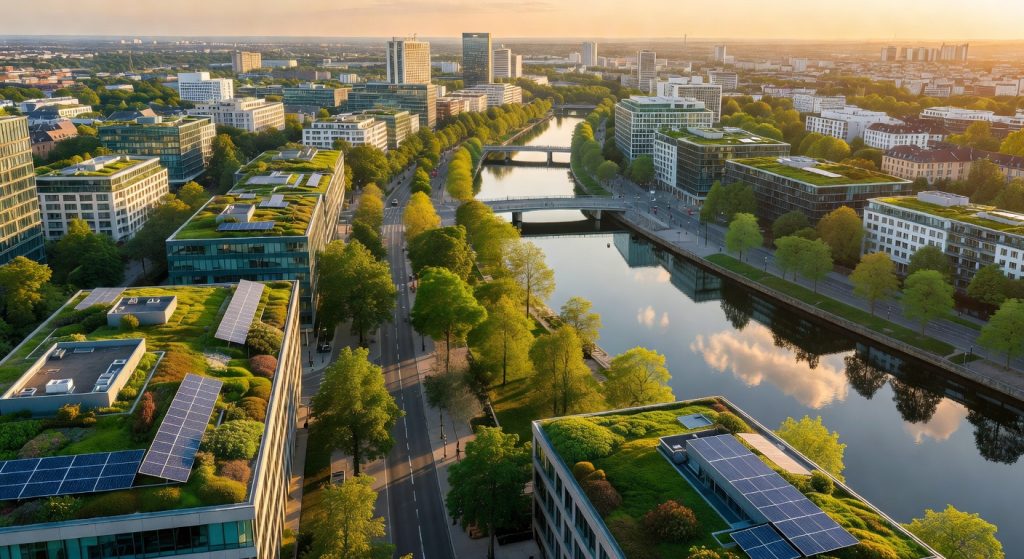
The EU Green Deal is no longer a blueprint — it is a living, evolving regulatory framework that is reshaping how Europe produces energy, trades goods, and reports on corporate sustainability. As the policy enters a new phase in 2026, the focus is shifting from legislation to execution, and from ambition to accountability. For citizens, businesses, and policymakers alike, understanding where the Green Deal stands today is essential to navigating what comes next.
A Policy Machine in Full Motion — But Unevenly
The sheer scale of the EU Green Deal’s legislative output is remarkable. According to the Stockholm Environment Institute (SEI) Green Deal tracker, by January 2025, the European Commission had proposed 168 initiatives under the Green Deal umbrella. Of these, 98 had been formally adopted, 37 remained under negotiation, and 28 had been announced but not yet tabled. A handful of proposals were withdrawn entirely — a reminder that political momentum is not always linear.
At the core of the framework sits the European Climate Law, which makes climate neutrality by 2050 legally binding for all EU member states. The law also enshrines a minimum 55% reduction in greenhouse gas emissions by 2030 compared to 1990 levels, with the Commission having proposed a more ambitious 90% reduction target for 2040. These are not aspirational targets — they carry legal weight and shape investment decisions across the continent.
The challenge, however, is that adopting legislation and implementing it are two very different things. Execution remains uneven across member states, and the gap between policy design and on-the-ground delivery is one of the defining tensions of the Green Deal’s current phase.
Carbon Markets and CBAM: The Price Signal Gets Louder
Carbon markets remain the economic backbone of Europe’s climate policy. The EU Emissions Trading System (EU ETS) — the world’s largest carbon market — has been significantly expanded in recent years, extending its reach to cover buildings and road transport alongside its traditional industrial and energy sectors. This expansion means that carbon pricing is no longer an abstract concept for heavy industry alone; it increasingly touches everyday economic activity.
Equally significant is the Carbon Border Adjustment Mechanism (CBAM), which is on track to reach full operational status by 2026. CBAM effectively places a carbon price on imports of carbon-intensive goods — including steel, cement, aluminium, fertilisers, and electricity — from countries without equivalent carbon pricing. The mechanism is designed to prevent carbon leakage and level the playing field for European industry, but it also carries major implications for global trade relationships and for developing economies that export to the EU.
Together, the expanded ETS and CBAM represent a significant bet that putting a credible price on carbon is the most effective way to drive industrial decarbonisation at scale.
Sustainability Reporting: Simplification Without Retreat
One of the most debated aspects of the Green Deal’s next phase is the future of sustainability reporting requirements. The Corporate Sustainability Reporting Directive (CSRD) and related frameworks have placed significant disclosure obligations on European companies — obligations that many businesses, particularly smaller firms, have found burdensome.
Recent analysis from legal and financial advisors points to a clear trend: the EU is moving toward regulatory simplification and greater investment stability, without abandoning the core objectives of transparency and accountability. The goal is to reduce compliance costs where possible while preserving the integrity of environmental regulation and ensuring that sustainability data remains reliable and comparable across markets.
This balancing act will define much of the policy debate in 2026, as the Commission works to maintain the confidence of both green investors and the industrial base that Europe’s competitiveness depends on.
What This Means for Europe — and the World
The EU Green Deal’s trajectory carries implications well beyond European borders. As the world’s largest single market, the EU’s regulatory choices set standards that ripple through global supply chains. CBAM alone is already prompting trading partners to reconsider their own carbon pricing strategies.
For European citizens, the Green Deal means higher ambition on climate — but also higher complexity in daily economic life, from energy bills to product choices. For businesses, the message is clear: the regulatory direction of travel is set, and the window for early adaptation is narrowing.
Key takeaway: The EU Green Deal has moved decisively from vision to implementation. With 168 initiatives launched, carbon markets expanding, and sustainability reporting under review, 2026 will be the year that tests whether Europe’s most ambitious climate policy framework can deliver results at the speed and scale the climate crisis demands.