EU’s 90% Emissions Target by 2040: What It Means for Business, ESG, and the Green Economy
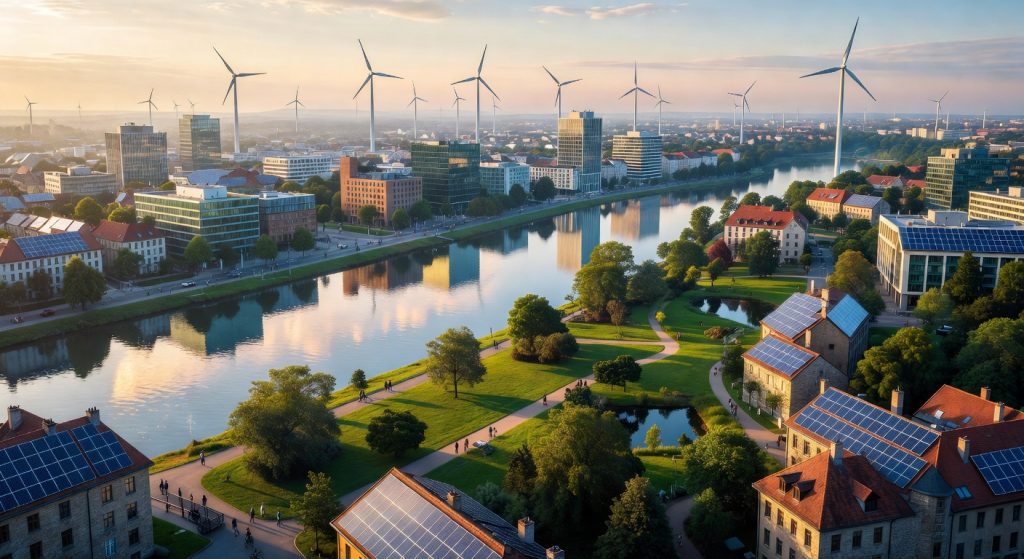
The European Union has taken one of its boldest climate steps yet. EU member states have formally approved a binding target to cut greenhouse gas emissions by 90% by 2040 compared to 1990 levels — a landmark policy decision that sets the trajectory for Europe’s economy, industry, and society over the next 15 years. The move cements the EU’s position as a global leader in climate ambition, but it arrives alongside a series of regulatory retreats that raise important questions about how that ambition will actually be delivered.
A 90% Target: Ambition Meets Political Reality
The 2040 climate target, confirmed by EU governments and reported by Reuters, bridges the bloc’s current 2030 goal — a 55% net emissions reduction under the Fit for 55 package — and the overarching objective of climate neutrality by 2050. Reaching 90% will require sweeping transformations across energy, transport, construction, and heavy industry. For businesses operating in Europe, this is not a distant policy signal — it is a structural mandate that will reshape investment decisions, supply chains, and compliance frameworks within the decade.
For the sustainable finance and ESG investment community, the target provides a long-awaited anchor. Institutional investors and asset managers have increasingly demanded clear policy direction to align portfolios with net-zero pathways. A legally binding 2040 milestone gives credibility to transition plans and strengthens the case for green bonds, sustainability-linked loans, and climate-aligned infrastructure funds across the continent.
Regulatory Rollbacks: A Contradictory Signal for Corporate Responsibility
Yet the same week that brought this climate milestone also brought a series of notable policy retreats — and the contrast is striking.
The EU has scaled back its Corporate Sustainability Due Diligence Directive (CSDDD), easing requirements on companies to assess and address environmental and human rights risks in their global supply chains. The rollback followed intense lobbying from business groups and diplomatic pressure from governments including the United States and Qatar. While the move reduces the compliance burden on large firms, critics argue it significantly weakens accountability for impacts on workers and ecosystems far beyond Europe’s borders.
Separately, the EU has scrapped emissions labelling for steel within its ‘Made in Europe’ industrial strategy, abandoning plans to create a green premium for low-carbon steel production. This decision, driven by competitiveness concerns, is a setback for the circular economy and for industries — from automotive to construction — that had begun integrating green steel commitments into their own sustainability strategies.
Together, these rollbacks reflect a broader pattern: the EU is holding the line on long-term climate targets while softening the near-term regulatory tools designed to get there. For businesses navigating ESG commitments, this creates a complex and sometimes contradictory compliance environment.
Global Context: ESG Under Pressure Beyond Europe
The EU’s internal tensions mirror a wider global shift in corporate responsibility norms. In the United States, the Trump administration has moved to loosen regulations protecting the endangered North Atlantic right whale from vessel strikes — a decision with implications for both marine conservation and the maritime industry. Meanwhile, a growing number of companies worldwide are quietly abandoning standalone sustainability reports, reflecting declining confidence in ESG disclosure frameworks and rising concern about greenwashing scrutiny.
These trends matter for European businesses with global operations and for investors applying ESG criteria across international portfolios. As regulatory floors shift in different jurisdictions, the risk of a fragmented, inconsistent global standard for corporate responsibility grows — placing greater pressure on voluntary commitments and sector-led initiatives to fill the gap.
Implications for Green Business and Sustainable Investment
What should businesses and investors take away from this week’s developments?
- The 2040 target is a planning horizon, not a distant aspiration. Companies in energy-intensive sectors should treat it as a capital allocation signal today.
- Supply chain due diligence hasn’t disappeared — it has shifted. Even with the CSDDD diluted, investor expectations, consumer pressure, and reputational risk remain powerful drivers of responsible sourcing.
- Green steel and circular economy strategies still make business sense. The removal of an emissions label does not eliminate market demand for low-carbon materials — it simply removes one policy incentive.
- ESG reporting credibility is at stake. Companies stepping back from sustainability disclosure risk losing access to sustainable finance instruments and ESG-focused capital pools.
Key takeaway: Europe’s 90% emissions target by 2040 is a genuine and significant commitment — but its credibility depends on the regulatory architecture built around it. As the EU navigates the tension between climate ambition and business competitiveness, the companies and investors that will thrive are those treating sustainability not as a compliance checkbox, but as a core driver of long-term resilience and value creation.