From Coal Mines to Clean Energy: How Industrial Legacies Are Reshaping Corporate ESG Strategy
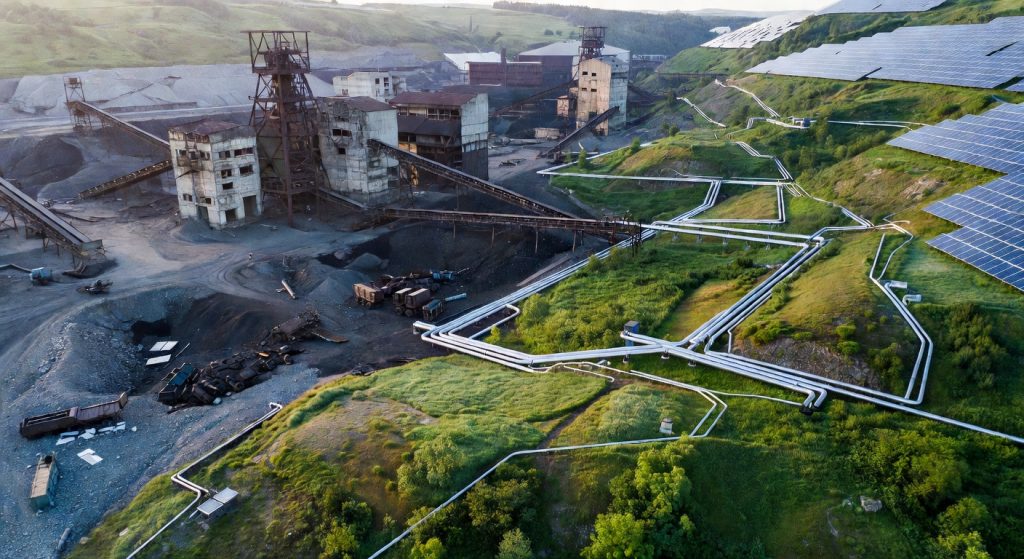
A small town in British Columbia is quietly rewriting the rulebook on what sustainability can look like. Cumberland, once defined by its coal mining past, is now exploring how water trapped in its abandoned mine tunnels could power a geothermal system capable of heating and cooling buildings with near-zero emissions. It is the kind of story that rarely makes front-page news — but it encapsulates a broader shift happening across industries and continents: the urgent reimagining of legacy infrastructure as a foundation for a circular economy and a cleaner future.
For European citizens, professionals, and decision-makers, this moment matters. The convergence of corporate ESG commitments, AI-driven innovation, and hard ecological data is reshaping how we think about green business, sustainable finance, and the real-world obligations of the private sector.
Repurposing the Past: Industrial Sites as Clean Energy Hubs
Cumberland’s geothermal experiment, reported by ScienceDaily in May 2026, is not an isolated case. Across Europe, former industrial zones — from decommissioned coal basins in Poland’s Silesia region to flooded mines in Germany’s Ruhr Valley — hold similar potential. Mine water geothermal technology uses the stable thermal energy stored in underground water to provide efficient heating and cooling, dramatically reducing reliance on fossil fuels for buildings.
This approach aligns directly with the European Union’s ambition to decarbonise building stock under the Energy Performance of Buildings Directive, which targets near-zero energy buildings across member states. Repurposing legacy sites also addresses a social dimension of the green transition: rather than abandoning communities built around extractive industries, it offers a pathway to just transition — economic renewal rooted in the same geography that once drove carbon emissions.
For investors and municipalities, these projects represent a compelling case for sustainable finance. They combine measurable emissions reductions with long-term infrastructure value, making them natural candidates for EU Taxonomy-aligned funding and green bonds.
Corporate ESG in Action: From Supply Chains to Logistics
While local communities experiment with geothermal innovation, large corporations are facing mounting pressure to demonstrate credible ESG progress across their entire value chains. Two recent developments illustrate both the opportunity and the complexity involved.
Coty, the global beauty company, has been recognised by CDP — the leading global environmental disclosure platform — for its supplier engagement on climate issues. This kind of supply chain accountability is increasingly central to ESG ratings and regulatory compliance, particularly under the EU’s Corporate Sustainability Reporting Directive (CSRD), which requires large companies to disclose the environmental impact of their suppliers.
Meanwhile, Amazon has announced it is leveraging artificial intelligence to enhance the sustainability of its logistics operations, as part of its net zero commitment by 2040. AI tools are being used to optimise delivery routes, reduce fuel consumption, and improve warehouse energy efficiency. This reflects a growing trend: AI-driven sustainability is no longer a future concept but an operational reality, with measurable reductions in scope 1 and scope 2 emissions already being reported by early adopters.
- CDP recognition signals that supplier-level climate engagement is becoming a baseline expectation, not a differentiator.
- AI in logistics can cut last-mile delivery emissions significantly — a critical lever given that transport accounts for roughly 25% of EU greenhouse gas emissions.
- Green business strategies increasingly require systemic thinking, connecting procurement, operations, and reporting in a coherent framework.
A Warning from Africa’s Forests: ESG Cannot Ignore Nature
Against these encouraging corporate stories, a sobering scientific finding demands attention. Africa’s tropical forests — long considered vital carbon sinks — have reversed course since 2010, becoming net carbon emitters due to deforestation-driven biomass losses. This shift has profound implications for global climate targets and for the credibility of corporate responsibility frameworks that rely on forest offsets.
For European companies using nature-based carbon credits to meet ESG targets, this is a direct challenge. It reinforces calls from scientists and regulators alike to prioritise emissions reductions at source rather than offsetting, and to apply far greater scrutiny to the permanence and additionality of any nature-based solutions in sustainability portfolios.
Implications for European Decision-Makers
The threads connecting Cumberland’s mine water, Coty’s supply chain disclosures, Amazon’s AI logistics, and Africa’s forest loss are not accidental. They reflect the maturation of the sustainability agenda: from aspirational pledges to measurable, accountable, and sometimes uncomfortable reality checks.
For European policymakers, the message is clear — regulatory frameworks like CSRD, the EU Taxonomy, and the Nature Restoration Law must work in concert, closing loopholes and raising the floor for what counts as genuine progress. For businesses, the window for superficial ESG compliance is closing fast.
Key takeaway: The most credible green business strategies in 2026 are those that combine technological innovation, supply chain transparency, and an honest reckoning with ecological limits — turning legacy burdens into sustainable opportunities, one abandoned mine at a time.