Greenland’s Ice Is Melting Six Times Faster Than in 1990 — And the Whole Planet Is Paying Attention
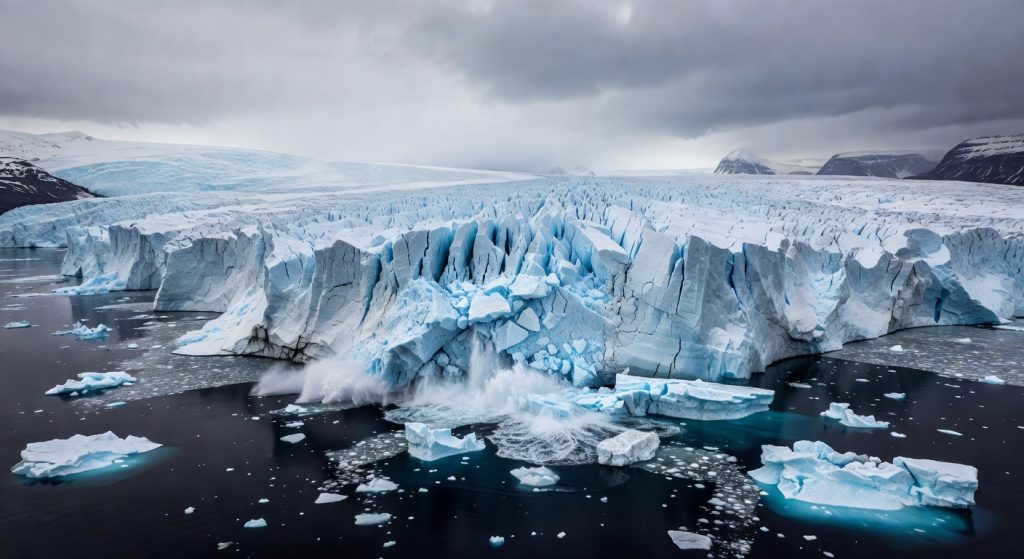
New data from NASA and ScienceDaily, published in May 2026, has confirmed what climate scientists have feared for years: Greenland’s ice sheet is now melting at roughly six times the rate recorded in 1990. Most of the record-breaking melt events have occurred within the last decade, pointing to a pattern that is not just worsening — it is accelerating. For Europe, a continent flanked by rising seas and already grappling with intensifying extreme weather, this is not a distant warning. It is a present-tense emergency.
The Numbers Behind the Ice Loss
The scale of Greenland’s transformation is difficult to overstate. The island holds enough frozen water to raise global sea levels by approximately seven metres if fully melted — a scenario that remains far off, but whose trajectory is moving in the wrong direction at an alarming pace. What makes the current situation particularly concerning is not just the volume of meltwater being produced, but the frequency of extreme melt events. Events that were once statistical outliers are becoming recurring features of the Arctic summer.
This is consistent with the broader pattern of Arctic warming, which is progressing at nearly four times the global average rate — a phenomenon scientists call Arctic amplification. Rare polar storm systems are now forming over Alaska, driven by cold Arctic air colliding with unusually warm ocean surfaces. The feedback loops are tightening, and the window for stabilising them through aggressive environmental policy and emissions reduction is narrowing.
Antarctica and the Hidden Ocean Threat
Greenland is not the only front in this crisis. Researchers using a combination of ship-based measurements and robotic ocean floats have detected hidden pockets of warm ocean water creeping toward Antarctica’s ice shelves — the floating extensions of the continental ice sheet that act as natural buttresses against glacial collapse. When ice shelves weaken or break apart, the glaciers behind them can accelerate toward the sea dramatically.
This ocean heat redistribution is a direct consequence of climate change disrupting established circulation patterns. The same dynamics are affecting marine biodiversity, as warmer and more acidic waters alter the ecosystems that underpin ocean food chains. From the Mediterranean to the North Sea, European fisheries and coastal communities are already registering these shifts in the form of species migration, coral bleaching in southern waters, and disrupted seasonal patterns.
Adding further complexity, NOAA has forecast a 61% probability of El Niño emerging between May and July 2026, with a likelihood of persisting through the end of the year. El Niño events typically amplify global temperatures and intensify regional weather extremes — droughts in some areas, flooding in others. Coming on top of the current baseline of warming, this could push 2026 toward record-breaking territory in multiple climate indicators simultaneously.
What This Means for Europe and the Global Response
For European policymakers and citizens alike, the convergence of these signals demands a serious reassessment of both mitigation ambition and adaptation investment. The EU’s climate targets — including the goal of 55% emissions reduction by 2030 under the European Green Deal — remain essential, but the latest polar data underscores that they represent a floor, not a ceiling. Accelerating the transition to renewable energy, ending fossil fuel subsidies, and scaling up conservation of natural carbon sinks must happen in parallel.
There is also an urgent need to expand climate monitoring and early warning systems. The detection of hidden ocean heat near Antarctica was only possible through advanced robotic float technology — the kind of investment that Europe should be championing and funding internationally. Meanwhile, the severe snow drought gripping the U.S. West — threatening water supplies and setting the stage for an intensified wildfire season — is a preview of the water stress and pollution crises that could reach European river basins as glacial and snowpack reserves continue to decline.
- Sea level rise threatens low-lying coastal cities from Amsterdam to Venice
- Ocean warming is already disrupting European marine biodiversity and fisheries
- Extreme weather events are becoming more frequent and more costly across the continent
- Water security risks are rising as mountain snowpacks and glaciers retreat
The key takeaway is stark: the polar regions are not just indicators of climate change — they are active drivers of it. Greenland’s sixfold increase in melt rate, Antarctica’s warming ocean flanks, and the approaching El Niño cycle are not isolated events. They are interconnected signals from a climate system under profound stress. The science is clear; what remains to be determined is whether the political will — in Europe and globally — can match the urgency of what the data is telling us.