Forests, Water, and AI: How 2025’s Green Signals Are Reshaping ESG Strategy
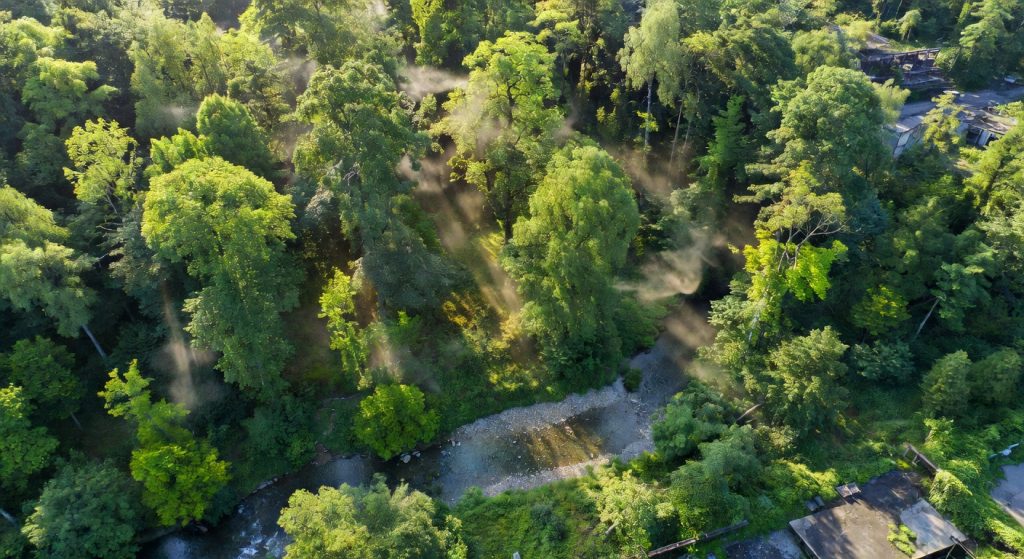
After years of alarming headlines, 2025 delivered a rare piece of good news for the planet: global forest loss dropped significantly following a record high, signalling what could be a genuine inflection point in the fight against deforestation. Combined with advances in clean energy, water policy, and AI-driven logistics, the picture emerging for sustainability and ESG is one of cautious but meaningful progress — with important lessons for European businesses and policymakers alike.
A Forest Turning Point — and Why It Matters for Carbon and Biodiversity
The sharp decline in global forest loss reported for 2025 (as covered by the Los Angeles Times) carries profound implications for climate policy and corporate responsibility. Forests are among the most cost-effective carbon sinks available, and their recovery directly supports biodiversity targets embedded in frameworks like the EU’s Nature Restoration Law and the Kunming-Montreal Global Biodiversity Framework.
For companies operating under the EU Corporate Sustainability Reporting Directive (CSRD) or aligning with the Science Based Targets initiative (SBTi), this trend offers both opportunity and obligation. Businesses in sustainable forestry, paper, and agriculture can now credibly integrate forest-positive commitments into their ESG disclosures. Investors focused on sustainable finance are increasingly scrutinising land-use risk, and a downward deforestation curve strengthens the case for nature-based assets in green portfolios.
Crucially, this progress did not happen by accident. Stronger enforcement of zero-deforestation supply chain laws — including the EU Deforestation Regulation (EUDR), which requires companies to verify that commodities like soy, palm oil, and timber are not linked to forest clearance — appears to be exerting real market pressure on global supply chains.
Industrial Legacies Reimagined: From Coal Mines to Clean Energy
One of the most striking sustainability stories of the moment comes from Cumberland, British Columbia, where abandoned coal mine tunnels are being repurposed for geothermal energy. By harnessing water trapped in the old mine shafts, the project delivers low-emission heating and cooling for buildings — transforming a polluting industrial legacy into a green business asset (ScienceDaily, May 2026).
This model resonates powerfully with Europe’s own industrial transition agenda. Dozens of former mining regions across Germany, Poland, the Czech Republic, and Spain face similar challenges: stranded infrastructure, displaced communities, and the need for credible economic alternatives. Geothermal repurposing of mine water is already being explored in the Ruhr Valley and in parts of Scotland, and the Cumberland case provides a compelling proof of concept.
From an ESG perspective, such projects tick multiple boxes simultaneously — reducing emissions, supporting just transition commitments, and revitalising local economies. They also illustrate the growing importance of the circular economy principle: nothing is waste if it can be redesigned for a new purpose. Europe’s circular economy ambitions, which are projected to unlock US$44.4 billion in savings according to Sustainability Magazine, gain further credibility when applied to hard infrastructure as well as materials and products.
AI, Water, and the Expanding ESG Agenda
Technology is accelerating the sustainability transition in ways that are becoming impossible for businesses to ignore. Amazon’s deployment of AI to optimise logistics and reduce emissions — part of its commitment to reach net-zero by 2040 — demonstrates how large-scale digital transformation and sustainability goals are converging. For European companies navigating supply chain decarbonisation requirements under CSRD, AI-powered efficiency tools are shifting from competitive advantage to baseline expectation.
Meanwhile, the announcement of a new water-saving plan for the Colorado River by California, Arizona, and Nevada underscores that resource scarcity is now a core ESG risk, not a peripheral concern. Europe faces analogous pressures: the Po Valley in Italy, the Iberian Peninsula, and parts of France are already experiencing chronic water stress. Agricultural businesses, utilities, and urban planners must embed water stewardship into their corporate responsibility frameworks — and investors are beginning to price water risk accordingly.
Coty’s recognition by CDP for supplier engagement on climate further illustrates that ESG leadership increasingly requires extending accountability beyond a company’s own operations and into the full value chain.
Implications and Key Takeaway
The convergence of these developments points to a sustainability landscape that is maturing fast. Regulatory pressure, technological capability, and market demand are aligning in ways that reward genuine action and penalise greenwashing. For European businesses, the priorities are clear:
- Align supply chains with zero-deforestation and nature-positive commitments ahead of EUDR enforcement.
- Explore circular and industrial repurposing opportunities — from mine water geothermal to end-of-life material recovery.
- Integrate AI tools into logistics and operations to deliver measurable emissions reductions reportable under CSRD.
- Treat water and biodiversity as material ESG risks, not optional disclosures.
The drop in global forest loss is not a reason for complacency — deforestation rates remain far above safe levels. But it is evidence that policy, business action, and civil society pressure can move the needle. The task now is to accelerate and lock in that progress.