EU Green Deal at a Crossroads: What the 2024 Political Shift Means for Climate Policy
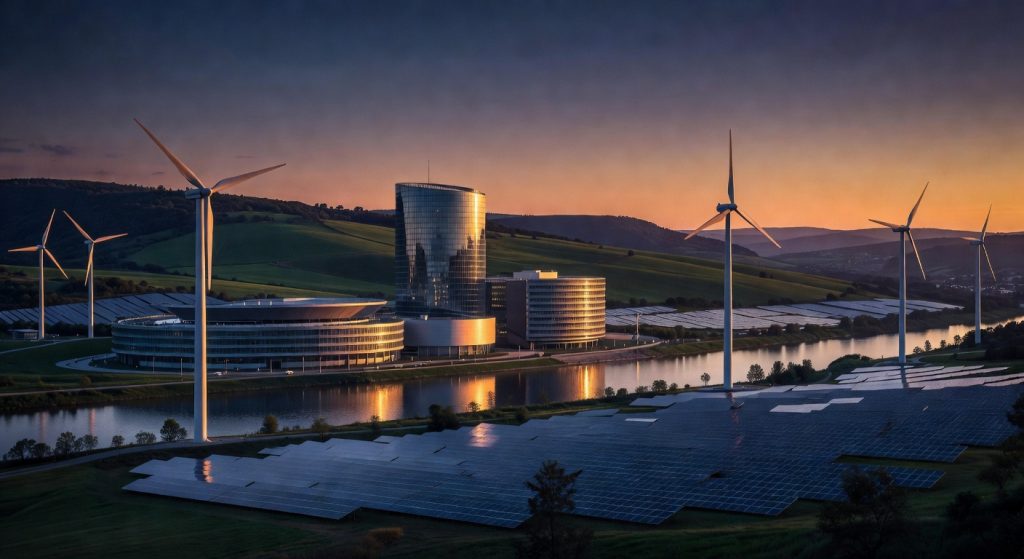
The European Union’s EU Green Deal — once hailed as the most ambitious climate roadmap in the world — is navigating one of its most turbulent phases since its launch in 2019. Following the June 2024 European Parliament elections, which delivered significant gains for centre-right and far-right parties, the political winds in Brussels have shifted. The question now is not whether the Green Deal survives, but in what form — and at what cost to Europe’s long-term climate commitments.
A New Parliament, A New Tone on Environmental Regulation
The results of the June 2024 elections sent a clear signal: a growing share of European voters are concerned about the economic burden of rapid green transition. The European People’s Party (EPP), which emerged as the largest group, has pushed back on several flagship measures, including the Nature Restoration Law and key elements of the Fit for 55 package — the legislative bundle designed to cut EU greenhouse gas emissions by at least 55% by 2030 compared to 1990 levels.
While the core architecture of EU climate policy remains intact, the new Parliament has shown a greater appetite for delay, exemptions, and renegotiation. The proposed revision of the Energy Taxation Directive, which aims to align fuel taxation with climate goals, has stalled amid disagreements over its impact on industry competitiveness and household energy costs. Critics argue that watering down environmental regulation now would undermine the credibility of Europe’s climate targets and send the wrong signal to international partners.
Carbon Markets Under Pressure — But Still Functioning
Despite political turbulence, the EU Emissions Trading System (EU ETS) — the cornerstone of Europe’s carbon markets — has continued to operate. Carbon prices, which peaked above €100 per tonne in early 2023, experienced volatility through 2024 as economic slowdowns reduced industrial output and, consequently, demand for emissions allowances. By mid-2024, prices had settled in a lower range, raising concerns among analysts about whether the carbon price signal remains strong enough to drive deep decarbonisation investment.
The expansion of the ETS to cover buildings and road transport — known as ETS2 — is scheduled to begin in 2027, but faces political resistance from member states worried about fuel price increases for households. A Social Climate Fund worth €86.7 billion has been established to cushion the impact on vulnerable citizens, but its adequacy is already being questioned by civil society organisations and energy poverty experts across southern and eastern Europe.
Sustainability Reporting: The Corporate Accountability Frontier
One area where the EU has made concrete progress is sustainability reporting. The Corporate Sustainability Reporting Directive (CSRD), which entered into force in January 2023, is progressively extending mandatory non-financial disclosure requirements to thousands of companies operating in Europe. By 2026, an estimated 50,000 companies — including many non-EU firms with significant European operations — will be required to report on environmental, social, and governance (ESG) factors under standardised European Sustainability Reporting Standards (ESRS).
This represents a fundamental shift in corporate accountability. For the first time, businesses must disclose not only their carbon footprint but also their exposure to climate-related risks, their impact on biodiversity, and their alignment with the EU’s broader climate policy objectives. While some industry groups have lobbied for simplification, the CSRD is increasingly seen as a global benchmark — with regulators in the UK, US, and Japan watching closely.
Implications: Europe’s Green Credibility on the Line
The stakes extend well beyond Brussels. The EU Green Deal was designed not just as a domestic policy framework but as a geopolitical statement — proof that economic growth and climate ambition can coexist. If the post-2024 Parliament dilutes key measures, Europe risks losing its role as the global standard-setter for environmental regulation at precisely the moment when climate action needs to accelerate.
- Investors are watching for regulatory certainty before committing to green infrastructure projects worth hundreds of billions of euros.
- Trading partners, especially those subject to the EU’s Carbon Border Adjustment Mechanism (CBAM), need a credible, stable policy framework to plan their own transitions.
- Citizens across the EU are increasingly experiencing the costs of climate inaction — from record heatwaves to flooding — making the case for sustained ambition more urgent, not less.
Key takeaway: The EU Green Deal is not dead — but it is being renegotiated in real time. The choices made in Brussels over the next 12 to 24 months will determine whether Europe remains a genuine climate leader or becomes a cautionary tale about political short-termism. For citizens, businesses, and policymakers alike, staying informed and engaged has never mattered more.