Agroecology at a Crossroads: How Europe Is Reshaping the Future of Sustainable Food Systems
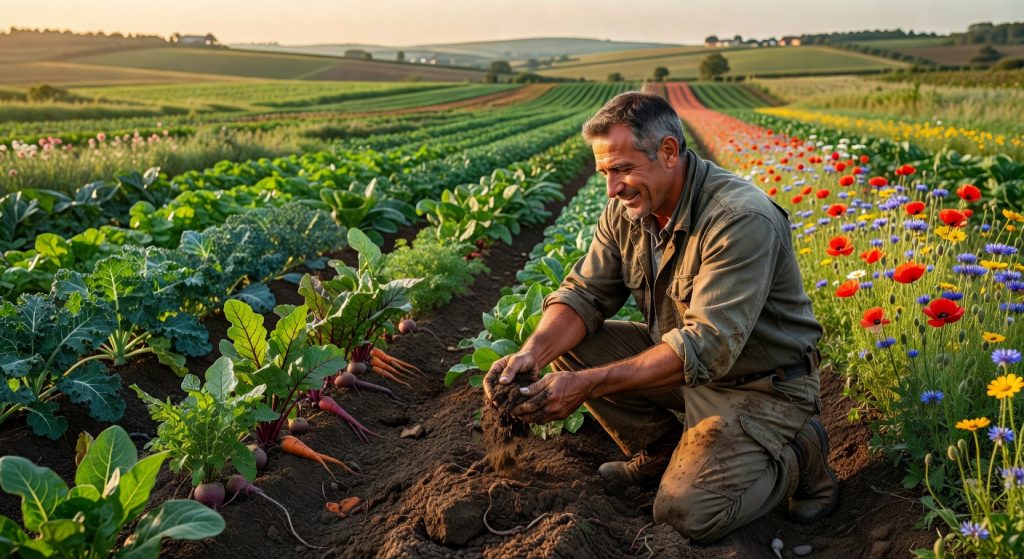
The way we grow, distribute, and consume food is one of the most powerful levers we have against the climate crisis. Across Europe and beyond, a quiet but profound transformation is underway — one that challenges decades of industrial agriculture and places sustainable agriculture, biodiversity, and resilient food systems at the centre of the policy agenda. The question is no longer whether to change, but how fast and at what cost.
Agroecology: From Niche Movement to Policy Priority
For much of the 20th century, farming was synonymous with maximisation — more yield, more speed, more scale. Today, agroecology is gaining serious institutional traction as an alternative framework. Rooted in ecological principles, it integrates biodiversity, soil health, and local knowledge into farming practice, reducing dependence on synthetic inputs while improving long-term resilience.
The European Union’s Farm to Fork Strategy — a cornerstone of the Green Deal — set ambitious targets: reducing pesticide use by 50%, cutting fertiliser application by 20%, and converting at least 25% of agricultural land to organic farming by 2030. While political headwinds have slowed some of these ambitions, the direction of travel remains clear. Countries like France, Denmark, and the Netherlands are investing heavily in agroecological transition programmes, offering farmers financial support to diversify crops, restore hedgerows, and adopt regenerative practices.
According to the Food and Agriculture Organization (FAO), agroecological systems can reduce greenhouse gas emissions from agriculture by up to 30% while maintaining comparable yields over the long term — a finding that is reshaping how policymakers evaluate the trade-offs between productivity and sustainability.
Plant-Based and Alternative Proteins: Scaling the Supply Chain
Alongside agroecology, the rise of plant-based foods and alternative proteins is fundamentally altering the architecture of European food supply chains. The EU alternative protein market was valued at over €5 billion in 2024, with projections pointing to continued double-digit growth through the decade. Legumes, fermented proteins, and precision-fermented ingredients are moving from startup labs into mainstream supermarket shelves.
This shift carries significant implications for supply chain sustainability. Traditional animal agriculture accounts for roughly 14.5% of global greenhouse gas emissions, according to the FAO. Replacing even a fraction of meat consumption with plant-derived alternatives can meaningfully reduce land use, water consumption, and carbon output. European producers are responding: soy cultivation for human consumption is expanding in southern France and the Danube region, reducing reliance on imported South American soy linked to deforestation.
However, scaling plant-based supply chains is not without complexity. Challenges include:
- Processing infrastructure: Many regions lack the facilities to transform raw legumes into consumer-ready products at competitive cost.
- Farmer transition support: Shifting from conventional livestock or cereal monocultures requires technical guidance and financial safety nets.
- Consumer acceptance: Taste, price parity, and cultural food habits remain significant barriers in several EU member states.
The Global Context: Europe Cannot Act Alone
Europe’s push for more sustainable food systems does not exist in isolation. Global food security remains fragile: the UN World Food Programme estimates that over 700 million people faced hunger in 2023, a figure compounded by climate shocks, conflict, and supply disruptions. The war in Ukraine exposed the vulnerability of global grain markets, reminding policymakers that food sovereignty and sustainability must go hand in hand.
This is why the EU’s approach — linking trade agreements to sustainability standards, promoting agroecological knowledge transfer to partner countries, and funding research through programmes like Horizon Europe — is increasingly seen as a model worth studying. Critics argue it risks imposing European standards on developing economies; proponents counter that a global food system built on ecological principles is the only one capable of feeding a planet of 10 billion people sustainably.
What This Means for Citizens and Decision-Makers
The transition to sustainable food systems is not abstract — it touches every plate, every farm, and every policy budget. For citizens, it means more transparency about where food comes from and how it was produced. For businesses, it demands investment in supply chain sustainability and honest reporting on environmental impact. For governments, it requires long-term commitment beyond electoral cycles.
The good news: the tools, the science, and increasingly the political will exist. Agroecology, plant-based innovation, and smarter supply chains are not utopian ideals — they are practical, scalable strategies already being tested across Europe’s fields and food labs.
Key takeaway: Europe stands at a genuine inflection point in its food and agriculture story. The choices made in the next five years — on subsidies, trade rules, research investment, and consumer education — will determine whether the continent becomes a genuine leader in sustainable food systems or loses momentum to short-term economic pressures. The window is open. The question is whether we walk through it.