Solar Panels, Green Hydrogen, and Battery Recycling: The Cleantech Breakthroughs Reshaping the Energy Transition
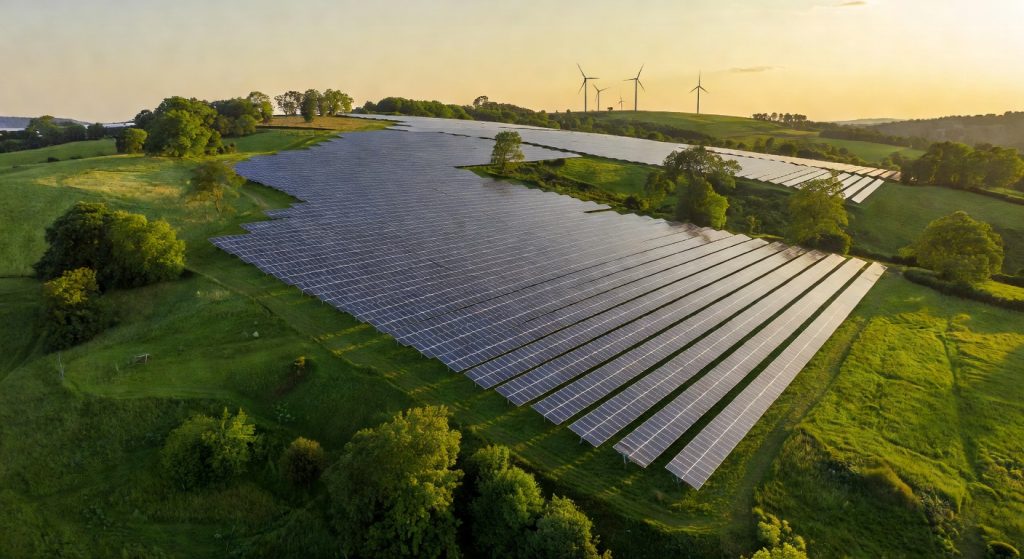
The pace of green technology innovation is accelerating — and this week’s wave of breakthroughs offers a compelling snapshot of where the energy transition is heading. From ultra-efficient solar panels attracting multi-million dollar public investment, to hydrogen produced without a single electrolyzer, to faster ways of recovering critical minerals from old batteries, the cleantech sector is delivering solutions that matter for citizens, businesses, and policymakers alike. Here is what you need to know.
Next-Generation Solar: Perovskite Tandems Move Closer to the Market
California-based Tandem PV has secured a $4 million grant from the California Energy Commission to accelerate the commercialisation of perovskite-silicon tandem solar panels — a technology widely regarded as the next leap forward in photovoltaics. Unlike conventional silicon panels, which are approaching their theoretical efficiency ceiling of around 29%, tandem cells stack two light-absorbing layers to capture a broader spectrum of sunlight, pushing efficiencies beyond 30% in laboratory conditions.
This matters enormously for the energy transition. Higher efficiency means more electricity generated per square metre of panel — a critical advantage for dense urban environments, industrial rooftops, and space-constrained installations typical of European cities. While this particular grant is American, the technology race is global: European research institutions and manufacturers are also investing heavily in perovskite development, and the EU’s Solar Energy Strategy explicitly targets next-generation photovoltaics as a pillar of energy sovereignty.
Alongside perovskite tandems, researchers are exploring other solar enhancements — including red onion extract coatings and black metal surface treatments — that could further boost panel efficiency at low cost. Advanced solar innovation is no longer a niche pursuit; it is becoming a mainstream industrial priority.
Green Hydrogen Without the Grid — and Battery Recycling at Scale
Two other breakthroughs this week deserve equal attention. At the Karlsruhe Institute of Technology in Germany, the start-up Photreon has developed mass-producible photoreactor panels capable of generating hydrogen directly from sunlight — without electrolyzers and without drawing electricity from the grid. This approach dramatically simplifies the hydrogen production chain, potentially reducing costs and infrastructure requirements that have so far slowed the hydrogen economy’s growth in Europe.
For a continent betting heavily on green hydrogen to decarbonise industry, shipping, and heavy transport, this kind of green innovation could prove transformative. The European Hydrogen Bank has already committed billions to scaling hydrogen infrastructure; technologies that lower the entry barrier could unlock deployment in regions currently lacking grid capacity or affordable renewable electricity.
Meanwhile, researchers at Rice University have developed a faster, more energy-efficient method to recover critical minerals — including lithium, cobalt, and nickel — from spent lithium-ion batteries. As electric mobility scales across Europe, with EV sales growing year on year and the EU’s 2035 combustion engine phase-out approaching, the pressure on battery supply chains is intensifying. Domestic recycling capacity is not yet keeping pace with demand. A more efficient recovery process could ease that bottleneck, reduce dependence on raw material imports, and lower the environmental footprint of the batteries powering our cars, bikes, and smart cities infrastructure.
Equity, Digital Finance, and the Broader Cleantech Picture
Two further developments round out this week’s cleantech landscape. In the United States, Tribal Energy Alternatives has awarded $3.2 million in grants to 14 Tribal Nations for solar energy access and workforce development — a reminder that the energy transition must be equitable, reaching communities historically excluded from clean energy benefits. European policymakers pursuing a Just Transition have much to learn from such targeted, community-centred approaches.
Finally, a new study on blockchain technology shows that newer consensus mechanisms can significantly reduce the energy consumption of digital currencies — addressing one of the most persistent criticisms of crypto and opening the door to greener fintech applications. As digital infrastructure becomes ever more central to smart city management and carbon tracking, reducing its energy footprint is not optional; it is essential.
What This Means for Europe’s Green Future
Taken together, this week’s innovations point to a cleantech ecosystem that is maturing rapidly across multiple fronts simultaneously. Solar efficiency is climbing, hydrogen production is being simplified, battery recycling is becoming more viable, and even digital finance is getting greener. For European decision-makers, the message is clear: the technologies needed to meet climate targets are arriving — but translating laboratory breakthroughs into scalable, equitable deployment requires sustained public investment, smart regulation, and cross-border collaboration.
Key takeaway: The energy transition is not waiting. From perovskite solar panels to gridless hydrogen reactors, green technology is advancing on multiple fronts at once. Europe’s opportunity — and responsibility — is to channel this momentum into real-world impact for citizens and communities across the continent.