Rooftop Solar Hits 20% of Puerto Rico’s Energy Mix: What the Americas’ Renewable Surge Means for Europe
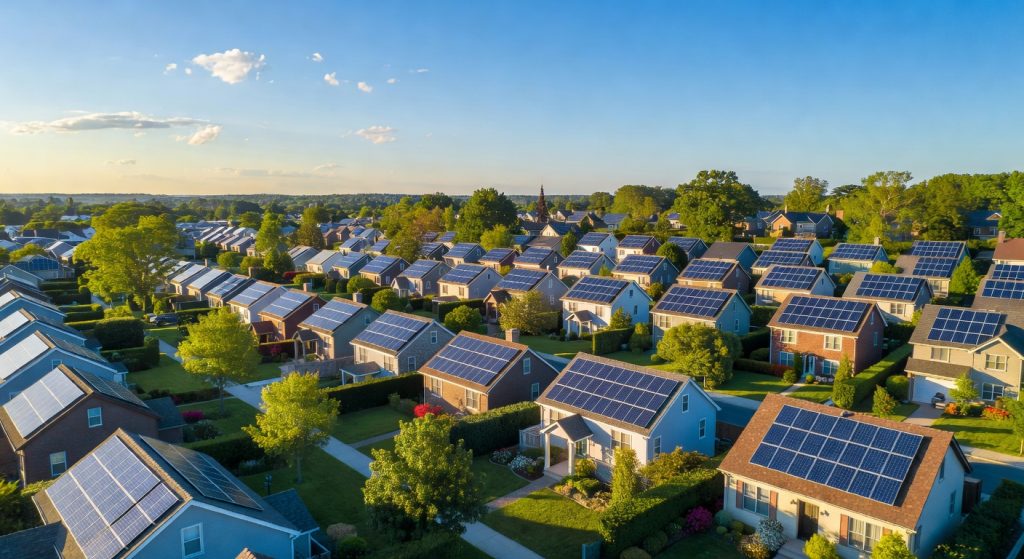
By the end of 2025, rooftop solar panels had quietly become one of Puerto Rico’s most powerful energy assets. With 1,456 MW of installed rooftop solar capacity, the island now generates 20% of its total electricity from distributed solar alone — making it the second-largest source in the capacity mix, surpassing natural gas and sitting just behind petroleum. According to data from the U.S. Energy Information Administration (EIA), rooftop solar accounted for an extraordinary 81% of all new capacity added between 2016 and 2025. This is not just a local story. It is a signal — one that European policymakers, urban planners, and energy professionals would do well to read carefully.
A Resilience-Driven Revolution in Renewable Energy
Puerto Rico’s solar boom did not happen in a vacuum. The island’s aggressive pivot toward renewable energy was accelerated by necessity: the catastrophic destruction of its centralised grid during Hurricane Maria in 2017 exposed the fragility of fossil-fuel dependency. Rooftop solar, paired increasingly with battery storage, offered households and businesses something the old grid could not — energy resilience at the local level.
This distributed model of resource management is precisely what many European regions are now exploring. From Sicily to the Greek islands, communities vulnerable to grid instability or dependent on diesel imports are looking at decentralised solar as both an economic and a security solution. Puerto Rico’s decade-long data provides a compelling real-world case study: when policy frameworks and market incentives align, rooftop solar can scale faster than almost any other energy technology.
The broader U.S. picture reinforces this trend. Wind and utility-scale solar generation reached 17% of total U.S. electricity in 2025, producing 760,000 GWh — up 88,000 GWh from the previous year. This represents a 20-year transformation from less than 1% in 2005, demonstrating what sustained investment and policy commitment can achieve over time.
Fossil Fuels in Retreat: Coal Exports Fall, Renewables Rise
The structural shift away from fossil fuels is becoming visible in trade flows as well. U.S. coal exports fell by 16 million short tons in 2025, reaching 93 million short tons — with thermal coal down 18% and metallurgical coal down 11%. While these figures reflect complex global market dynamics, the direction of travel is clear: fossil fuel demand is softening as solar, wind, and emerging technologies like hydrogen gain ground.
For Europe, this matters directly. The continent has long been exposed to volatile fossil fuel import costs, as the energy crisis of 2022 made painfully clear. Accelerating the deployment of utility-scale solar and wind, improving energy efficiency across buildings and industry, and investing in green hydrogen infrastructure are no longer optional strategies — they are economic imperatives. The Americas’ data simply confirms what European institutions like the International Energy Agency (IEA) and the European Commission have been projecting: renewables are now the cheapest and fastest-growing source of new electricity capacity globally.
Lessons for European Cities and Policymakers
What can Europe draw from Puerto Rico’s rooftop solar story? Several practical lessons stand out:
- Distributed generation builds resilience: Centralised grids remain vulnerable to extreme weather events — a growing concern as climate change intensifies across the Mediterranean and beyond. Rooftop solar reduces that vulnerability at the household and community level.
- Speed is possible: 81% of new capacity from a single technology in under a decade shows that rapid scaling is achievable when barriers to installation are reduced and incentives are clear.
- Water and land efficiency matter: Rooftop solar requires no additional land use and does not compete with agriculture or water resources — a critical advantage in drought-stressed Southern European regions.
- Policy continuity drives investment: Long-term regulatory certainty, not just short-term subsidies, is what unlocks private capital at scale.
Key Takeaway
Puerto Rico’s achievement is more than a statistic. It is proof that a society can fundamentally reshape its energy system within a single decade, even under difficult economic and environmental conditions. As Europe accelerates its own clean energy transition under the Green Deal and REPowerEU frameworks, the message from the Caribbean is both encouraging and instructive: rooftop solar is not a niche solution — it is a cornerstone of the modern energy system. The question for European cities, businesses, and governments is no longer whether to scale distributed renewables, but how quickly they can remove the obstacles standing in the way.