Record $2.3 Trillion Invested in the Energy Transition: What It Means for Green Tech in 2025
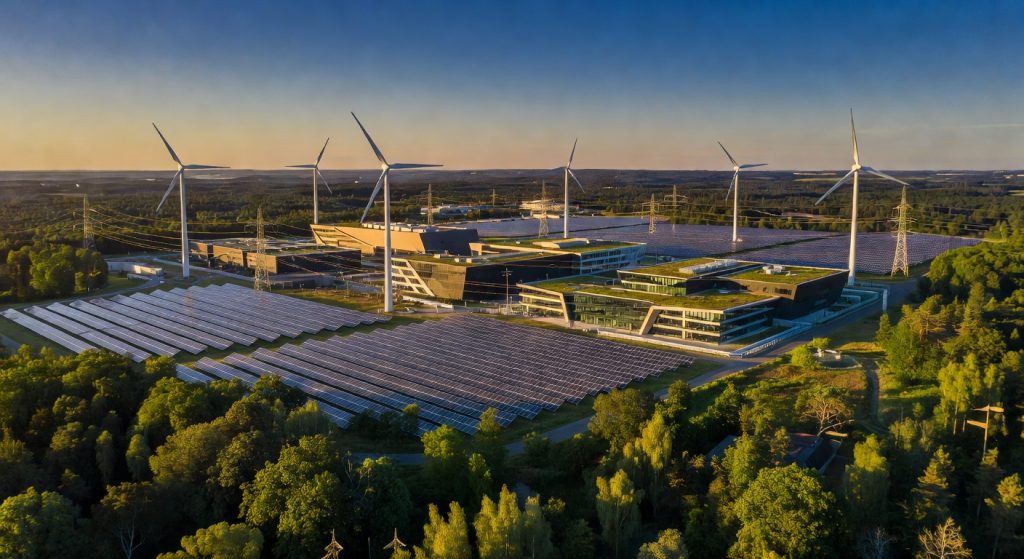
The numbers are in — and they are striking. Global investment in the energy transition reached a record $2.3 trillion in 2025, up 8% from the previous year, according to BloombergNEF’s latest Energy Transition Investment Trends report. From renewables and energy storage to green hydrogen, electrified transport, and smart grids, the cleantech economy is no longer a future promise. It is the present reality — and it is accelerating.
For European citizens, businesses, and policymakers, this milestone carries concrete implications. The momentum is global, but the decisions made in Brussels, Berlin, and Rome in the months ahead will determine whether Europe leads this transformation or scrambles to keep pace.
A Tipping Point for Green Technology: Renewables Now Power Global Demand Growth
One of the most significant signals in 2025 is that renewables have overtaken global electricity demand growth — meaning every new unit of electricity demand added worldwide is being met, on average, by clean sources. Solar has been the primary driver, particularly in China and India, where deployment has reached an industrial scale previously unimaginable.
An Oxford University analysis cited in recent energy research frames industrial electrification not merely as a climate strategy, but as an economic security priority. This framing matters enormously for European industry, which faces dual pressure from energy costs and decarbonisation targets. Companies that electrify production processes now — powered by increasingly cheap renewables — are building a structural competitive advantage.
Meanwhile, green innovation is moving beyond isolated technologies toward system-level integration. Projects like H2 Green Steel in Sweden, expected to reach full operation by 2026, exemplify this shift: combining green hydrogen, renewable electricity, and redesigned industrial processes into a single, coherent zero-emission system. This is the new benchmark for industrial leadership in Europe and beyond.
Breakthroughs in Storage, Hydrogen, and AI-Driven Energy Management
The investment surge is not flowing into yesterday’s solutions. Three technological frontiers are drawing particular attention in 2025:
- Solid-state batteries — promising higher energy density, faster charging, and improved safety for electric vehicles and grid storage, with commercial pilots scaling up across Asia and Europe.
- Green hydrogen — moving from pilot projects to infrastructure. California’s Avina green hydrogen facility, advancing despite federal rollbacks, will cut an estimated 130,000 tonnes of CO₂ per year by fuelling trucks and buses with state-backed grants. Europe’s own hydrogen backbone projects are watching closely.
- AI and IoT for energy management — smart grid technologies and intelligent building systems are enabling real-time optimisation of energy flows, reducing waste and lowering costs for households and businesses alike. This is the connective tissue of smart cities.
India’s Ministry of New and Renewable Energy (MNRE) has also launched a ₹2.3 crore startup challenge focused on rooftop solar and distributed renewables, explicitly targeting innovations in AI, IoT, and energy hardware. The global partnership potential of such programmes underscores that green tech innovation is no longer concentrated in a handful of Western capitals — it is distributed, competitive, and fast-moving.
Policy Resilience: Why Incentives and Regulation Still Matter
Record private investment does not emerge in a vacuum. It follows policy signals. In the United States, even Republican lawmakers are now proposing to extend clean energy tax incentives, acknowledging that abrupt policy reversals damage business confidence and economic momentum. The lesson for Europe is clear: stable, long-term policy frameworks are themselves a form of green infrastructure.
The European Green Deal and REPowerEU have provided that foundation, but implementation gaps remain. Permitting delays for renewable projects, fragmented grid investment, and uneven support for electric mobility across member states continue to slow deployment. Closing these gaps is not an environmental luxury — it is an industrial and geopolitical imperative.
What This Means for Europe’s Green Future
The $2.3 trillion figure tells us that the energy transition has achieved genuine economic momentum. Green technology is no longer propped up by idealism alone — it is driven by falling costs, rising returns, and strategic necessity. For European citizens, this translates into lower energy bills as scalable solutions mature. For businesses, it means new markets, new supply chains, and new risks for those who delay. For policymakers, it is both validation and a call to action.
The key takeaway: the global cleantech investment record of 2025 is not a ceiling — it is a foundation. Europe’s task now is to ensure that its regulatory ambition, industrial capacity, and innovation ecosystem are aligned to build on it. The race is on, and the starting gun has already fired.