Regenerative Agriculture Gets a Financial Boost: New Loans, Robots, and Microbes Reshaping Food Systems
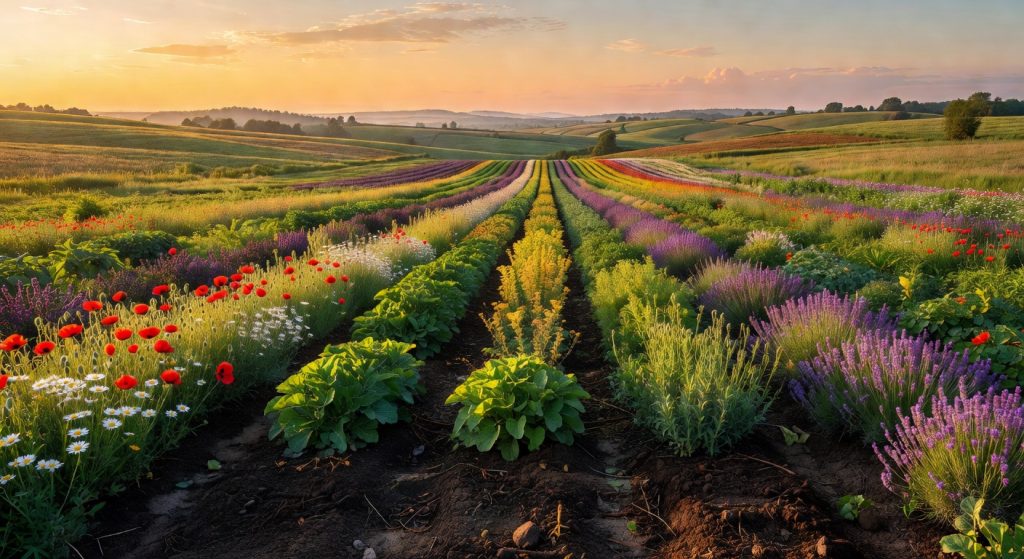
A quiet but significant shift is underway in global agriculture. As farm economies face mounting pressure — from volatile commodity prices to shrinking federal subsidies — a new generation of financial tools, technologies, and biological innovations is emerging to support the transition toward sustainable agriculture. This week’s developments paint a picture of an industry at an inflection point, with implications that stretch well beyond American farmland into European food policy and supply chain sustainability.
Financing the Regenerative Transition: A New Model Takes Root
The most structurally significant announcement comes from the United States, where Farmers Business Network (FBN) and the Walton Family Foundation have launched a first-of-its-kind pilot lending program offering preferential loan conditions to producers who adopt regenerative practices. The initiative directly addresses one of the most persistent barriers to agroecological transition: access to capital.
Regenerative agriculture — which prioritises soil health, biodiversity, and reduced chemical inputs — often requires upfront investment before financial returns materialise. Traditional lenders, focused on short-term yield metrics, have historically been reluctant to finance such transitions. By linking loan incentives to regenerative outcomes, the FBN-Walton model attempts to realign financial risk with long-term ecological value.
This approach resonates strongly with debates happening across Europe, where the EU’s Farm to Fork Strategy has set ambitious targets — including a 25% share of organic farmland by 2030 — but has struggled to translate policy ambition into accessible rural finance. The European Investment Bank and several national green banks have explored similar blended finance mechanisms, but a scalable, private-sector-led model remains elusive. The American pilot could offer a replicable blueprint.
Agtech Innovation: Robots, Microbes, and Methane Reduction
Beyond financing, a cluster of technology investments signals that the tools for transforming food systems are maturing rapidly.
- Bonsai Robotics has secured $15 million to scale automated fruit harvesters — a direct response to chronic agricultural labour shortages that affect harvests from California to Calabria. Automation of this kind carries complex trade-offs: it can improve supply chain sustainability by reducing post-harvest losses, but also raises legitimate questions about rural employment.
- CH4 Global has begun large-scale production of methane-reducing feed additives derived from seaweed. Livestock farming accounts for roughly 14.5% of global greenhouse gas emissions according to the FAO, and enteric fermentation — essentially, cow burps — is a major contributor. Scalable feed solutions could become a critical lever in decarbonising food systems without requiring immediate structural changes to meat production.
- Windfall Bio, backed by Amazon’s Climate Pledge Fund, has reached a commercial milestone with its methane-eating microbes — organisms that can be applied in agricultural settings to capture and neutralise methane emissions. Microbial solutions represent a frontier in agroecology, working with natural biological processes rather than against them.
Meanwhile, Guinness has announced one of Ireland’s largest regenerative agriculture pilots, focusing on barley cultivation and soil health across its supply chain. For a European audience, this is notable: it demonstrates that large food and beverage brands are beginning to internalise supply chain sustainability not as a marketing exercise, but as a sourcing imperative.
What This Means for European Food Policy and Farmers
Taken together, these developments reflect a convergence of private capital, technological innovation, and corporate supply chain pressure that is reshaping the economics of sustainable agriculture. For European policymakers and farmers, several implications stand out.
First, the financing gap for regenerative transition is solvable — but it requires creative instruments that reward ecological outcomes, not just yields. Second, agtech investments in automation and biological solutions are accelerating globally; European agri-food actors risk falling behind if regulatory frameworks don’t adapt to enable responsible deployment. Third, corporate-led pilots like Guinness’s Irish programme show that plant-based and regenerative sourcing commitments from major brands can drive on-farm change at scale — potentially faster than top-down policy alone.
Key takeaway: The regenerative agriculture transition is no longer a niche aspiration — it is attracting serious capital, technological firepower, and corporate commitment. Europe has the policy framework; what it increasingly needs is the financial architecture and regulatory agility to match the pace of global innovation.