Europe’s Energy Vulnerability and the ESG Reckoning: From LNG Dependence to AI-Driven Circularity
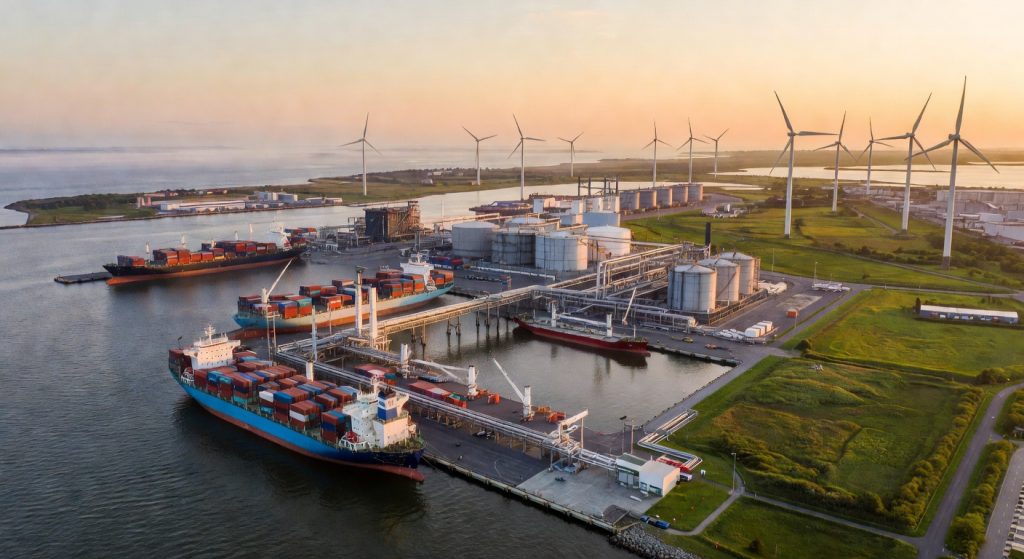
Europe’s sustainability ambitions are colliding with geopolitical reality. As Germany discovers that 92% of its LNG imports now originate from the United States, a stark warning from the Institute for Energy Economics and Financial Analysis (IEEFA) is reverberating across boardrooms and policy chambers alike: the continent’s energy transition is not yet insulated from the unpredictable forces of global politics. At the same time, fresh developments in microplastics regulation and AI-powered logistics are reshaping what corporate responsibility and sustainable finance look like in 2025.
Germany’s LNG Gamble: A New Geopolitical Fault Line for ESG Investors
When Germany accelerated its pivot away from Russian gas following the 2022 invasion of Ukraine, diversification was the watchword. Yet the numbers tell a more uncomfortable story. According to IEEFA, Germany’s near-total dependence on US LNG — 92% of its liquefied natural gas imports — has simply traded one geopolitical risk for another. Any shift in US trade policy, export priorities, or diplomatic relations could expose German industry and households to fresh supply shocks.
There is a silver lining. Germany’s accelerating heat pump rollout has already delivered €1.3 billion in energy cost savings, demonstrating that demand-side solutions remain the most durable hedge against import dependency. But for ESG analysts and sustainable finance professionals, the broader lesson is clear: energy security metrics must now sit alongside carbon metrics in any credible portfolio risk assessment. A transition strategy that swaps one fossil fuel dependency for another — even a geographically different one — does not fully satisfy the governance pillar of ESG.
The situation is further complicated by the US decision to reverse its policy on Russian oil sanctions waivers within just 48 hours, extending relief to May 16. This kind of policy volatility has direct implications for ESG investment strategies globally, particularly for markets like India that are navigating competing energy relationships. For European institutional investors, it underscores the urgency of backing genuinely domestic renewable capacity rather than relying on the stability of any single external supplier.
Microplastics, Corporate Responsibility, and the Regulatory Wave
Beyond the energy sector, a quieter but equally significant sustainability story is unfolding. The US Environmental Protection Agency (EPA) and the Department of Health and Human Services (HHS) have jointly launched the MAHA initiative — a coordinated policy response to the growing microplastics contamination crisis. While this is a US-led effort, its ripple effects will be felt across global supply chains and European green business practices.
Microplastics contamination is no longer a niche environmental concern. It is a material risk for companies across packaging, textiles, agriculture, and water management. Businesses that have not yet mapped their microplastics footprint — both in their operations and their supply chains — are increasingly exposed to:
- Regulatory risk, as governments on both sides of the Atlantic tighten standards on plastic pollution and waste management
- Reputational risk, as citizens and consumers demand greater transparency on product safety and environmental impact
- Financial risk, as sustainable finance frameworks increasingly incorporate pollution metrics into ESG scoring
For European companies operating under the Corporate Sustainability Reporting Directive (CSRD), proactive disclosure on pollution and waste is no longer optional — it is a legal and competitive imperative.
AI and the Circular Economy: Where Green Business Meets Real Returns
Amid the geopolitical turbulence, one development offers a more optimistic signal for sustainability professionals. Amazon has announced a major AI-driven initiative targeting sustainable logistics and circularity across its European operations, projecting savings of up to US$44.4 billion through smarter routing, reduced waste, and circular supply chain design.
This is significant not merely for its scale, but for what it signals about the maturation of the circular economy as a business model. When one of the world’s largest logistics operators frames AI-powered circularity as a core profitability driver — not just a CSR gesture — it validates what sustainability advocates have argued for years: that resource efficiency and green business practices are financially accretive over the long term.
For smaller European businesses and policymakers, the takeaway is actionable. AI tools for demand forecasting, reverse logistics, and material recovery are increasingly accessible, and the EU’s circular economy action plan provides a supportive regulatory backdrop for companies willing to invest.
The Bigger Picture: Resilience Must Be Built Into Sustainability Strategy
This week’s convergence of stories — energy geopolitics, microplastics regulation, and AI-driven circularity — points to a single overarching theme: sustainability and ESG strategies must be built for resilience, not just compliance. Europe cannot afford transition pathways that create new dependencies while eliminating old ones. Corporate responsibility must extend beyond carbon accounting to encompass supply chain integrity, pollution prevention, and genuine circular economy integration.
Key takeaway: Whether you are an investor recalibrating your ESG portfolio, a business leader assessing supply chain risk, or a policymaker designing the next phase of Europe’s green transition, the message is consistent — diversification, transparency, and systemic thinking are not optional extras. They are the foundation of any sustainability strategy fit for an era of geopolitical uncertainty.