Billions Flow Into Sustainable Agriculture: What the Latest Agtech Wave Means for Food Systems
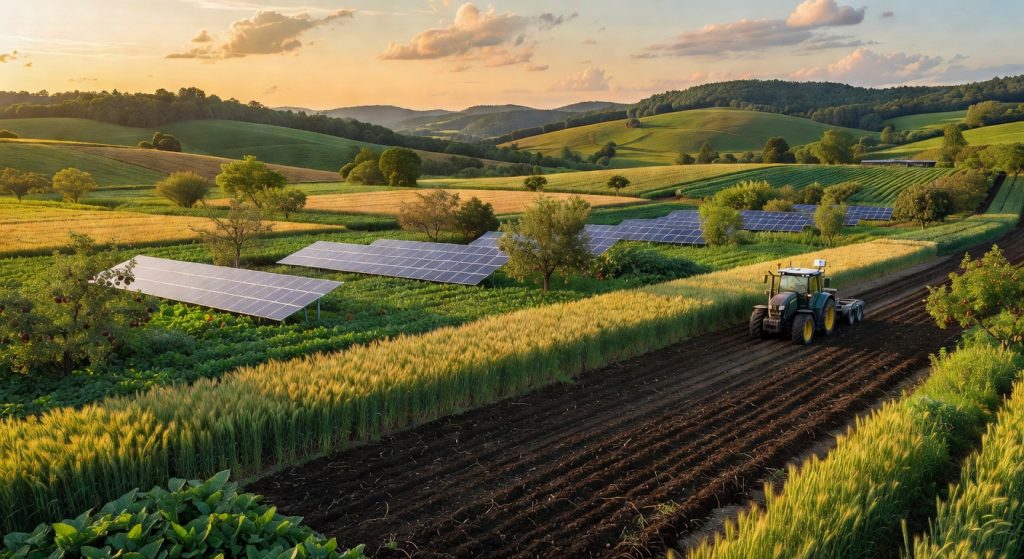
A surge of public and private capital is reshaping how the world grows, harvests, and distributes food. In recent weeks, a series of landmark investments and corporate moves have signalled that sustainable agriculture is no longer a niche concern — it is becoming the backbone of a new food economy. For European citizens, businesses, and policymakers already navigating the EU’s Farm to Fork strategy, these developments offer both inspiration and a competitive benchmark.
Public Investment Sets the Tone: $180M for Biofuels and Clean Energy on Farms
The Biden administration’s allocation of $3.3 billion for sustainable farming — including $180 million specifically earmarked for biofuels and clean energy infrastructure — represents one of the most significant public commitments to decarbonising food systems in recent US history. The funding targets the reduction of agricultural emissions, supporting farmers who adopt cleaner energy sources and more efficient production methods.
While this is a US initiative, its implications resonate across the Atlantic. Europe has long positioned itself as the global leader in agri-environmental policy, but public funding at this scale demonstrates that the transatlantic competition for green agricultural leadership is intensifying. The European Common Agricultural Policy (CAP) is under pressure to match this ambition, particularly as member states struggle to balance farmer income support with genuine supply chain sustainability requirements.
Private Capital Accelerates Agtech Innovation
Alongside public spending, private investors are placing major bets on the technologies that will define tomorrow’s food systems. Several deals stand out:
- Inari raised $144 million for gene-edited seeds designed to improve crop resilience under climate stress — a technology with enormous potential but also regulatory complexity, especially in the EU where gene-editing rules remain stricter than in the US.
- Sound Agriculture secured $25 million for sustainable fertiliser alternatives, directly addressing one of agriculture’s largest sources of nitrous oxide emissions.
- Bonsai Robotics closed a $15 million round for automated fruit harvesters, tackling labour shortages while reducing waste — a challenge acutely felt in Southern European agriculture.
- CH4 Global is scaling methane-reducing feed additives for livestock, targeting one of the most stubborn emission sources in the global food chain.
Together, these investments reflect a clear market thesis: that agroecology-aligned technologies — those that work with natural systems rather than against them — are becoming commercially viable at scale. For European agtech startups, this is both a signal and a challenge to accelerate their own innovation pipelines.
Regenerative Agriculture Moves From Pilot to Supply Chain Reality
Perhaps the most structurally significant development is the mainstreaming of regenerative agriculture within corporate supply chains. Campbell’s has launched a regenerative pilot for potato sourcing in partnership with major retailer Ahold Delhaize, embedding soil health metrics directly into procurement decisions. Meanwhile, AgroLiquid’s acquisition of Monty’s Plant Food signals consolidation in the sustainable crop nutrition sector, as companies seek to offer integrated soil health solutions to farmers.
This shift matters enormously for supply chain sustainability. When large food brands and retailers begin requiring regenerative practices from suppliers, the transformation moves beyond voluntary commitments into contractual obligation. European retailers — many of whom are already subject to the EU’s Corporate Sustainability Reporting Directive (CSRD) — should watch these models closely as templates for their own supplier engagement strategies.
Implications for Europe and the Path Ahead
The global momentum behind sustainable agriculture and plant-based and low-emission food innovation presents a clear message for European decision-makers: the window to lead is open, but it will not stay open indefinitely. The EU’s regulatory framework — from Farm to Fork to the Nature Restoration Law — provides a strong foundation, but regulation alone will not drive the scale of investment now flowing into agtech globally.
Policymakers should consider how to de-risk private investment in regenerative transitions, particularly for small and medium-sized farms that lack the capital to adopt new technologies independently. Citizens and consumers, meanwhile, hold real power: purchasing choices that reward transparent, sustainable sourcing send signals that accelerate exactly the kind of supply chain transformation these corporate pilots represent.
Key takeaway: A confluence of public funding, private investment, and corporate supply chain commitments is accelerating the transition to sustainable food systems at a pace that would have seemed unlikely just five years ago. For Europe, the challenge is not to watch from the sidelines, but to channel its regulatory ambition into an equally bold investment and innovation agenda.