Solar Powers 22% of EU Electricity for the First Time — What This Milestone Really Means
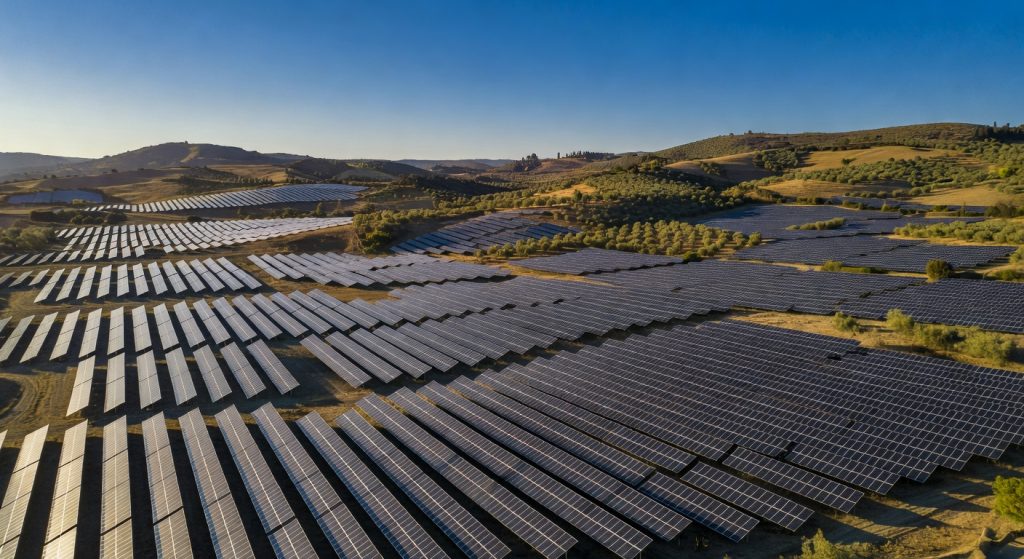
For the first time in history, solar energy led the European Union’s electricity generation mix, supplying 22% of the bloc’s power in June 2024 — surpassing natural gas and coal combined. Reported by Canary Media, this is not just a statistical milestone: it signals a structural shift in how Europe produces and thinks about energy. Yet behind this headline lies a more complex picture of grid challenges, policy turbulence, and the urgent need for smarter resource management.
A Historic Turning Point for Renewable Energy in Europe
June is, of course, a peak month for solar irradiation across Europe — from the Iberian Peninsula to the Italian south — so seasonal factors matter. But the scale of this achievement still marks a genuine inflection point. The rapid expansion of photovoltaic capacity across Germany, Spain, the Netherlands, and Poland has transformed solar from a niche technology into the continent’s single largest power source for an entire month.
This growth reflects years of EU policy commitment: the REPowerEU plan, the revised Renewable Energy Directive (RED III) targeting 42.5% renewables by 2030, and sustained public and private investment. Energy efficiency improvements across buildings and industry have also reduced overall demand, making it easier for renewables to cover a larger share of what remains.
Still, grid infrastructure has not kept pace. Integrating variable sources like solar and wind at this scale requires flexible capacity — battery storage, demand response, and cross-border interconnections — that Europe is still building out. Curtailment (wasting generated renewable electricity because the grid cannot absorb it) remains a real and growing problem in several member states.
Global Contrasts: US Policy Reversals Cast a Shadow
While Europe celebrates this milestone, the contrast with current US energy policy is stark and instructive. The Trump administration recently cancelled a $4.9 billion federal loan for the Grain Belt Express — the largest planned transmission line for wind and solar power in the United States. Without this infrastructure, vast renewable generation capacity in the American Midwest risks being stranded, unable to reach population centres in the east.
Simultaneously, New Hampshire redirected $15 million from its clean energy fund, effectively ending a municipal solar expansion pilot. These reversals are already triggering layoffs among small solar installers and creating uncertainty across the US renewables supply chain. For European policymakers and investors, these developments serve as a cautionary tale: renewable energy transitions require not just generation capacity, but stable, long-term policy frameworks and transmission investment.
On a more positive note, innovation continues regardless of political headwinds. In Utah, Turboden America and Fervo Energy have announced a partnership to deploy 1,750 MW of geothermal ORC (Organic Rankine Cycle) units — a significant scaling of a technology that provides firm, baseload clean power to complement intermittent solar and wind. Geothermal, alongside green hydrogen and large-scale storage, is increasingly seen as a critical piece of the 24/7 clean energy puzzle.
Grid Investment and Resource Management: The Next Frontier
The energy transition is no longer primarily about building more solar panels or wind turbines — it is about managing a vastly more complex system. In the US, utility PECO has requested a $429 million rate increase to fund grid upgrades, residential battery pilots, and reliability projects. Similar pressures are mounting across European grids.
Effective resource management in this new era means:
- Expanding and modernising transmission networks to move renewable electricity where it is needed
- Deploying battery storage and demand flexibility to balance supply and demand in real time
- Investing in complementary clean technologies — geothermal, green hydrogen, pumped hydro — for resilience
- Protecting water resources, as both geothermal and hydrogen production have significant water footprints that require careful planning
Key Takeaway
June 2024’s solar milestone is a genuine cause for optimism — proof that the EU’s renewable energy ambitions are becoming reality. But sustaining this momentum demands honest attention to what comes next: smarter grids, better storage, diversified clean technologies, and above all, the political will to keep investing even when short-term pressures push in the opposite direction. Europe has a rare opportunity to show the world that the energy transition is not only possible, but irreversible.