Green Steel, Forest Recovery, and Water Reuse: The ESG Signals Reshaping Sustainability in 2026
Sustainability is no longer a peripheral concern for businesses and policymakers — it is the central axis around which industrial strategy, environmental policy, and corporate responsibility now rotate. A cluster of recent developments, spanning green mining in West Africa, forest science breakthroughs, and bold water reuse legislation in the United States, is sending clear signals to ESG-focused investors and decision-makers: the transition to a sustainable economy is accelerating, and the stakes have never been higher.
Simandou and the Green Steel Opportunity
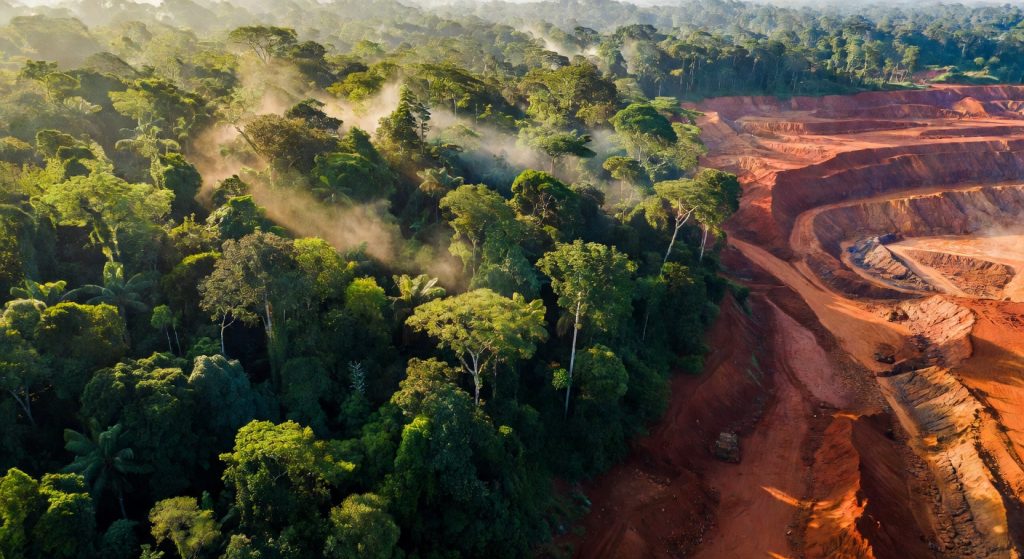
The world’s largest untapped high-grade iron ore deposit, Guinea’s Simandou mine, is now moving toward full operations — and its implications for the global steel industry are profound. Unlike lower-grade ores that require more energy-intensive processing, Simandou’s high-quality iron ore is particularly well-suited for use in direct reduced iron (DRI) processes, a key pathway toward green steel production powered by hydrogen or renewable electricity.
For European steelmakers — already under pressure from the EU’s Carbon Border Adjustment Mechanism (CBAM) and Fit for 55 targets — access to cleaner, more efficient raw materials is not just a competitive advantage, it is a decarbonisation necessity. The project also diversifies global supply chains away from dominant producers like Australia and Brazil, reducing geopolitical concentration risk. From an ESG and sustainable finance perspective, Simandou represents a test case: can large-scale extractive projects be structured to deliver genuine environmental and social value, or will green mining remain more aspiration than reality? Transparent governance, community benefit-sharing, and robust environmental impact assessments will determine whether this project earns its green credentials.
Forest Science Offers a Natural Climate Solution — But Africa Sounds the Alarm
Two pieces of forest-related research published in early 2026 paint a picture of both hope and urgency. On the positive side, new findings reveal that tropical forests recover twice as fast after deforestation when soils contain sufficient nitrogen. This discovery opens practical pathways for accelerating reforestation and carbon sequestration — critical tools in meeting global climate targets. For the circular economy and nature-based solutions sector, it suggests that soil health management should be integrated into restoration project design from the outset.
Yet the optimism is tempered by alarming data from Africa. Research confirms that Africa’s forests have reversed from net carbon sinks to net carbon emitters since 2010, driven by relentless deforestation and biomass loss. This shift fundamentally undermines global carbon accounting assumptions and puts pressure on both national governments and multinational corporations with supply chains tied to African land use. For companies reporting under frameworks such as the EU Corporate Sustainability Reporting Directive (CSRD) or TNFD (Taskforce on Nature-related Financial Disclosures), this is a material risk that demands immediate attention. Deforestation-linked emissions are no longer an abstraction — they are a measurable liability.
Policy Innovation: Water Reuse and Cross-Border Environmental Responsibility
In the United States, the EPA has launched its Water Reuse Action Plan 2.0, a comprehensive strategy to advance water sustainability across sectors — including the rapidly growing AI and data centre industry, which is notoriously water-intensive. Simultaneously, the EPA’s ‘Feed It Onward’ initiative targets food waste reduction, reinforcing the connection between circular economy principles and food security.
Equally significant is the EPA’s Memorandum of Understanding with Mexico to address the Tijuana River sewage crisis — a long-standing cross-border environmental failure. This agreement signals a renewed commitment to transboundary environmental responsibility, a principle that resonates strongly within the European regulatory tradition, where shared ecosystems like the Rhine or the Danube have long required multilateral governance frameworks.
For European businesses operating globally, these US policy moves are worth monitoring. They reflect a broader trend: corporate responsibility for water stewardship is moving from voluntary reporting to regulatory expectation.
What This Means for ESG Strategy
Taken together, these developments underscore several priorities for sustainability professionals and ESG-focused organisations:
- Green materials sourcing is becoming a core decarbonisation lever — supply chain due diligence must extend to raw material quality and origin.
- Nature-based solutions require scientific rigour; soil health and ecosystem integrity are now financial variables, not just environmental ones.
- Water and waste are rising up the regulatory agenda — businesses should treat them as strategic ESG priorities, not compliance afterthoughts.
- Deforestation risk in African supply chains demands urgent reassessment under emerging disclosure frameworks.
Key takeaway: The sustainability transition is being shaped simultaneously by industrial-scale projects like Simandou, by frontier ecological science, and by policy innovation on both sides of the Atlantic. For businesses and investors committed to genuine ESG performance, the message is consistent — the window for proactive action is open, but it will not stay open indefinitely.