Five Years of the EU Green Deal: What Has Been Achieved — and What Still Needs to Happen
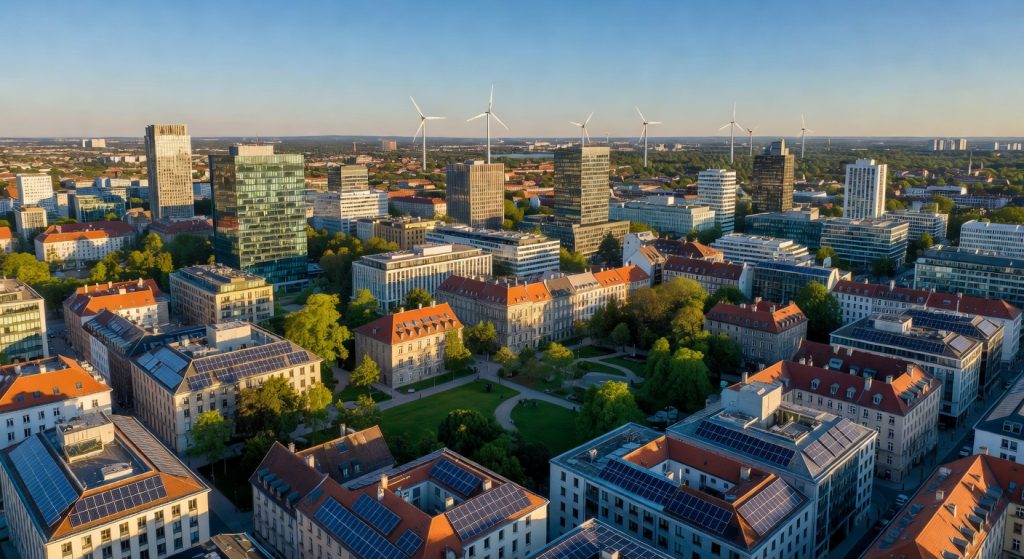
When the European Commission launched the EU Green Deal in December 2019, it was billed as Europe’s most ambitious transformation since the single market. Five years later, the verdict is nuanced: real progress has been made, but the gap between targets and reality is widening at a moment when political and economic headwinds are intensifying. A February 2026 review by A&O Shearman offers a clear-eyed assessment — and a roadmap for what must happen next.
What the Green Deal Has Actually Delivered
The achievements are substantial and should not be underestimated. EU greenhouse gas emissions have continued to fall, clean technology investment has scaled significantly across the continent, and a new architecture of environmental regulation has been built from the ground up. The expanded EU Emissions Trading System (EU ETS) — now covering buildings and road transport in addition to industry and power — is generating more than €200 billion for green transition funds, channelling capital into areas that previously lacked dedicated public finance.
The Carbon Border Adjustment Mechanism (CBAM), one of the Green Deal’s most globally significant instruments, is on track for full operation by 2026. By placing a carbon price on imports of steel, cement, aluminium, fertilisers, and electricity, CBAM creates a powerful incentive for trading partners to clean up their own production — making EU climate policy a lever for global change, not just a domestic exercise.
Progress on sustainability reporting has also been transformative. The Corporate Sustainability Reporting Directive (CSRD) has forced thousands of companies to measure and disclose their environmental impact with unprecedented rigour, reshaping how investors and decision-makers assess risk.
Where the Fault Lines Are Emerging
Despite these gains, the numbers tell a cautionary tale. Current National Energy and Climate Plans (NECPs) project a 51% reduction in emissions by 2030 — short of the legally binding 55% target under the Fit for 55 package. The revision of the Energy Taxation Directive, a key instrument to make fossil fuels more expensive relative to renewables, remains unfinished, undermining the coherence of the entire regulatory framework.
Economic slowdown across the EU, combined with geopolitical turbulence — from energy supply disruptions to rising competition from US and Chinese green industry subsidies — has fuelled a political backlash against regulatory complexity. Businesses and investors have increasingly called for a simplification of sustainability regulations, arguing that overlapping reporting requirements and shifting rules are creating uncertainty rather than confidence. The Commission has responded by signalling a period of regulatory stabilisation: fewer new laws, better enforcement of existing ones, and a focus on making the current rulebook work.
Hard-to-abate sectors — heavy industry, shipping, aviation, agriculture — remain the most difficult challenge. These are precisely the areas where market signals alone are insufficient and where targeted policy support is most needed.
The Road to 2030 and Beyond
The political coalition supporting the Green Deal has held, with the European Parliament reaffirming its commitment to Green Deal enforcement as a matter of both competitiveness and just transition. The proposed 2040 climate target of 90% GHG reduction, put forward in 2024, sets an ambitious trajectory — but bridging the gap to 2030 first is the immediate priority.
Three strategic imperatives are emerging for the next chapter of EU climate policy:
- Stabilise the regulatory environment to give businesses and investors the long-term predictability they need to commit capital to green projects.
- Scale green investments, particularly through instruments like the Innovation Fund and the Just Transition Fund, to support regions and sectors most exposed to transition costs.
- Close the emissions gap by finalising pending legislation — above all the Energy Taxation Directive revision — and strengthening NECPs where they fall short.
What This Means for Citizens, Businesses, and Policymakers
For ordinary Europeans, the Green Deal’s success or failure will be felt in energy bills, job quality, and the livability of cities. For businesses, regulatory clarity is now as important as ambition — investment decisions in clean technology require a stable horizon. For policymakers, the challenge is to hold the line on targets while making the transition genuinely fair and economically viable.
Key takeaway: The EU Green Deal has built a foundation that few would have thought possible five years ago. But the hardest work — closing the gap to 2030, decarbonising heavy industry, and maintaining political consensus — lies ahead. Europe’s ability to deliver on its own promises will determine not just its climate future, but its credibility as a global leader in sustainable governance.