Google, Meta and McKinsey Back a 131,000-Tonne Reforestation Deal in Appalachia — What It Means for Corporate Climate Strategy
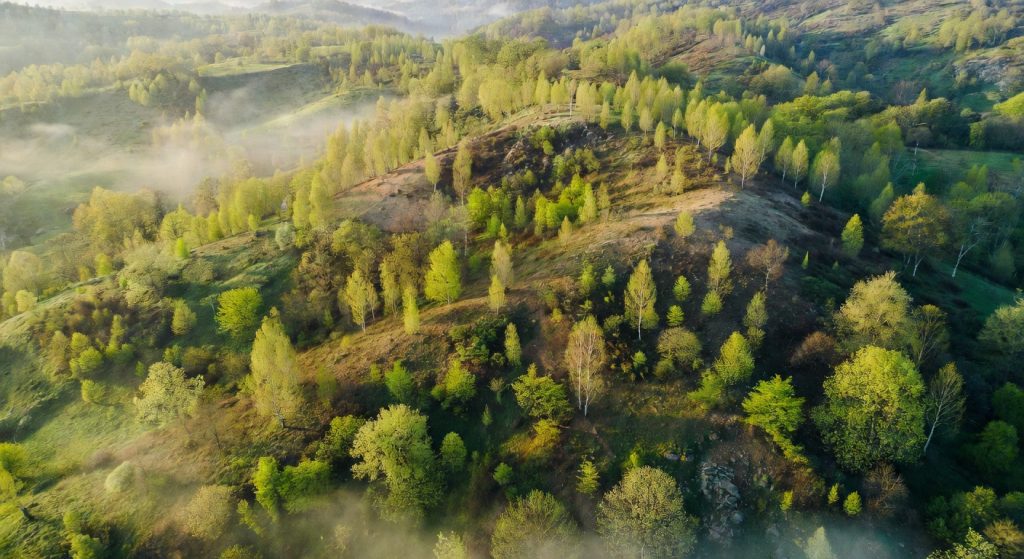
A coalition of some of the world’s most influential corporations — including Google, Meta, and McKinsey — has thrown its weight behind a large-scale reforestation project in the Appalachian region of the United States, backing a deal designed to remove 131,240 tonnes of carbon dioxide through the restoration of degraded land. The initiative, coordinated through the Symbiosis Coalition, marks one of the most significant corporate investments in nature-based carbon removal to date, and sends a clear signal about where private climate finance is heading.
For those watching food systems, sustainable agriculture, and land use policy — particularly from a European perspective — this deal is more than a headline. It raises urgent questions about how we value forests, farmland, and ecosystems in the broader fight against climate change.
Nature-Based Solutions Move from Niche to Mainstream
For years, nature-based solutions — reforestation, rewilding, soil carbon sequestration, and agroecology — were treated as complementary tools at best, or greenwashing vehicles at worst. The Appalachian deal suggests the calculus is shifting. When companies of the scale of Google and Meta commit to verified, large-volume carbon removal through ecosystem restoration, it legitimises an entire category of climate action.
The project targets degraded land, a critical distinction. Rather than converting productive agricultural land — a move that would pit food production against climate goals — the initiative focuses on restoring landscapes that have already lost ecological function. This approach aligns with principles long championed by European environmental policy, including the EU’s Nature Restoration Law, which sets binding targets to restore at least 20% of the EU’s land and sea areas by 2030.
Nature-based carbon markets, however, remain contested. Critics point to issues of permanence (forests can burn), additionality (would the trees have grown anyway?), and social equity (who owns the land, who benefits?). The credibility of this deal will depend on the robustness of its measurement, reporting, and verification (MRV) framework — something European regulators are increasingly demanding of any carbon credit entering EU supply chains.
Implications for Sustainable Agriculture and Food Systems
The intersection of reforestation and food systems is more direct than it might appear. In Appalachia — a region with deep roots in small-scale farming and significant rural poverty — land restoration projects must navigate complex trade-offs between agricultural livelihoods and ecological recovery.
This tension is familiar in Europe. The EU’s Farm to Fork Strategy and the Common Agricultural Policy (CAP) reforms are both grappling with how to support farmers who adopt practices that benefit the climate and biodiversity — from agroforestry and cover cropping to reduced tillage and wetland restoration. The Symbiosis Coalition model, where corporate buyers fund ecosystem services on private or community land, could offer a complementary financing mechanism — one that doesn’t rely solely on public subsidy.
For supply chain sustainability, the implications are significant. Companies under pressure to decarbonise their Scope 3 emissions — those generated across their value chains — are increasingly looking at land-use change as a lever. Tech giants like Google and Meta have enormous indirect footprints through data centres, hardware manufacturing, and employee travel. Investing in high-quality carbon removal through reforestation is one way to address residual emissions that are difficult to eliminate directly.
What European food and agriculture businesses should note is the growing expectation from corporate buyers that nature-positive supply chains will become a baseline requirement, not a premium option.
What Europe Can Learn — and Offer
Europe is not a passive observer in this story. The continent has developed some of the world’s most rigorous frameworks for sustainable land management, from organic certification to the EU Deforestation Regulation (EUDR), which requires companies to prove that commodities like soy, beef, and timber have not contributed to deforestation.
European agroecology movements, cooperative farming models, and public-private partnerships in rural development offer tested alternatives to purely market-driven approaches. As corporate carbon markets scale up globally, there is an opportunity for Europe to export not just regulation, but practice — showing how food systems can be redesigned around ecological principles without sacrificing productivity or farmer income.
Key Takeaway
The Google-Meta-McKinsey reforestation deal in Appalachia is a landmark moment for corporate nature-based investment. But its true value — ecological, social, and financial — will be determined by the integrity of its implementation. For European policymakers, farmers, and businesses, the message is clear: nature-based solutions are entering the mainstream of climate finance, and those who build credible, transparent frameworks now will shape the rules of the game for decades to come. Sustainable agriculture and restored ecosystems are not competing priorities — they are, increasingly, the same investment.