The Renewable Energy Surge Is Real: What Germany, Spain, and Beyond Tell Us About the New Energy Order
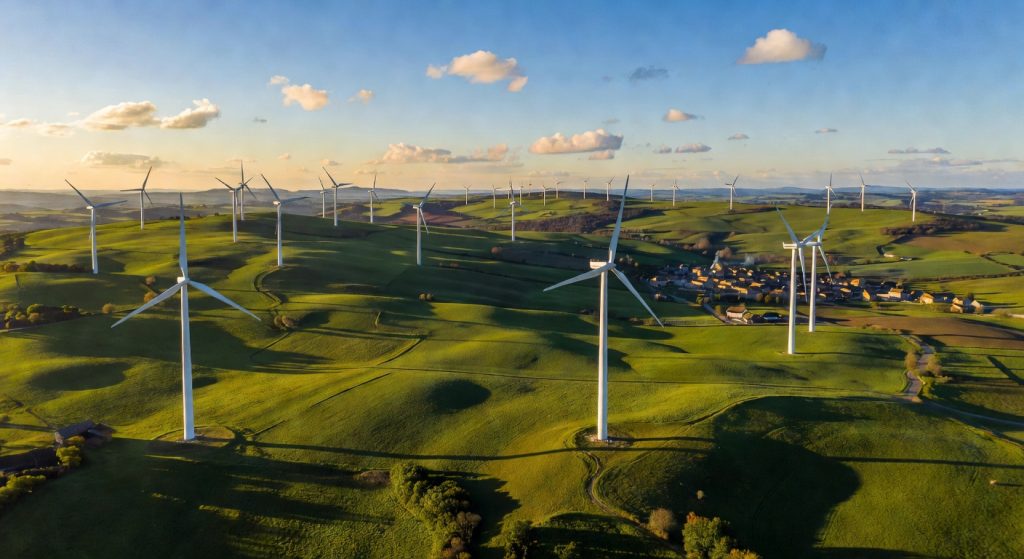
Something fundamental is shifting in the global energy system — and the numbers are no longer subtle. From the plains of Texas to the coasts of Cornwall, from Germany’s policy offices to Australia’s suburban rooftops, renewable energy is moving from promising alternative to dominant force. The question is no longer whether the transition will happen, but how fast — and who will lead it.
Europe Sets the Pace: Germany and Spain Lead by Example
In March 2026, Germany announced plans to tender 12 gigawatts of additional onshore wind capacity under its Climate Action Program 2026 — one of the largest single wind energy procurement efforts in European history. This move signals that Berlin, despite years of political turbulence around its energy policy, is doubling down on domestic wind energy as a cornerstone of its decarbonisation strategy.
Meanwhile, Spain offers a compelling case study in what sustained clean energy investment actually delivers. Over just six years, the country has doubled its combined solar and wind capacity, transforming its electricity mix and, crucially, insulating its economy from the fossil fuel price shocks that have rattled European households since 2021. When gas prices spike, countries with deep renewable infrastructure simply feel less pain. That is not an ideological argument — it is arithmetic.
Together, Germany and Spain illustrate a broader European pattern: energy security and climate ambition are converging, not competing. The geopolitical turbulence of recent years has, paradoxically, accelerated the case for renewables by making fossil fuel dependence look not just environmentally reckless, but strategically dangerous.
A Global Momentum That Cannot Be Ignored
Europe is not acting in isolation. Across the world, the renewable energy transition is gathering speed at a scale that would have seemed implausible a decade ago.
- Australia’s largest electricity grid hit a landmark milestone, with renewables supplying over 50% of power even during record demand peaks — driven by rooftop solar panels and rapidly expanding battery storage systems.
- In the United States, Texas overtook California as the largest market for utility-scale solar in 2025, with solar now the fastest-growing electricity source in the country. Renewables account for over 36% of total installed US generating capacity.
- In the UK, the country’s first deep geothermal plant, located in Cornwall, is now delivering round-the-clock renewable electricity to up to 10,000 homes from nearly 5 kilometres underground — while businesses are tapping shallow geothermal energy from flooded former coal mines, turning industrial heritage into clean resource management.
These are not isolated experiments. They represent a systemic shift in how nations generate, store, and think about energy. The role of energy efficiency and smart storage is equally critical: without the ability to balance supply and demand, even abundant solar and wind capacity cannot deliver reliable grids.
Corporate Commitments and the Road Ahead
The private sector is no longer waiting for governments to lead. Some 445 companies worldwide have committed to sourcing 100% of their electricity from renewables through the RE100 initiative, while 116 others are accelerating electric vehicle adoption and 107 are actively improving energy efficiency across their operations. These commitments matter because they create long-term demand signals that de-risk investment in new capacity — from utility-scale solar farms to green hydrogen production facilities that could eventually store and transport renewable energy at industrial scale.
Hydrogen, in particular, remains a critical piece of the puzzle for hard-to-decarbonise sectors — heavy industry, shipping, and long-haul transport — where direct electrification is difficult. Europe’s bet on green hydrogen, produced using surplus renewable electricity and water through electrolysis, could prove decisive in reaching net-zero targets by mid-century.
What This Means for Citizens and Decision-Makers
For European citizens, the practical implications are already visible: more stable energy bills in countries with high renewable penetration, cleaner air in cities transitioning away from gas heating, and new jobs in manufacturing, installation, and grid management. For policymakers, the lesson from Germany, Spain, and beyond is that ambition and execution must go hand in hand — tenders, permits, and grid investment need to move at the same speed as political targets.
Key takeaway: The global renewable energy transition has crossed a threshold. It is no longer a future scenario — it is the present reality reshaping economies, geopolitics, and daily life. Europe, with initiatives like Germany’s 12 GW wind programme and Spain’s solar expansion, is well-positioned to lead. But maintaining that position requires sustained policy commitment, smart resource management, and the courage to move faster than feels comfortable.