Regenerative Agriculture Meets Corporate Supply Chains: A New Model for Scope 3 Emissions
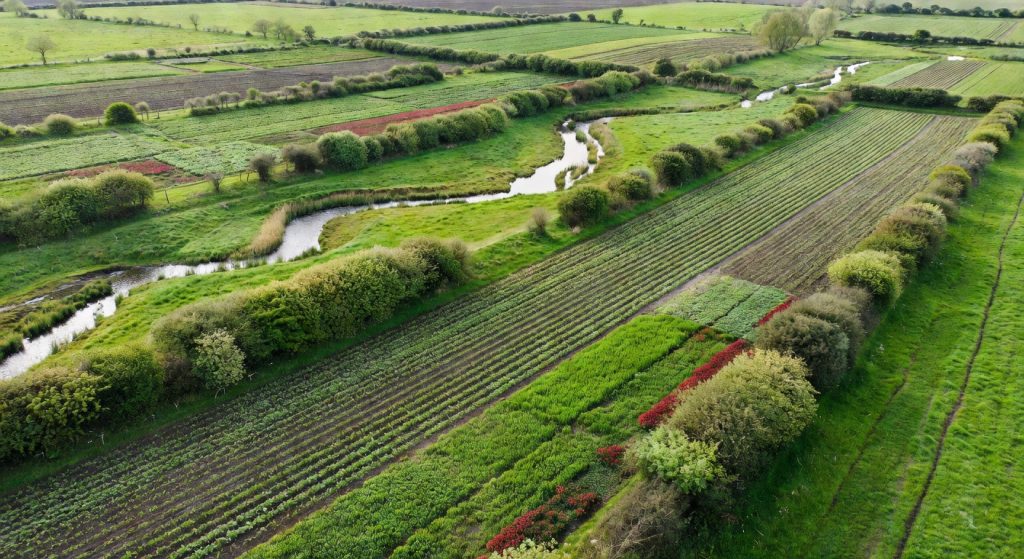
As pressure mounts on corporations to account for their full carbon footprint, one of the most stubborn challenges remains Scope 3 emissions — those embedded in supply chains, far upstream from factory gates. A quiet but significant shift is underway in sustainable agriculture: companies are beginning to co-invest directly in farm-level regenerative practices, sharing both the costs and the climate benefits. The model is gaining traction in the United States, and its implications stretch well beyond American borders.
Co-Investing in Farms: A New Frontier for Supply Chain Sustainability
The Ecosystem Services Market Consortium (ESMC), a U.S.-based nonprofit, is at the forefront of this shift. Its March 2026 newsletter highlights an award-winning framework that allows multiple companies sharing the same agricultural landscapes — think grain traders, food manufacturers, and retailers all sourcing from the same region — to co-invest and co-claim verified farm-level emissions reductions and carbon removals.
This matters because food and agriculture supply chains are notoriously complex. A single farm may supply ingredients to dozens of brands. Under traditional carbon accounting, attributing emissions reductions to one buyer is nearly impossible. The ESMC model addresses this by creating a shared investment mechanism, where benefits are proportionally allocated based on sourcing volumes and verified through rigorous measurement, reporting, and verification (MRV) protocols.
For European companies already navigating the Corporate Sustainability Reporting Directive (CSRD) and incoming supply chain due diligence requirements, this kind of collaborative framework offers a compelling blueprint. The EU’s Farm to Fork Strategy explicitly calls for a transition toward agroecology and regenerative practices — but the financing gap between ambition and farm-level action remains wide. Co-investment models could help bridge it.
Policy Gaps and the Perennial Agriculture Opportunity
Not all news from the agricultural policy front is encouraging. The U.S. House Agriculture Committee’s Farm, Food, and National Security Act of 2026, passed on March 5, has drawn sharp criticism from the National Sustainable Agriculture Coalition, which argues the bill largely maintains the status quo — failing to redirect meaningful investment toward sustainable food systems or support for farmers transitioning to regenerative methods.
This policy inertia stands in contrast to growing scientific and market consensus. The launch of Living Roots: The Promise of Perennial Foods (March 3) adds to a growing body of advocacy for perennial crops — plants that don’t need to be replanted each season — as a structural solution to emissions, soil degradation, and dietary resilience. Unlike annual monocultures, perennial food crops build organic matter, reduce tillage, and sequester carbon year after year. Kernza grain, hazelnuts, and certain legumes are already being integrated into plant-based food systems in Europe and North America.
Meanwhile, California’s State Board of Food and Agriculture flagged a separate but related crisis: the Sustainable Groundwater Management Act (SGMA) is projected to take over one million acres of farmland out of production due to water restrictions — a stark reminder that climate adaptation in agriculture is no longer hypothetical.
Controlled-Environment Agriculture: Innovation Filling the Gap
As outdoor farming faces mounting climate and water pressures, controlled-environment agriculture (CEA) — including vertical farms and plant factories — is emerging as a complementary solution. These systems use significantly less water, eliminate pesticide use, and can operate year-round regardless of climate conditions. While energy consumption remains a challenge, the integration of renewable energy sources is rapidly improving their sustainability profile.
In Europe, CEA is gaining ground in the Netherlands, Denmark, and increasingly in Southern Europe, where drought is reshaping traditional farming. Combined with regenerative outdoor agriculture and perennial cropping systems, CEA represents one pillar of a diversified, climate-resilient food production model.
What This Means for Europe
The convergence of these trends points to several implications for European stakeholders:
- Corporations facing CSRD and supply chain disclosure obligations should explore co-investment frameworks as a practical tool for verified Scope 3 reductions.
- Policymakers drafting the next EU Common Agricultural Policy reform cycle should consider incentive structures that reward collaborative, landscape-level sustainability investments.
- Farmers and cooperatives can position themselves as active partners in corporate sustainability strategies — not just commodity suppliers.
- Consumers benefit when food system sustainability moves from label claims to verified, farm-level action.
The key takeaway is clear: sustainable agriculture is no longer a niche concern — it is becoming the operating logic of competitive, resilient food supply chains. Europe has the regulatory framework; what it increasingly needs are the financial mechanisms and collaborative models to make farm-level transformation real and scalable.