Carbon Markets, CSRD Reform, and Global ESG Disclosure: What’s Changing in 2026
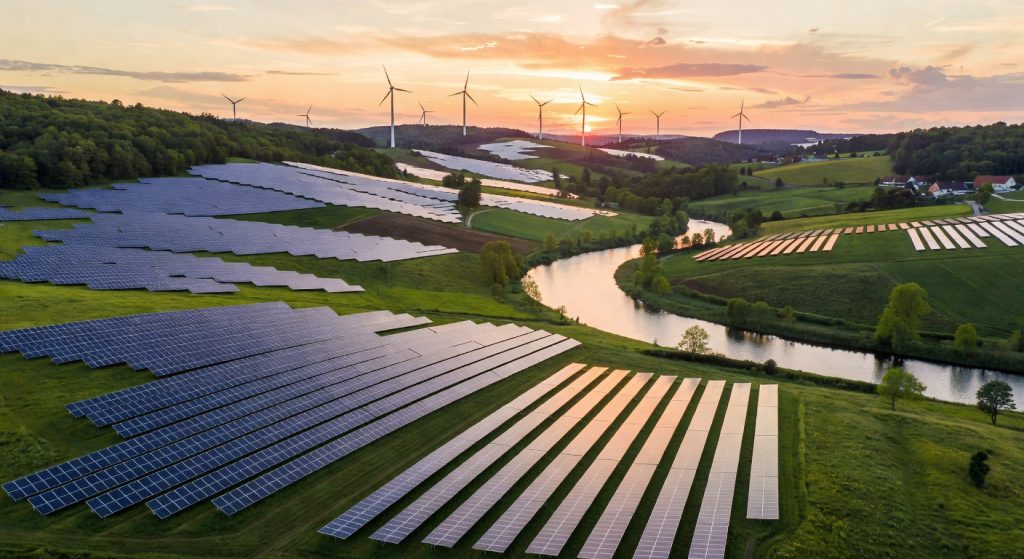
The global sustainability and ESG landscape is shifting faster than ever in 2026. Three major forces are converging: the expansion of carbon markets into new economies, a wave of regulatory reform reshaping corporate disclosure obligations, and the accelerating adoption of international reporting standards. For businesses, investors, and policymakers — particularly in Europe — understanding these developments is no longer optional. It is a strategic imperative.
India’s Carbon Market Goes Live — and It Changes the Global Picture
On March 24, 2026, India inaugurated the Indian Carbon Market Portal at the Prakriti 2026 summit, marking a landmark moment for global climate finance. The platform operationalizes India’s carbon trading ecosystem, creating a structured mechanism to channel capital into emissions reduction projects and support the country’s industrial transition. With India being the world’s third-largest emitter, a functioning domestic carbon market carries enormous weight for international climate ambitions.
This development is directly relevant to European businesses and investors. The EU Emissions Trading System (EU ETS) remains the world’s most mature carbon market, but India’s entry signals that carbon pricing is becoming a truly global instrument. As more economies adopt market-based mechanisms for decarbonization, the architecture of sustainable finance becomes more interconnected — and more complex to navigate. Companies with supply chains or operations in India will need to factor carbon costs into their long-term planning, while European financial institutions may find new opportunities in cross-border green business investment.
Alongside India’s platform, Spain-based Zelestra activated a 162 MW solar cluster to power pharmaceutical sector decarbonization — a concrete example of how renewable energy infrastructure is being deployed to meet corporate responsibility targets across hard-to-abate industries.
EU Simplifies CSRD and CSDDD — But Compliance Complexity Remains
Closer to home, the European Union adopted Directive (EU) 2026/470, introducing significant changes to both the Corporate Sustainability Reporting Directive (CSRD) and the Corporate Sustainability Due Diligence Directive (CSDDD). The reform raises reporting thresholds, extends implementation timelines, and simplifies certain requirements — a response to business community concerns about regulatory burden.
For many mid-sized European companies, this provides breathing room. However, simplification does not mean retreat. The EU’s commitment to mandatory ESG disclosure and supply chain due diligence remains firm. Member States must now transpose the directive into national law, meaning the specific shape of compliance obligations will vary across the bloc — adding a layer of jurisdictional complexity that businesses operating in multiple EU markets will need to manage carefully.
The reform also arrives at a moment of global regulatory fragmentation. In the United States, federal-level ESG disclosure progress has stalled, yet California is pressing ahead with an August 2026 deadline for Scope 1 and 2 emissions reporting under SB 253, and New York is advancing 2028 GHG disclosure legislation for large companies. For multinationals, this patchwork of rules — EU, US state, and emerging market requirements — demands agile and forward-looking compliance strategies.
ISSB Standards Emerge as the Global Baseline for Climate Disclosure
One of the most significant structural trends of 2026 is the rapid adoption of ISSB (International Sustainability Standards Board) standards as a global baseline for climate-related financial disclosures. The UK has already moved toward alignment, and now Korea has published a draft roadmap requiring mandatory sustainability disclosures for large listed companies from 2028, with Scope 3 GHG reporting phased in from 2030. Even Ethiopia has signaled adoption, underscoring the standards’ reach into emerging economies.
For European companies, this is broadly positive news. The EU’s own reporting framework shares significant overlap with ISSB standards, meaning that businesses already investing in robust sustainability reporting infrastructure are building transferable capabilities. The convergence around a common global language for climate risk and opportunity disclosure also strengthens the case for circular economy metrics and nature-related disclosures to follow a similar path of standardization.
Implications for European Businesses and Investors
Taken together, these developments point to a clear direction of travel:
- Carbon pricing is going global — European companies should monitor international carbon market developments as part of their transition risk assessments.
- Disclosure obligations are multiplying — even with EU simplification, the combination of CSRD, ISSB-aligned rules in export markets, and US state laws means reporting demands are rising overall.
- Standardization creates opportunity — companies that invest now in high-quality, comparable ESG data will be better positioned to access sustainable finance and build investor trust.
- Renewable energy deployment is accelerating — projects like Zelestra’s solar cluster demonstrate that industrial decarbonization is moving from strategy to infrastructure.
Key takeaway: 2026 is not a year of regulatory retreat — it is a year of recalibration. The fundamentals of the global sustainability agenda are strengthening, even as individual rules are adjusted. For businesses committed to genuine corporate responsibility, the message is clear: build resilient, transparent, and forward-looking ESG practices now, because the regulatory and market expectations will only grow.