Regenerative Farming Could Save the UK £150bn — And Europe Is Watching Closely
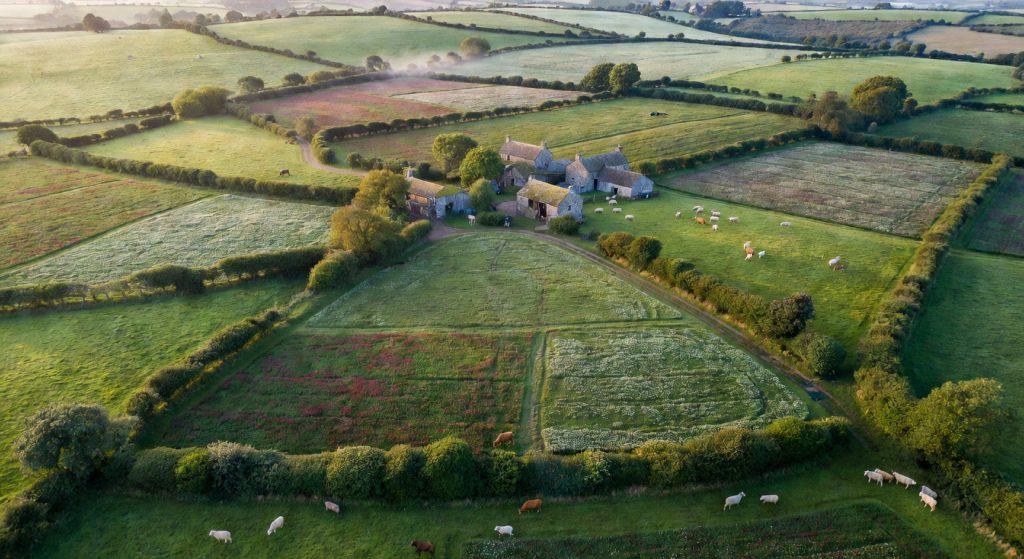
A landmark report published in March 2026 has put a striking number on the cost of inaction in sustainable agriculture: £150 billion. That is the estimated economic hit the United Kingdom could face if it fails to transition its food and farming systems toward regenerative practices. The report, titled The Sustainable Farming Dividend, makes a compelling case that the shift is not just an environmental imperative — it is a financial one. For European policymakers, farmers, and businesses watching from across the Channel, the findings carry significant weight.
The Numbers Behind the Regenerative Agriculture Case
The report’s headline figures are hard to ignore. Scaling regenerative agriculture across the UK could unlock £56 billion in natural capital by 2035, boost farm profitability by £1.6 billion annually, and meaningfully reduce dependence on imported fertilisers — a critical vulnerability given that the UK currently sources 60% of its nitrogen fertilisers from overseas. That dependency, exposed sharply by the energy crisis triggered by Russia’s invasion of Ukraine, represents both a supply chain risk and a climate liability.
Regenerative practices — including cover cropping, reduced tillage, agroforestry, and rotational grazing — build soil organic matter, sequester carbon, and reduce the need for synthetic inputs. This is not fringe agroecology: it is increasingly mainstream in European agricultural policy discussions, particularly as the EU’s Farm to Fork Strategy pushes for a 20% reduction in fertiliser use and a 50% cut in pesticides by 2030.
The report urges governments to provide policy certainty and financial incentives to accelerate the transition — a message that resonates strongly in a post-Brexit UK still designing its Environmental Land Management schemes, and equally in EU member states navigating the reformed Common Agricultural Policy.
Global Momentum: From Midwest Fields to Vertical Farms
The UK findings do not exist in isolation. Across the Atlantic, the Ecosystem Services Market Consortium (ESMC) highlighted co-investment programmes such as Midwest Feed and Regen Rice in its March 2026 newsletter, enabling companies to achieve shared Scope 3 emissions reductions through regenerative supply chains. US retailer ADUSA received a sustainability award for its collaboration with General Mills — a signal that supply chain sustainability is becoming a competitive differentiator, not just a compliance exercise.
Meanwhile, the plant factory and controlled environment agriculture sector is growing steadily. A new market report projects the global plant factory industry will reach $130 billion by 2030, growing at 1.8% annually, driven by advances in hydroponics, LED lighting, and demand for organic, locally grown produce. These technologies reduce water use, eliminate pesticide runoff, and insulate food production from climate volatility — making them a valuable complement to field-based regenerative systems, particularly for urban food supply chains across European cities.
The launch of Living Roots: The Promise of Perennial Foods in March 2026 adds another dimension to the conversation. Perennial crops — which do not need replanting each season — offer the potential to dramatically cut emissions, improve soil health, and diversify diets, aligning closely with the principles of agroecology and long-term food system resilience.
Implications for European Food Policy and Business
For European decision-makers, the convergence of these developments points toward a clear strategic direction:
- Reduce input dependency: The fertiliser vulnerability exposed in the UK applies equally across the EU. Regenerative and plant-based farming systems that minimise synthetic inputs are a form of geopolitical risk management.
- Reward outcomes, not just practices: Policy frameworks must evolve to incentivise measurable results — carbon sequestration, biodiversity gains, water quality — rather than prescriptive methods alone.
- Integrate technology with ecology: Controlled environment agriculture and field-based regenerative systems are not rivals; they are complementary tools for building resilient, sustainable food systems.
- Engage the private sector: As ESMC and General Mills demonstrate, corporate investment in regenerative supply chains is accelerating. European businesses that move early will gain credibility and competitive advantage.
The economic case for sustainable agriculture has never been clearer. What has historically been framed as a cost to business is increasingly revealed as a hedge against far greater costs — ecological collapse, supply chain disruption, and volatile input markets.
Key takeaway: The £150 billion warning from the UK is not a distant forecast — it is a near-term risk assessment. Europe has the policy architecture, the scientific knowledge, and growing private sector momentum to act. The question is no longer whether to transition to regenerative, resilient food systems. It is how fast, and who leads.