Europe’s Post-2030 Climate Architecture Takes Shape: What the New Consultations Mean for Business and Citizens
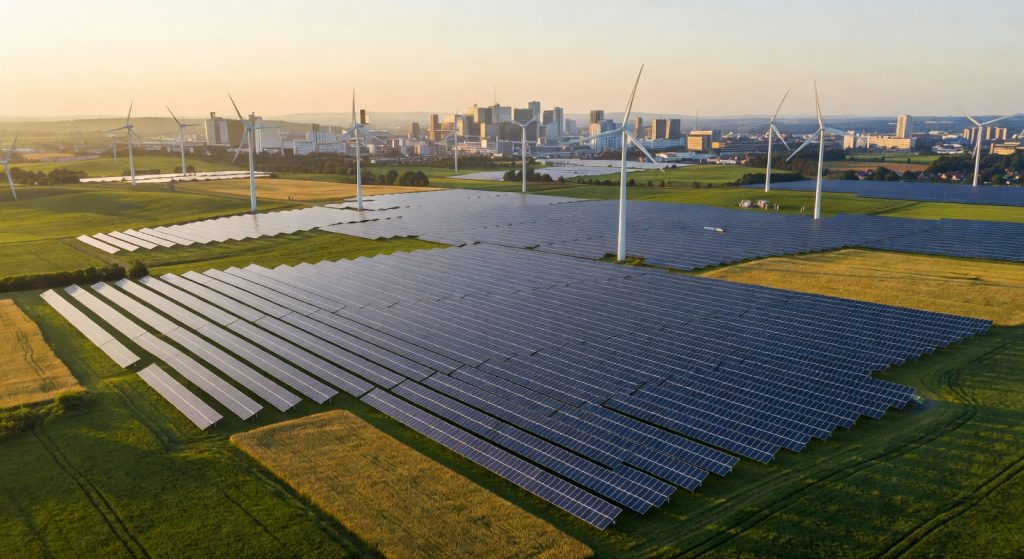
On March 20, 2026, the European Commission opened a landmark consultation process to define the post-2030 renewable energy framework — the next chapter of Europe’s clean energy transition. Building on the current binding target of 42.5% renewables by 2030 (with an ambition of 45%), the new framework aims to go further, embedding clean energy more deeply into power systems, transport, industry, and heating. A legislative proposal is expected before the end of 2026, alongside parallel revisions to energy efficiency rules and governance structures.
This moment arrives at a pivotal — and tense — juncture for EU climate policy. The European Green Deal, now five years old, is undergoing its first major review, revealing both genuine achievements and growing political friction over how fast and how far Europe should go.
A Green Deal at a Crossroads: Progress and Pushback
The five-year review of the European Green Deal paints a mixed picture. On the positive side, the EU has made measurable progress on emissions reductions, and the expansion of the EU Emissions Trading System (ETS) has generated over €200 billion in carbon market revenues — funds that can be redirected toward the clean energy transition and social support measures.
Yet the same review flags mounting concerns. Businesses and member states are pushing back against the administrative weight of sustainability reporting requirements, particularly the Corporate Sustainability Reporting Directive (CSRD) and the Sustainable Finance Disclosure Regulation (SFDR). Calls for simplification are growing louder, and the Commission is under pressure to reduce reporting burdens without gutting the transparency that investors and civil society depend on.
Meanwhile, the ETS itself faces uncertainty. Ongoing reviews and potential rule changes in 2026 are raising questions about long-term stability — a concern that directly affects carbon markets and the confidence of companies that have already made costly green investments. Early movers who bet on a stable regulatory roadmap now risk being penalised if the goalposts shift.
The Post-2030 Policy Puzzle: Renewables, Budget, and Industrial Strategy
The consultation launched this week is not happening in isolation. It is part of a broader effort to construct a coherent post-2030 policy architecture across several interconnected areas:
- Renewable energy targets beyond 2030, with a focus on sectoral integration — connecting clean power to transport electrification, green hydrogen for industry, and heat pumps for buildings.
- EU budget negotiations, where a proposal to allocate 35% of the next multiannual financial framework to climate-related spending is on the table — a significant lever for directing public investment.
- Industrial and circular economy legislation, including clean tech acceleration acts designed to keep European manufacturing competitive against subsidised rivals in the US and China.
- Revised CO₂ standards for cars and vans, debated at the EU Environment Council on March 17, 2026, which introduce greater technological flexibility while maintaining overall emission reduction goals — a nod to the automotive industry’s lobbying, but also a recognition that multiple pathways (including synthetic fuels) may coexist alongside battery electric vehicles.
Together, these pieces form the skeleton of Europe’s climate policy framework for the 2030s. The challenge is assembling them coherently, without creating contradictions or regulatory gaps that undermine investor confidence.
Implications: Stability, Simplification, and the Risk of Backsliding
The dominant theme running through all these developments is tension between ambition and manageability. European businesses, particularly SMEs, are struggling with overlapping and sometimes inconsistent environmental regulation. Simplification is a legitimate goal — but critics warn that rolling back rules on deforestation due diligence, delaying ETS provisions, or weakening sustainability reporting sends a damaging signal to markets and trading partners.
Globally, the stakes are high. As the US retreats from federal climate commitments and geopolitical competition over clean technology intensifies, the EU’s credibility as a climate leader depends on maintaining a clear, stable, and ambitious regulatory environment. Fragmentation or perceived backsliding could erode Europe’s soft power and its ability to shape international carbon markets and trade standards.
Key takeaway: The post-2030 consultations are an opportunity to future-proof Europe’s energy and climate framework — but only if policymakers resist short-term pressure to water down commitments. Citizens, businesses, and investors all benefit from clarity and consistency. The next few months of legislative drafting will reveal whether the EU can hold that line.