EU Climate Law Updated, Shipping Tax Stalls, and US States Hold the Line: What’s Shifting in Environmental Policy
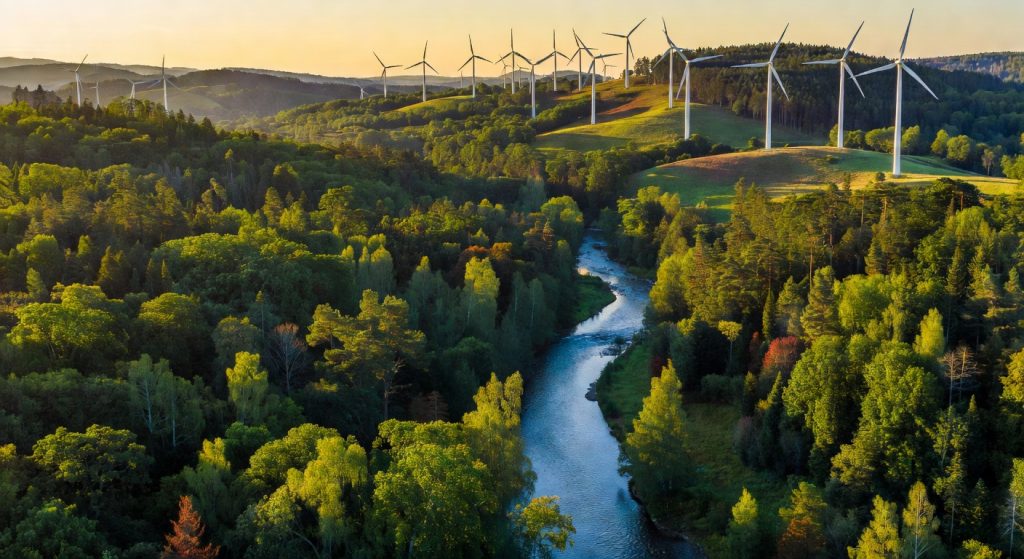
The global environmental policy landscape is rarely still, but the past week has delivered a particularly striking mix of progress, delay, and defiance. From Brussels to Washington, decisions made in legislative chambers and international bodies are reshaping the trajectory of climate action — sometimes in opposite directions. Here is what you need to know, and why it matters.
Europe Locks In Its Climate Ambition with Revised Climate Law
The most significant development from a European perspective is the formal adoption of amendments to the European Climate Law (Regulation EU 2021/1119) by the Council of the EU. Following the European Parliament’s approval on February 10, 2026, the revised regulation is now set to enter into force 20 days after its publication in the Official Journal of the EU.
The European Climate Law is the legal backbone of the EU’s commitment to becoming climate-neutral by 2050, with a binding intermediate target of reducing net greenhouse gas emissions by at least 55% by 2030 compared to 1990 levels. These amendments reinforce that architecture, signalling that the EU is not stepping back from its environmental policy commitments despite economic pressures and a shifting geopolitical context.
For citizens and businesses across the continent, this matters in practical terms: it keeps in place the regulatory certainty that drives investment in renewable energy, clean technology, and sustainable infrastructure. It also sends a message to international partners — and competitors — that Europe’s green transition is legally anchored, not merely aspirational.
The IMO’s Shipping Carbon Tax Delay: A Setback for Global Climate Coordination
Not all news from the international stage is encouraging. The UN International Maritime Organization (IMO) has postponed its decision on adopting a global carbon tax on shipping emissions by a full year. This is a meaningful blow to efforts to decarbonise one of the world’s most carbon-intensive sectors.
International shipping accounts for roughly 3% of global greenhouse gas emissions — comparable to the annual emissions of a major industrialised nation. A global carbon levy had been seen as one of the most effective tools to accelerate the sector’s transition toward cleaner fuels and technologies. The delay reflects the persistent difficulty of achieving consensus among member states with very different economic interests, from major shipping nations to developing countries concerned about trade costs.
From a European standpoint, this is particularly frustrating. The EU has already moved ahead with including shipping in its Emissions Trading System (ETS), meaning European-linked voyages are already subject to a carbon price. A fragmented international approach risks competitive distortions and undermines the kind of coordinated global action that the climate crisis demands. The IMO delay is a reminder that multilateral environmental governance remains one of the hardest problems in international policy.
US States Resist Federal Rollbacks — But Conservation Faces Real Threats
Across the Atlantic, the picture is one of sharp internal contradiction. More than 20 US states with clean electricity or net-zero targets are actively advancing climate policies, demonstrating that subnational momentum can survive — and even intensify — in the face of federal retreat. Colorado’s Senate, for instance, passed a resolution reaffirming its commitment to protecting the state’s 22 million acres of public lands and opposing accelerated oil and gas leasing.
Yet the threats to conservation and biodiversity are real and escalating. The Trump administration is advancing a proposal to repeal the Roadless Area Conservation Rule, a landmark protection covering 44 million acres of national forests from logging and road construction. If repealed, this would open some of America’s most ecologically sensitive landscapes to industrial exploitation — with consequences for carbon storage, water systems, and wildlife habitat that extend well beyond US borders.
- 44 million acres of national forest currently protected by the Roadless Rule
- 20+ US states maintaining active climate and clean energy targets
- 190 clean energy projects backed by UK ministers amid energy security concerns
What This All Means: Fragmentation Is the Defining Challenge
Taken together, these developments reveal a world in which environmental policy is becoming increasingly fragmented — between nations, between federal and subnational governments, and between ambition and implementation. Europe is consolidating its legal framework for climate action. The UK is accelerating renewable energy deployment. But international coordination on issues like shipping emissions is faltering, and in the United States, federal conservation protections are under direct threat.
For European decision-makers, this fragmentation creates both risk and opportunity. Risk, because global problems like climate change and biodiversity loss cannot be solved by one continent acting alone. Opportunity, because Europe’s regulatory leadership — from the Climate Law to the ETS — positions it to shape global standards if it engages strategically with allies at the subnational and national level worldwide.
The key takeaway: Progress on climate and environmental policy is real but uneven. The institutions and laws being built or defended today will determine whether the next decade of action is coherent enough to matter. Every delay, every rollback, and every reinforced commitment carries consequences that compound over time.