EU Rewrites the Rules on Car Emissions: What the 2026 CO₂ Standards Debate Means for Climate Policy
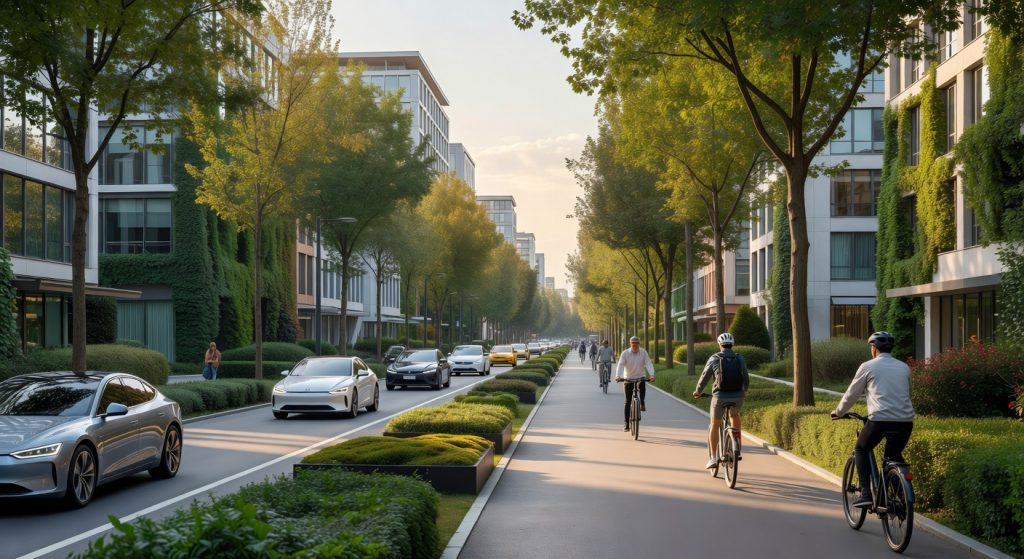
On March 17, 2026, EU environment ministers gathered to debate one of the most politically charged files on the European agenda: revised CO₂ emissions standards for cars and vans. The outcome of these negotiations will not only shape what vehicles Europeans drive in the coming decade, but also signal how serious the bloc remains about its legally binding climate commitments — and how far it is willing to bend them in the name of industrial competitiveness.
Flexibility vs. Ambition: What’s Actually Being Negotiated?
At the heart of the debate is a tension that has defined EU climate policy in recent years: how to maintain the 55% greenhouse gas emissions reduction target by 2030 — enshrined in the European Climate Law — while responding to mounting pressure from automakers and several member states who argue that the current trajectory is economically damaging.
The revised standards under discussion introduce greater technological flexibility, meaning that manufacturers may be given more room to meet emissions targets through a broader mix of technologies, rather than being pushed exclusively toward battery electric vehicles. This reflects a broader recalibration of the EU Green Deal approach, one that seeks to preserve core climate objectives while easing what many in industry describe as an unsustainable regulatory burden.
Critics, however, warn that flexibility without clear guardrails risks becoming a backdoor for delay. Environmental groups and several member states have stressed that any revision must not water down the 2030 target, which is itself already considered insufficient by scientists aligned with the Paris Agreement’s 1.5°C pathway.
A Pivotal Year for EU Climate Architecture
The vehicle emissions debate does not exist in isolation. The European Commission is simultaneously preparing post-2030 climate and energy rules, and 2026 has been identified internally as a decisive phase for the EU’s long-term climate architecture — particularly given major member state elections expected in 2027 that could shift political dynamics significantly.
On the financial side, negotiations on the EU’s next long-term budget for 2028–2034 are already underway. The Commission has proposed dedicating 35% of a nearly €2 trillion budget to climate and environment objectives — a substantial commitment, but one that will face fierce competition from defence, agriculture, and cohesion priorities.
Adding another layer, the newly proposed Industrial Accelerator Act aims to strengthen European manufacturing of clean technologies and introduce ‘Made in EU’ requirements in public procurement. This is part of a broader effort to ensure that Europe’s green transition generates jobs and industrial value at home, rather than ceding ground to competitors in the United States and China.
Businesses and Investors Are Calling for Clarity
One of the most consistent messages emerging from the private sector is a demand for predictability. Investors navigating sustainability reporting obligations under frameworks like the CSRD, and businesses planning capital expenditure around carbon markets and clean technology, are increasingly vocal about the costs of regulatory uncertainty.
The simplification agenda being pursued by the Commission — which includes streamlining sustainability reporting requirements and clarifying transition pathways — is broadly welcomed, but stakeholders caution that simplification must not become synonymous with weakening. The integrity of EU climate policy, including the EU Emissions Trading System and sector-specific carbon standards, depends on consistent, long-term signals.
- CO₂ standards for cars and vans are being revised with greater technological flexibility, while the 55% 2030 target remains legally binding.
- Post-2030 climate rules are entering a critical negotiation phase, with 2026 decisions likely to shape Europe’s trajectory for decades.
- 35% of the 2028–2034 EU budget is proposed for climate and environment — a record allocation now under political negotiation.
- The Industrial Accelerator Act links clean technology manufacturing to public procurement, aiming to keep the green economy in Europe.
What This Means for Europe’s Green Future
The decisions being made in Brussels right now — on vehicle standards, budget allocations, and industrial policy — will determine whether the EU’s green transition remains a credible global model or gradually loses its ambition under the weight of political compromise. For citizens, the stakes are tangible: air quality, energy costs, job markets, and the long-term livability of European cities all hang in the balance.
The key takeaway: Europe is not abandoning its climate commitments, but it is actively renegotiating how to meet them. The challenge for policymakers in 2026 is to ensure that flexibility serves innovation — not delay — and that the EU Green Deal emerges from this recalibration stronger, not hollowed out.