From Crisis to Catalyst: How the 2022 Energy Shock Turbocharged Europe’s Green Tech Revolution
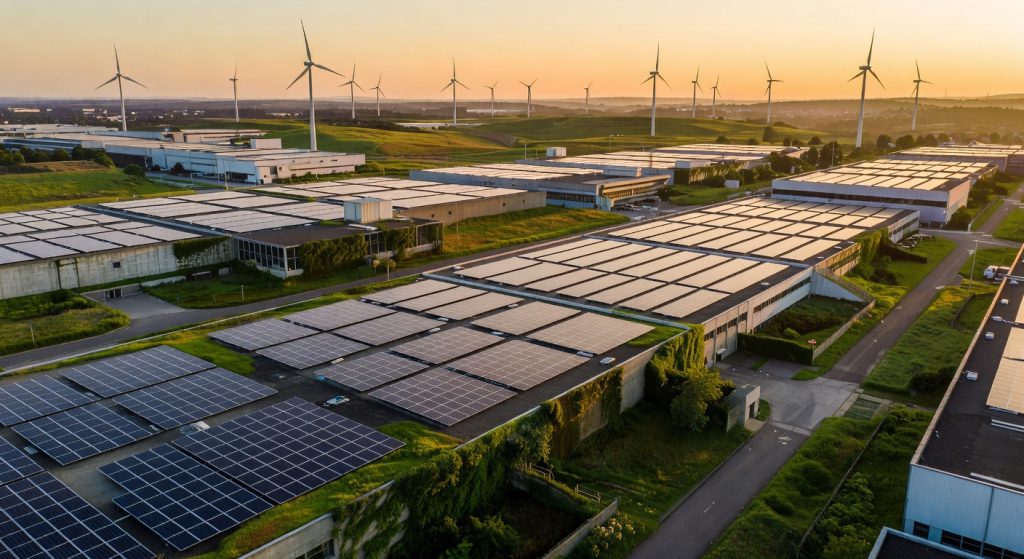
When Russia’s invasion of Ukraine sent natural gas prices soaring in February 2022, European households and industries faced an energy emergency unlike anything seen in decades. Governments scrambled, factories cut production, and citizens turned down thermostats. But beneath the pain, something unexpected was happening: a quiet acceleration of the clean energy transition that researchers are only now fully quantifying.
New research from the Centre for Economic Policy Research (CEPR) reveals a striking surge in green technology adoption following the 2022 energy crisis — measured through a telling proxy: hiring in green-tech-related roles. The effect was strongest in energy-intensive businesses operating in countries most dependent on natural gas, precisely the firms with the most to lose from fossil fuel volatility. The lesson is both sobering and hopeful: crises, when severe enough, can break the inertia that policy alone often cannot.
Record Investment and a Reshaping of the Global Cleantech Map
The momentum sparked by the crisis has not faded. Global cleantech investments reached a record $2.3 trillion in 2025, up 8% year-on-year, according to the latest industry data. Of that total, $1.2 trillion flowed into renewables and power grid infrastructure, while $893 billion went into electrified transport — a clear signal that electric mobility is no longer a niche bet but a mainstream industrial priority.
Europe stands out in this landscape. EU green innovation investments jumped 18% to $455 billion in 2025, driven by dual imperatives: accelerating the energy transition and reducing dependence on imported fossil fuels. This growth is happening despite significant headwinds, including shifting U.S. policy under the new administration and intensifying competition from Asian manufacturers in solar panels, batteries, and electric vehicles.
Asia — particularly China — continues to dominate manufacturing scale, but Europe is carving out a strategic niche in smart grid infrastructure, advanced storage, and the regulatory frameworks that the rest of the world will eventually need to adopt. The EU’s push for energy sovereignty is, in this sense, also a soft-power play for the future of global green tech standards.
The Next Frontier: Geothermal, AI Grids, and the Data Center Challenge
Looking ahead to 2026, the cleantech sector is being reshaped by two converging forces: the explosive growth of artificial intelligence and a renewed emphasis on decentralization and energy sovereignty.
Data centers — the physical backbone of the AI economy — are voracious energy consumers, and they are driving unexpected innovation. Advanced geothermal energy is gaining serious traction as a reliable, always-on power source for facilities that cannot tolerate intermittency. Companies like Fervo Energy are pioneering enhanced geothermal systems, while new discoveries such as the Zanskar geothermal resource are expanding the geographic potential of this technology beyond traditional volcanic regions.
On the grid side, innovations are moving fast. Solid-state transformers, AI-powered grid management tools from firms like DG Matrix and ThinkLabs, and precision sensors from companies such as Atomionics and Page Technologies are collectively making electricity networks smarter, more resilient, and better suited to the two-way flows of a renewables-heavy system. These are the building blocks of the smart cities of tomorrow — places where energy is generated, stored, and consumed with far greater intelligence than today.
Venture capital is tracking these trends carefully. While overall 2025 activity remained steady, investors are increasingly concentrating on later-stage, scalable solutions — a sign of a maturing market where proof-of-concept is no longer enough and commercial viability is the new benchmark.
What This Means for Europe’s Energy Future
The CEPR findings carry a pointed implication for policymakers: price signals work. The 2022 shock did in months what years of subsidy schemes and regulatory nudges had struggled to achieve. This does not mean that crises should be welcomed — the human and economic costs were enormous — but it does suggest that carbon pricing, energy taxes, and other mechanisms that make fossil fuels genuinely expensive can be powerful accelerants of green innovation.
For European citizens and businesses, the picture is one of genuine, if uneven, progress. The energy transition is accelerating, investment is at record levels, and the technology pipeline — from geothermal to grid AI — is more robust than ever. The challenge now is execution: building out infrastructure fast enough, training enough workers in green-tech roles, and maintaining the political will to stay the course even as energy prices stabilize and the urgency of 2022 fades from memory.
Key takeaway: The 2022 energy crisis was a painful but transformative turning point for European green technology adoption. With record investment, maturing cleantech markets, and a wave of grid and geothermal innovation on the horizon, the clean energy transition is accelerating — but sustaining that momentum will require deliberate policy choices, not just the pressure of the next emergency.