Bangladesh’s 2030 Farming Target Signals a Global Shift Toward Climate-Resilient Food Systems
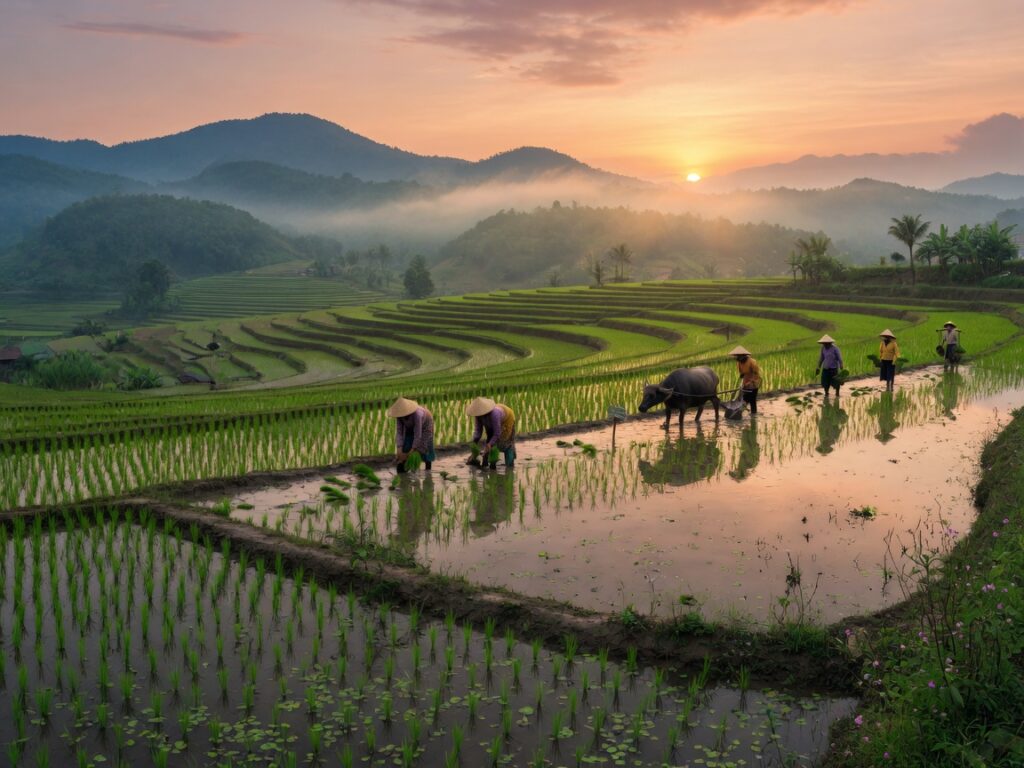
Bangladesh’s agriculture ministry has announced a target to expand sustainable farming practices to 50.01% of agricultural land by 2030, up from the current 44.37%. Framed explicitly as a climate-resilience and food-security strategy, the plan includes a shift toward greener subsidies and climate-adapted production systems. While the announcement comes from South Asia, it lands at a moment when sustainable agriculture is undergoing rapid transformation worldwide — from carbon markets to controlled-environment farming — and Europe has a direct stake in how these shifts unfold.
Why Bangladesh’s Target Matters Beyond Its Borders
Bangladesh is one of the world’s most climate-vulnerable nations, with rising sea levels, salinity intrusion, and erratic monsoons already disrupting rice and vegetable production. Its decision to formally target half of its farmland for sustainable practices is significant not just domestically but as a policy signal to other climate-exposed economies. The move toward agroecology-aligned subsidy reform — rewarding farmers for resilience-building practices rather than input-intensive yields — mirrors debates happening within the EU’s Common Agricultural Policy, where subsidy conditionality tied to environmental outcomes remains contentious.
For European food companies and importers sourcing from South Asia, this shift matters practically: climate-adapted supply chains, verified sustainability credentials, and traceability are increasingly prerequisites for market access under frameworks like the EU Deforestation Regulation and forthcoming due-diligence rules. Bangladesh’s policy could position it favorably as a supplier able to demonstrate credible sustainability transitions.
Carbon Markets and Methane Deals Are Reshaping Farm Economics
Parallel to policy shifts, market mechanisms are accelerating change in how food is produced. Google and Mitti Labs recently finalized a deal for one million rice methane credits, reflecting growing corporate appetite for verified emissions reductions embedded directly in food supply chains. Rice cultivation is responsible for roughly 10% of global agricultural methane emissions, making methane-reduction credits a increasingly attractive tool for both climate accounting and farmer income diversification.
Similarly, Agreena’s announcement of a 4.45 million-tonne soil carbon agreement in Kazakhstan illustrates how carbon markets are extending into new geographies, incentivizing regenerative practices such as reduced tillage and cover cropping. These developments matter for European stakeholders because:
- EU-based food and retail companies are major buyers of verified carbon credits to meet net-zero commitments.
- Regenerative agriculture financing models piloted abroad often inform EU carbon farming certification schemes, currently being finalized under the bloc’s Carbon Removals and Carbon Farming framework.
- Methane reduction in rice and livestock systems directly supports the EU’s Farm to Fork emissions targets, given the bloc’s reliance on imported agricultural commodities.
Innovation in Inputs and Controlled-Environment Farming
Beyond carbon markets, innovation is reshaping how food is grown and fertilized. Reports of food-derived fertilizers achieving organic certification, alongside continued interest in algae-based fertilizers and low-input farming techniques, point to a broader push to reduce dependency on synthetic, fossil-fuel-derived agrochemicals. This is particularly relevant in Europe, where fertilizer price volatility since 2022 has renewed interest in domestically produced bio-based alternatives.
Meanwhile, vertical farming continues attracting investment and technical expertise, exemplified by Affinor Growers’ appointment of a biotech advisor to accelerate controlled-environment agriculture development. As European cities seek to shorten food supply chains and reduce transport emissions, localized production models — even if still a small share of total food output — are gaining strategic relevance for urban food security and supply-chain sustainability.
Implications for Food Systems and Consumers
Collectively, these developments suggest that the transition toward sustainable food systems is no longer confined to policy documents — it is increasingly embedded in market mechanisms, corporate procurement, and technological investment. For European businesses, this means growing pressure to demonstrate verified sustainability credentials across sourcing regions, from South Asian rice paddies to Central Asian soils. For consumers, it may translate into more diverse sustainable and plant-based product offerings as companies diversify supply chains to reduce climate and regulatory risk.
Key takeaway: Bangladesh’s 2030 sustainable farming target is one piece of a broader global realignment, where climate policy, carbon markets, and agricultural innovation are converging. For Europe, staying attentive to these shifts is not optional — it’s central to meeting climate targets, securing resilient supply chains, and supporting the next generation of sustainable food systems worldwide.