Europe’s Next CAP: A More Targeted Push for Sustainable Agriculture After 2027
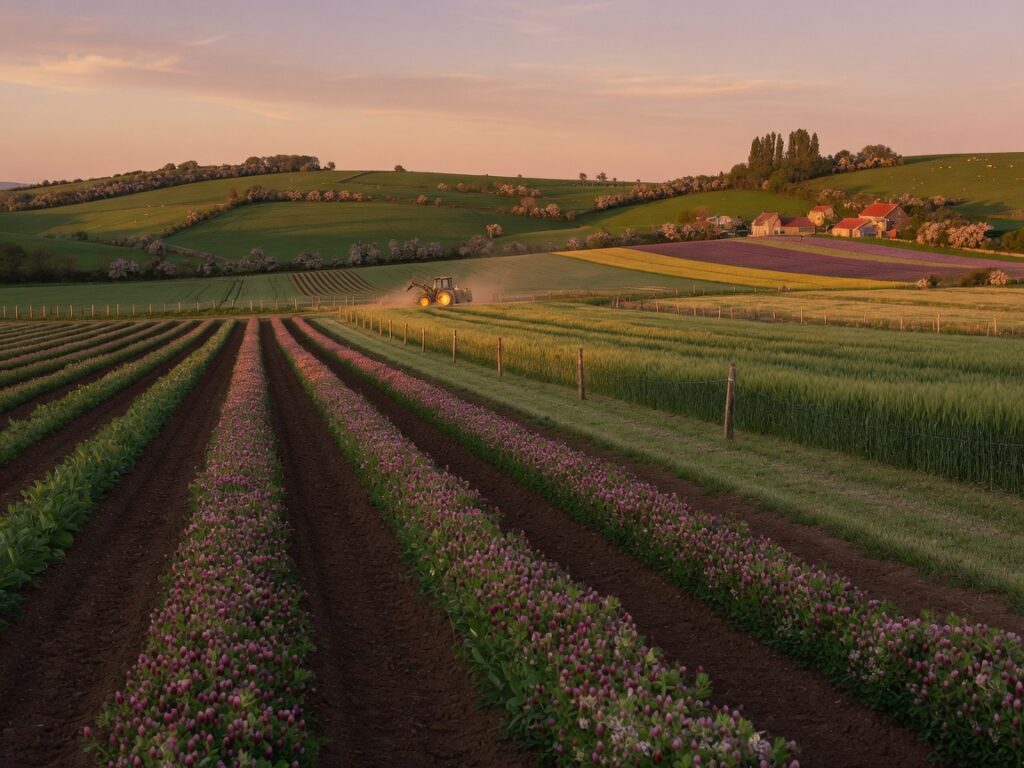
Europe’s farming policy is entering a new phase. The European Commission has unveiled its proposal for the Common Agricultural Policy (CAP) covering 2028–2034, marking one of the most consequential shifts in EU agricultural policy in years. At its core is a simple ambition: make farm support more targeted, more resilient to shocks, and more clearly tied to environmental performance. For citizens, farmers, and businesses alike, the proposal signals where European sustainable agriculture is heading over the next decade — and how food systems across the continent may need to adapt.
A Simpler, More Resilient CAP
The headline change is structural. The Commission wants to simplify the notoriously complex CAP framework while building in stronger shock absorbers for an increasingly volatile world. A new Unity Safety Net, worth €6.3 billion, is designed to help farmers weather market disruptions, extreme weather events, and geopolitical shocks — from droughts to energy price spikes to trade disputes.
Alongside this crisis reserve, the proposal introduces a new Farm Stewardship requirement for anyone receiving income support. In practice, this ties direct payments more explicitly to environmental performance, rather than treating income support and green conditions as separate tracks. It’s a subtle but important shift: sustainability is being woven into the baseline definition of what it means to be a supported farmer in the EU, not treated as an optional add-on.
This matters because the previous CAP period drew criticism — from auditors, NGOs, and farmers themselves — for being simultaneously too bureaucratic and too weak on measurable environmental outcomes. The 2028–2034 framework is an attempt to correct both problems at once.
What Actually Makes Agri-Environmental Schemes Work
Policy redesign alone won’t guarantee results. A recent EU report on sustainable farming guidance offers a useful reality check, identifying six factors that determine whether agri-environmental and climate schemes actually deliver: clear, practical guidance for farmers; adequate financial incentives; stronger uptake mechanisms; regional targeting rather than one-size-fits-all rules; result-based payments tied to actual outcomes; collective, landscape-scale action; and robust monitoring.
This aligns with a broader trend across EU sustainability guidance: promoting agroecology-aligned practices that are practical rather than purely aspirational. Crop rotation with legumes, mixed cropping, cover crops, conservation tillage, wetland rewetting, and lower-input livestock systems are increasingly framed not as niche alternatives but as mainstream tools within the Green Deal pathway. These practices tend to improve soil health, reduce input costs over time, and build resilience against the increasingly erratic weather patterns European farmers now face — from Mediterranean droughts to Central European flooding.
The emphasis on regional targeting and result-based payments is particularly notable. It suggests Brussels has absorbed lessons from earlier CAP cycles, where blanket subsidies sometimes rewarded compliance on paper rather than genuine environmental improvement on the ground.
Supply Chains, Protein Diversification, and Business Risk
Beyond farm gates, the sustainability conversation is increasingly a boardroom one. Investor analysis is flagging that companies exposed to animal agriculture supply chains face growing climate risk — from feed price volatility to water stress to regulatory tightening — while missing the resilience benefits of diversifying toward plant-based protein sources.
This connects directly to supply chain sustainability strategy. Food companies and retailers across Europe are under pressure from regulators, investors, and consumers to map and reduce climate exposure throughout their sourcing chains. Plant-based diversification isn’t just a consumer trend anymore; it’s increasingly framed as a risk-management and growth strategy, particularly as extreme weather disrupts traditional livestock and feed-crop production in parts of Southern and Eastern Europe.
Implications for Farmers, Businesses, and Citizens
- Farmers will likely face new conditions attached to income support, requiring earlier planning around stewardship practices and documentation.
- Agri-food businesses should anticipate closer scrutiny of supply chain resilience, particularly regarding livestock-dependent sourcing.
- Regional and local authorities gain more influence, as targeted, place-based schemes replace uniform EU-wide rules in some areas.
- Citizens and consumers can expect gradual shifts in the food landscape, including greater visibility of plant-based options and regenerative-labeled products.
Globally, the EU’s approach offers a test case other regions are watching closely. As countries from the US to parts of Asia grapple with how to reform farm subsidy systems amid climate pressure, the CAP’s blend of crisis-proofing and stewardship conditionality could become an influential template — provided it avoids the implementation pitfalls that hampered earlier reforms.
Key takeaway: The post-2027 CAP proposal represents a genuine attempt to align European farm support with climate resilience and measurable environmental outcomes, but its success will hinge on execution — clear guidance, fair incentives, and real monitoring — rather than the ambition of the text alone.