Europe’s Electrification Push: What the EU’s New Energy Plan Means for Business, ESG, and the Climate
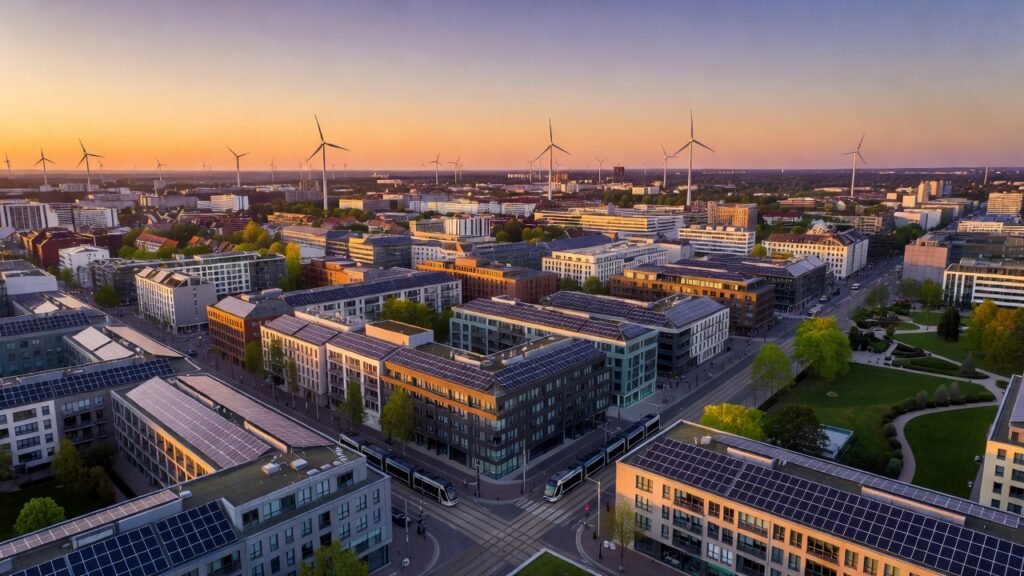
The European Commission is quietly assembling one of its most ambitious energy packages in years. According to Reuters, Brussels is drafting a comprehensive electrification plan designed to shift large parts of the EU economy away from oil and gas — a move accelerated by recent geopolitical disruption linked to tensions in the Middle East. If adopted, the package could reshape energy costs, infrastructure investment, and corporate sustainability strategies across the continent.
Electrification as a Strategic Imperative — Not Just a Climate Goal
For years, electrification has been framed primarily as a climate solution. But the EU’s latest push signals a broader rationale: energy security. With oil and gas supply chains repeatedly exposed to geopolitical shocks — from the Russia-Ukraine war to the Iran conflict — switching industry, transport, and buildings to electricity generated from domestic renewables is increasingly seen as a matter of economic resilience.
For businesses with active ESG commitments, this shift carries significant implications. Companies that have already invested in electrifying their operations — from heat pumps in facilities to electric vehicle fleets — are likely to benefit from lower long-term energy costs and improved alignment with incoming EU policy. Those still dependent on gas face growing transition risk, a factor that sustainable finance analysts and institutional investors are watching closely.
The plan also arrives as EU scientists confirmed that Western Europe experienced its warmest June on record in 2025, with an extreme heatwave disrupting power supplies and forcing school closures across multiple countries. Climate resilience is no longer a future consideration — it is a present business risk.
Carbon Pricing Expands: Waste Incineration and the Circular Economy Signal
Alongside the electrification agenda, the EU is moving to bring waste incineration plants inside the bloc’s Emissions Trading System (ETS). Under this proposal, operators would be required to purchase carbon allowances for every tonne of CO₂ their facilities emit — a cost that would likely be passed on to municipalities and waste management companies.
While this will increase short-term costs, the policy sends a clear long-term signal: burning waste will become progressively more expensive, strengthening economic incentives for recycling, waste reduction, and circular economy practices. For green business leaders, this is a structural opportunity. Companies that invest now in waste minimisation, material recovery, and sustainable packaging will be better positioned as carbon costs rise.
This move is consistent with the EU’s broader strategy of using carbon pricing to internalise environmental costs — a cornerstone of corporate responsibility frameworks and a growing expectation from ESG-focused investors and rating agencies.
Supply Chain Tensions and the Renewable Rollout Dilemma
Not every development this week pointed in a straightforwardly positive direction. Reuters also reported that EU funding restrictions on Chinese-made inverters — a critical component in solar installations — could slow or halt renewable energy projects in poorer European countries that rely heavily on public subsidies. This highlights a genuine tension at the heart of European energy policy: supply-chain security versus the speed of the clean-energy transition.
For sustainability professionals and ESG analysts, this is a reminder that the path to net zero is rarely linear. Procurement decisions, geopolitical considerations, and industrial policy all interact in ways that can create unexpected bottlenecks. Meanwhile, in Asia, Indonesian state energy firm Pertamina and Boeing signed a memorandum of understanding to develop sustainable aviation fuel (SAF), underscoring that the global race for low-carbon industrial solutions is intensifying well beyond Europe’s borders.
Implications for ESG Strategy and Sustainable Finance
Taken together, this week’s developments point to several clear priorities for organisations navigating the sustainability landscape:
- Electrification readiness is becoming a core ESG metric — companies should assess their exposure to gas dependency and accelerate transition planning.
- Carbon pricing risk is expanding to new sectors, including waste management; circular economy investments are increasingly a financial hedge, not just an ethical choice.
- Climate resilience must be embedded in operational planning — record heatwaves are already causing measurable business disruption across Europe.
- Supply chain due diligence on clean-tech components is becoming as important as the technology choices themselves.
Key takeaway: Europe’s electrification agenda is accelerating, driven by a convergence of climate urgency, energy security concerns, and expanding carbon regulation. For businesses, investors, and policymakers, the window to align strategies with this new reality is narrowing — and the costs of inaction are rising on every front.