Europe’s Clean Energy Push: Offshore Wind, Solar, and Grid Storage Reach New Milestones
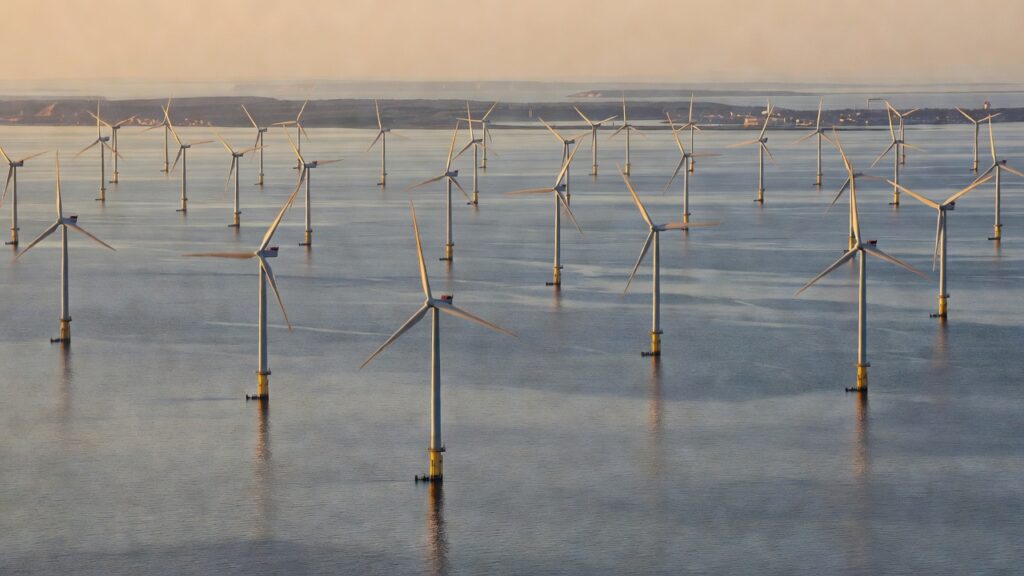
Europe’s clean energy transition is no longer a distant ambition — it is being hammered into the seabed, bolted to hillsides, and wired into battery banks across the continent. A wave of recent project milestones in offshore wind, utility-scale solar, and grid-scale storage signals that the infrastructure backbone of a post-fossil-fuel economy is taking tangible shape. For citizens, businesses, and policymakers alike, these developments carry real consequences for energy prices, grid reliability, and industrial competitiveness.
Wind and Solar: Generation Capacity Keeps Growing
In Germany, Vattenfall has installed the first monopile for the Nordlicht I offshore wind project, marking a key construction milestone for one of the country’s next-generation offshore assets. Meanwhile, the Nachtsheim-Luxem onshore wind farm has been formally commissioned, adding further capacity to Germany’s already substantial wind fleet. Together, these projects reflect a broader European commitment to scaling renewable energy generation even as grid integration challenges persist.
Across the Channel, the UK has granted development consent for the FVS Dean Moor Solar Farm, a 150 MW utility-scale solar project in Cumbria. The approval is a meaningful signal that permitting processes — long a bottleneck for clean energy deployment — are beginning to move faster. A 150 MW solar installation can power tens of thousands of homes and contribute meaningfully to regional electricity supply at lower marginal cost than gas peakers. As European governments streamline planning rules under frameworks like the EU’s revised Renewable Energy Directive, project delivery timelines are compressing, which matters enormously for meeting 2030 climate targets.
Storage: The Enabling Layer the Grid Has Been Waiting For
Generation alone does not make a resilient energy system. The real game-changer emerging from this latest round of investments is grid-scale storage, which allows surplus wind and solar output to be captured and dispatched when demand peaks or the sun sets.
In the Netherlands, Vopak has taken a final investment decision on a 200 MW / 800 MWh battery energy storage system (BESS) — one of the largest such projects in Western Europe. Separately, Greenvolt has signed an agreement with BYD Energy Storage for what is shaping up to be one of Europe’s biggest BESS deployments. These are not pilot projects; they are commercial-scale infrastructure bets that reflect growing confidence in storage economics.
Beyond batteries, the World Bank has approved US$265 million in financing for the Ifahsa pumped hydropower storage project in Morocco — a reminder that resource management and water-linked energy solutions remain critical, particularly across the Mediterranean region where climate stress on water systems is already acute. Pumped hydro, which moves water between reservoirs to store and release energy, is the world’s most established form of long-duration storage and will be essential for balancing grids with high shares of variable renewables.
Hydrogen and Industrial Decarbonization Enter the Investment Phase
Beyond power generation and storage, hydrogen is moving from policy document to construction site. Air Liquide has taken a final investment decision on a 200 MW electrolyser project in Rotterdam, with TotalEnergies signed as an offtaker — a structure that de-risks the investment and points toward a maturing green hydrogen market. Rotterdam’s port complex is one of Europe’s largest industrial clusters, and electrolysers of this scale can begin displacing fossil-derived hydrogen in refining, chemicals, and eventually shipping.
Parallel research advances are also pointing toward cheaper hydrogen production methods and solar-driven approaches to water purification and resource recovery, suggesting that the innovation pipeline supporting industrial decarbonization remains active well beyond current commercial deployments.
What This Means for Europe’s Energy Future
Taken together, these developments paint a picture of an energy system in structural transition. Key implications include:
- Lower long-run electricity costs as more zero-marginal-cost renewable energy enters the grid, supported by storage that smooths price volatility.
- Greater grid resilience through geographic and technological diversification — offshore wind, onshore wind, solar, batteries, and pumped hydro each respond differently to weather and demand patterns.
- Industrial competitiveness anchored in domestic clean energy and green hydrogen, reducing exposure to fossil fuel import price shocks.
- Cross-border opportunity, with North African projects like Ifahsa potentially feeding into future EU energy import corridors.
The key takeaway: Europe’s clean energy buildout is no longer waiting for technology breakthroughs — it is executing at scale. The convergence of offshore wind expansion, utility solar permitting reform, commercial battery storage, and green hydrogen final investment decisions in a single news cycle suggests the transition has entered an accelerating delivery phase. For citizens, that means cleaner, more stable power. For businesses, it means both opportunity and urgency to align with the infrastructure being built right now.