EU Green Deal at Full Speed: What 168 Initiatives Mean for Business and Citizens in 2025
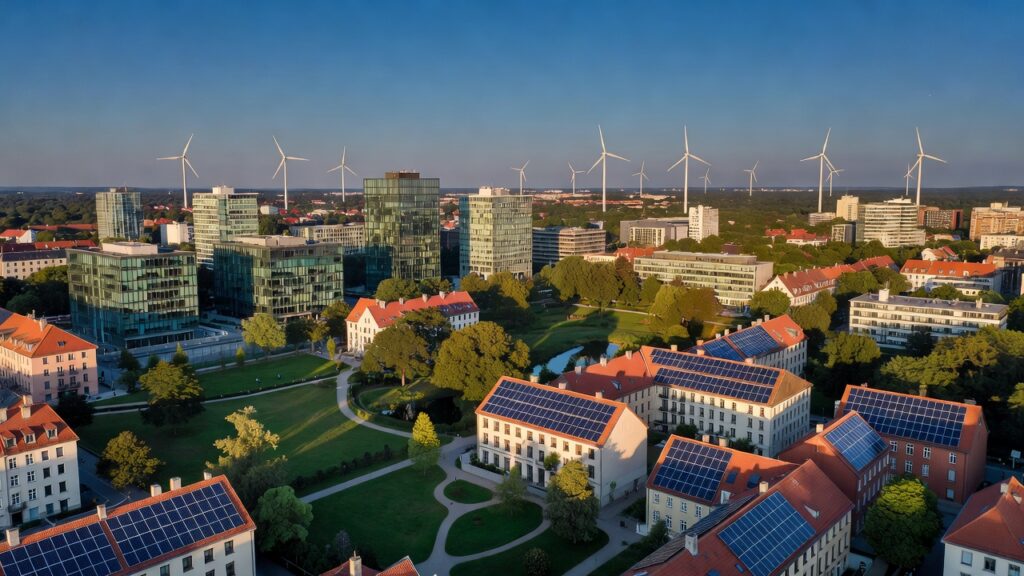
The European Green Deal was never just a slogan. Since its launch in 2019, it has quietly become the most comprehensive climate policy architecture in the world — and in 2025, the emphasis has shifted from ambition to execution. With 168 initiatives proposed by January 2025, of which 98 have already been adopted and 37 are still under negotiation, the EU is now deep in the implementation phase of a regulatory transformation that touches every sector of the European economy.
From Vision to Regulation: The Scale of the Green Deal Machine
It is easy to lose sight of how far-reaching the EU Green Deal has become. What started as a headline political commitment under Commission President Ursula von der Leyen has evolved into a sprawling legislative ecosystem spanning more than 150 policy measures — covering energy, transport, buildings, agriculture, biodiversity, finance, and industrial production.
For businesses, this means a rapidly changing compliance landscape. Sustainability reporting obligations under the Corporate Sustainability Reporting Directive (CSRD), new product design standards, greener procurement rules, and cleaner supply chain requirements are no longer future concerns — they are present-day operational realities. For citizens, the Green Deal’s reach is equally tangible: it shapes the cost of heating a home, the price of a plane ticket, and the energy bill at the end of the month.
The sheer volume of legislation also signals something important: the era of debating whether Europe should act on climate is over. The debate now is about how fast, at what cost, and with what degree of social fairness.
Carbon Pricing Gets Wider — and Harder to Ignore
At the heart of the EU’s climate policy sits carbon pricing, and it is expanding in both scope and bite. The EU Emissions Trading System (EU ETS) — the world’s largest carbon market — has been extended to cover buildings and road transport through the new ETS II mechanism. This means that fuel suppliers for heating and transport will soon face a direct carbon cost, which will inevitably filter through to end consumers.
Meanwhile, the Carbon Border Adjustment Mechanism (CBAM) is on track to become fully operational by 2026. Designed to prevent carbon leakage — the risk that European industries relocate to countries with weaker climate rules — CBAM places a carbon price on imports of steel, cement, aluminium, fertilisers, electricity, and hydrogen. For trading partners from Turkey to China, this is already reshaping export strategies and investment decisions.
Together, these two instruments represent a fundamental shift: carbon is no longer an externality in European markets — it is a cost of doing business. Companies that have not yet integrated carbon pricing into their financial planning are running behind.
Clean Industry, Raw Materials, and the Race for Net-Zero Manufacturing
The Green Deal’s industrial agenda is equally ambitious. The Net-Zero Industry Act and the Critical Raw Materials Act are pushing Europe to build domestic capacity in solar panels, wind turbines, batteries, heat pumps, and electrolysers — the physical backbone of the clean energy transition. Grid expansion, infrastructure investment, and raw-material security have become strategic priorities, not just environmental ones.
This creates a dual reality for European firms. On one side, compliance costs are rising — stricter emissions standards, mandatory sustainability disclosures, and supply chain due diligence requirements demand investment in systems, data, and expertise. On the other, the clean-tech buildout represents one of the largest investment opportunities of this decade, with billions in public and private capital flowing toward renewable energy, energy efficiency, and green manufacturing.
What This Means for You — Whether You Run a Company or Pay an Energy Bill
The practical implications of the Green Deal’s implementation phase are broad:
- For businesses: Sustainability reporting is no longer optional for large companies, and due diligence on supply chains is becoming law. Early movers on decarbonization are gaining competitive advantage in procurement and access to green finance.
- For investors: Carbon markets and clean-tech sectors are increasingly central to portfolio strategy. The CBAM will reshape global trade flows and affect valuations in carbon-intensive industries.
- For citizens: The extension of carbon pricing to transport and heating will affect household costs, though the EU has established a Social Climate Fund to cushion the impact for vulnerable households.
- For policymakers outside Europe: The CBAM is a signal that the EU will use its market power to export climate standards — a development with significant geopolitical implications.
Key takeaway: The EU Green Deal has moved beyond political declaration into a dense, operational regulatory framework that is reshaping costs, investment flows, and competitive dynamics across Europe and beyond. With carbon markets widening, sustainability reporting tightening, and clean-industry policy accelerating, 2025 is the year when the Green Deal stops being a plan and becomes the new normal.