EU Emissions Trading Reform and the AI Data Center Backlash: What ESG Leaders Need to Know
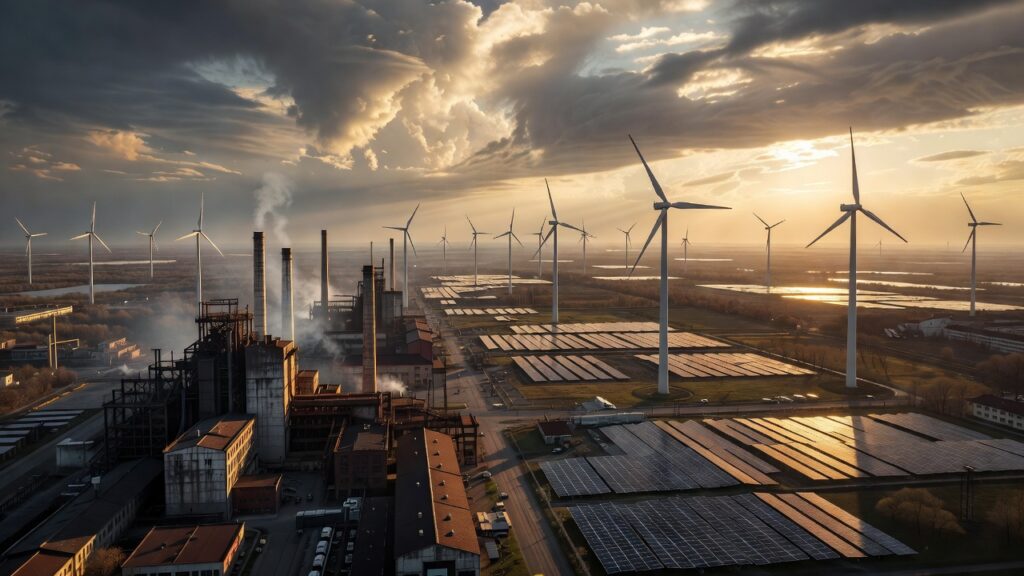
Two major fault lines in global sustainability policy cracked open this week — one in Brussels, one across the United States — and together they are reshaping the landscape for corporate ESG strategies, sustainable finance, and green business planning. The European Commission proposed sweeping reforms to the EU Emissions Trading System (ETS), while New York became the first U.S. state to impose a moratorium on large data center construction. These are not isolated events. They are signals of a deeper reckoning with how societies balance economic growth, technological ambition, and environmental responsibility.
EU Emissions Trading Reform: Flexibility or Backsliding?
The European Commission’s proposed overhaul of the EU ETS — Europe’s flagship carbon pricing mechanism and the world’s largest emissions trading market — introduces a significant policy pivot. Under the new framework, industries would be permitted to emit CO2 for a longer period before facing full carbon costs, while receiving increased financial support for clean technology investments. The reform is framed as a pragmatic response to industrial competitiveness concerns, particularly as European manufacturers face pressure from lower-cost producers in Asia and North America.
For sustainability and ESG professionals, the implications are complex. On one hand, enhanced funding for green innovation could accelerate the circular economy transition and unlock new flows of sustainable finance toward decarbonisation projects. On the other, extending emissions flexibility risks weakening the carbon price signal that has historically driven corporate responsibility commitments and low-carbon investment decisions.
- Sustainable finance flows tied to EU Taxonomy-aligned assets may face recalibration as ETS benchmarks shift.
- Corporate ESG reporting — particularly under the CSRD — will need to account for updated emissions baselines and transition timelines.
- Green business models built around early decarbonisation could gain a competitive edge as laggards benefit from extended flexibility windows.
The reform reflects a broader European tension: maintaining climate ambition while preserving industrial capacity. Whether it represents a pragmatic bridge or a dangerous compromise will depend heavily on how the additional clean tech funding is deployed and governed.
The Data Center Revolt: When Green Tech Meets Community Resistance
Across the Atlantic, a different kind of sustainability crisis is unfolding. New York State has enacted a one-year moratorium on large new data center construction, citing rising power costs, water strain, and disproportionate burdens on local communities — all consequences of the explosive demand driven by artificial intelligence infrastructure. On the same weekend, coordinated protests are taking place across at least 125 U.S. locations, organised by opponents of rapid data center buildout.
This grassroots resistance exposes a critical blind spot in the green business narrative: the assumption that digital infrastructure is inherently sustainable. Data centers consume enormous quantities of electricity and water. A single large hyperscale facility can use millions of litres of water daily for cooling and draw power equivalent to a small city. As AI workloads intensify, so does their environmental footprint — and the communities hosting these facilities are increasingly unwilling to absorb the costs.
For ESG investors and corporate responsibility officers, this trend demands urgent attention. Scope 2 and Scope 3 emissions linked to digital operations are coming under greater scrutiny. Companies that rely heavily on cloud computing and AI tools will need to demonstrate that their technology partners meet credible sustainability standards — or risk reputational and regulatory exposure.
A New Soil Science Warning and the Limits of What We Know
Adding to this week’s sustainability complexity, results from the world’s longest-running soil warming experiment have surfaced an unexpected climate concern, underscoring how much uncertainty remains in climate science. While details continue to emerge, findings from long-term soil studies consistently point to risks around carbon release from warming soils — a feedback loop that could undermine even the most ambitious net-zero strategies if not factored into corporate and policy planning.
This is a reminder that sustainable finance frameworks and ESG risk models must remain adaptive, incorporating emerging science rather than relying solely on established carbon accounting methodologies.
Implications for ESG Strategy and Sustainable Business
Taken together, this week’s developments point to three urgent priorities for sustainability leaders:
- Monitor EU ETS reform closely: Changes to carbon pricing architecture will directly affect transition risk assessments, green bond eligibility, and long-term decarbonisation roadmaps.
- Audit digital infrastructure sustainability: AI-driven operations carry hidden environmental costs. Proactive disclosure and supplier engagement on energy and water use are becoming non-negotiable for credible ESG reporting.
- Engage with communities, not just regulators: The data center backlash shows that social licence to operate is as critical as regulatory compliance. Corporate responsibility must extend to the communities bearing the physical burden of the green and digital transition.
Key takeaway: The week of 14 July 2026 crystallised a defining challenge for sustainable business: the transition to a low-carbon, technology-driven economy is generating its own contradictions. Navigating them will require ESG strategies that are simultaneously more flexible, more honest about trade-offs, and more deeply rooted in community and scientific realities.