EU Locks In 90% Emissions Cut by 2040: What the New Climate Target Means for Europe and the World
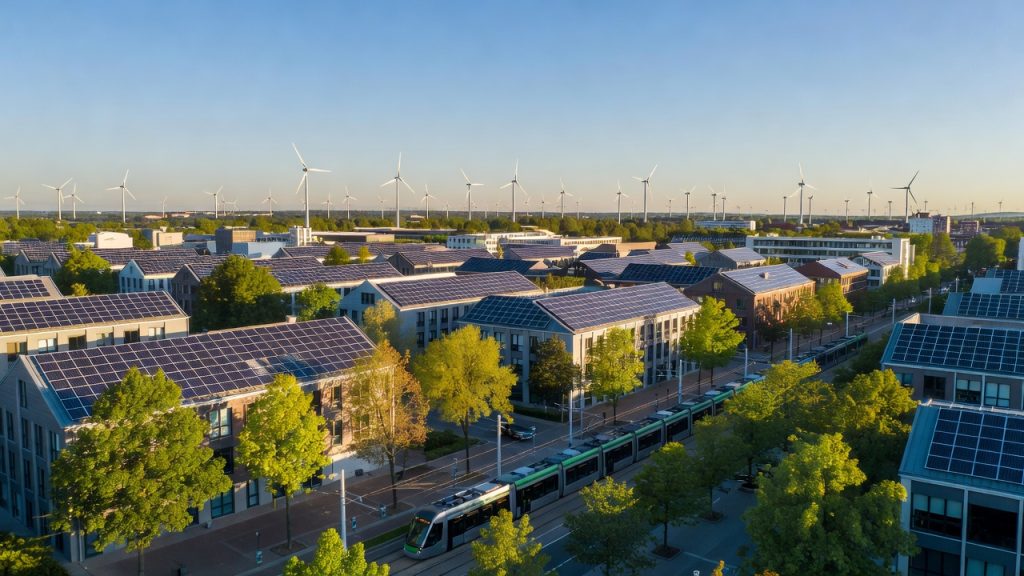
The European Union has taken one of its most consequential climate steps to date. By officially adopting a legally binding target to cut net greenhouse gas emissions by 90% by 2040 — compared to 1990 levels — the EU has cemented the intermediate milestone needed to reach full climate neutrality by 2050. The decision, endorsed by both the European Commission and the Council of the European Union, is grounded in the latest scientific guidance and aligns with the commitments of the Paris Agreement. It is not a distant aspiration: it triggers immediate, concrete updates across the entire EU policy architecture.
From Target to Action: The Policy Machinery Kicks In
The 2040 target does not exist in isolation. It directly updates the ‘Fit for 55’ legislative framework, the EU’s existing package of laws designed to reduce emissions by at least 55% by 2030. Among the most significant changes now confirmed:
- Zero-emission vehicles by 2035: All new cars and vans registered in Europe must produce zero emissions from 2035 onwards. As an interim step, average CO₂ emissions must fall by 55% for cars and 50% for vans by 2030. This effectively ends the internal combustion engine era for new passenger vehicles in the EU.
- Expanded carbon markets: Emissions trading will be extended to road transport starting in 2027, putting a price on pollution from fuel combustion. Revenues will be reinvested into clean technologies and channelled into the new €65 billion Social Climate Fund, designed to protect vulnerable households from the cost of the green transition.
- Renewable energy ambition raised: The EU’s binding renewables target for 2030 has been increased to a minimum of 42.5% of total energy consumption — up from the previous 32% — with a stated ambition to reach 45%. This will drive unprecedented investment in solar, wind, and grid infrastructure across the continent.
Alongside these measures, the Net-Zero Industry Act and revised F-gas regulations have been finalised. The former aims to boost domestic manufacturing of clean technologies — batteries, heat pumps, electrolysers — reducing Europe’s dependency on third-country supply chains. The latter phases down fluorinated gases, some of the most potent greenhouse gases, with ripple effects on global refrigeration and industrial sectors.
The Social Dimension: Who Pays, Who Benefits?
One of the most politically sensitive aspects of the new framework is its social architecture. Extending carbon pricing to road transport risks raising fuel costs for millions of Europeans — particularly those in rural areas or lower income brackets who have fewer alternatives to private cars. The Social Climate Fund, backed by €65 billion, is the EU’s answer to this tension. It is explicitly designed to fund energy efficiency renovations, subsidise zero-emission vehicles for lower-income households, and support workers in fossil-fuel-dependent industries transitioning to new roles.
This is the EU’s just transition principle in practice: the green shift must not deepen inequality. Whether the fund proves sufficient — and whether member states implement it equitably — will be one of the defining tests of EU climate policy in the coming years. Civil society organisations and sustainability reporting frameworks will play a key role in holding institutions accountable.
Global Implications: Europe as a Climate Standard-Setter
The EU’s decisions carry weight far beyond its borders. As the world’s largest single market, European environmental regulation effectively sets standards that global manufacturers, exporters, and investors must meet to access European consumers. The zero-emission vehicle mandate alone will reshape the global automotive industry, accelerating the shift to electric mobility in markets from South Korea to Brazil.
The expansion of carbon markets to road transport also signals a maturing of the EU Emissions Trading System (EU ETS), now one of the world’s most comprehensive carbon pricing mechanisms. Combined with the Carbon Border Adjustment Mechanism (CBAM) — already in its transitional phase — the EU is actively exporting its climate policy logic, incentivising trading partners to adopt comparable carbon pricing or face levies on exports to Europe.
For global investors and businesses navigating sustainability reporting obligations under frameworks like the Corporate Sustainability Reporting Directive (CSRD), this regulatory tightening raises the stakes considerably. Alignment with EU climate trajectories is fast becoming a baseline expectation, not a differentiator.
Key Takeaway
The EU’s 90% emissions reduction target for 2040 is more than a number — it is a legislative trigger that reshapes mobility, energy, industry, and social policy simultaneously. For citizens, it means cleaner air and lower energy bills in the long run, with targeted support during the transition. For businesses, it means regulatory certainty and a clear direction of travel. For the world, it reinforces Europe’s role as the leading force in climate policy and the EU Green Deal‘s ambition to make sustainability the new normal. The clock is running.