Green Finance Under Pressure: How Subsidy Races, Aviation Loopholes, and Methane Rules Are Reshaping ESG in 2025
The global sustainability agenda is moving faster than ever — but not always in a straight line. A cluster of major developments this week, spanning the United States, Europe, China, and Morocco, reveals just how complex the transition to a green economy has become. For businesses, investors, and citizens trying to navigate ESG commitments and sustainable finance, the signals are both encouraging and deeply contradictory.
The U.S. Subsidy Sprint: What It Means for Renewable Energy Globally
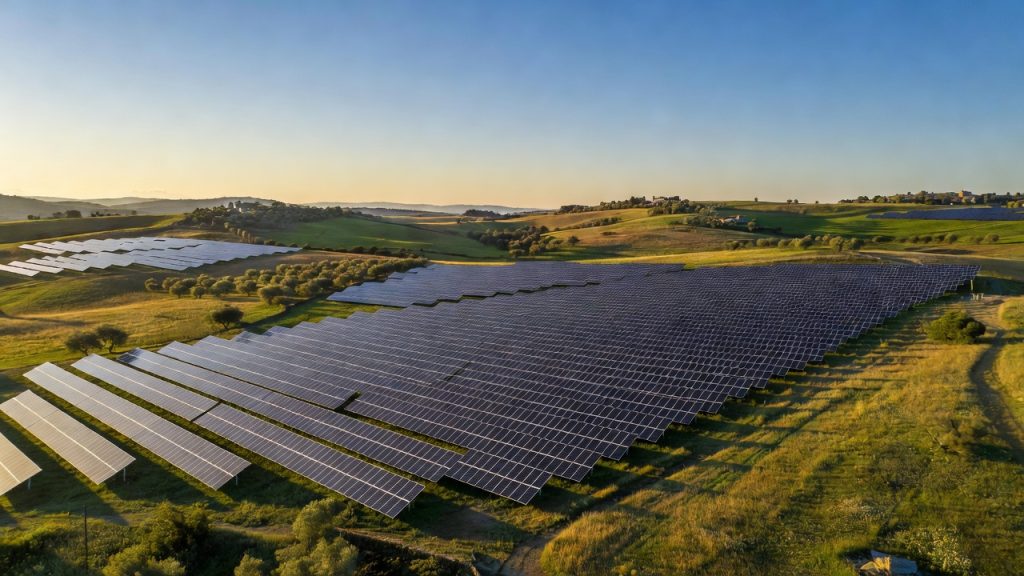
In the United States, major solar developers have secured federal subsidies for large-scale projects capable of nearly doubling current renewable energy capacity — a dramatic acceleration driven by a race to beat a July 4 policy deadline. According to Reuters Climate & Energy, missing that window could have triggered a sharp increase in renewable power costs, effectively stalling private investment in clean energy infrastructure.
While this is primarily a domestic U.S. story, its implications ripple across global sustainable finance. When the world’s second-largest economy moves decisively on renewables — even under political pressure — it shifts supply chains, technology costs, and investor expectations worldwide. European green business leaders and ESG fund managers are already watching closely: cheaper U.S. solar capacity could accelerate cost reductions in photovoltaic technology that benefit European markets too.
At the same time, the episode underscores a persistent vulnerability: when sustainability progress depends on policy deadlines rather than structural incentives, it remains fragile. The circular economy and long-term decarbonisation require frameworks that outlast electoral cycles.
Europe’s Mixed Signals: Private Jets, Methane Rules, and Corporate Responsibility
Europe’s own sustainability record this week was anything but clean. Two developments in particular highlight the tension between corporate responsibility and political pragmatism.
First, the EU’s second-highest court ruled that private jet manufacturing cannot be excluded from the taxonomy of environmentally sustainable activities, annulling a European Commission decision that had attempted to do so. The ruling reshapes how corporate responsibility is defined in the aviation sector — and raises uncomfortable questions about the integrity of the EU Taxonomy, the cornerstone of European sustainable finance regulation. If luxury aviation qualifies as a green activity under certain conditions, the credibility of ESG labelling is at stake.
Second, Germany — Europe’s largest gas market — joined a growing coalition pushing back against the EU’s planned methane emissions rules for oil and gas imports. Berlin warned that the policy could disrupt jet fuel supplies amid ongoing energy shocks linked to the Iran conflict. The argument reflects a real tension: energy security versus climate ambition. But critics point out that delaying methane regulation undermines the EU’s own climate targets and sends a damaging signal to international partners.
- Private jet taxonomy ruling: Complicates ESG classification and corporate sustainability reporting
- Methane rule pushback: Prioritises short-term energy security over long-term decarbonisation
- Combined effect: Risks eroding trust in Europe’s green regulatory leadership
China’s Clean Energy Ambition and the World Bank’s Climate Retreat
On the other side of the world, China updated its five-year energy plan to target 50% of electricity from non-fossil sources by 2030, up from a 42.3% target set for 2025. This is a significant upward revision that signals China’s continued commitment to clean energy expansion — even as geopolitical tensions with the West persist. For global ESG investors, China’s trajectory matters enormously: the country remains the world’s largest emitter and its largest manufacturer of solar panels and batteries.
Meanwhile, the World Bank approved $265 million for a pumped hydropower storage plant in Morocco — just two days after abandoning its goal to devote 45% of its lending to climate-related projects. The juxtaposition is striking. Individual green investments continue, but the institutional commitment to systematic climate finance appears to be weakening. For sustainable finance advocates, this is a warning sign: without binding targets, multilateral development banks risk drifting back toward business as usual.
Implications for ESG Strategy and Green Business
Taken together, this week’s developments paint a picture of a sustainability transition that is accelerating in some dimensions while stalling or backsliding in others. For ESG practitioners and green business leaders, the key takeaways are clear:
- Subsidy-driven renewable acceleration is real but policy-dependent — long-term strategy must go beyond incentive windows
- Regulatory credibility is a core ESG asset; court rulings and political compromises that blur green definitions erode investor confidence
- China’s updated energy targets reshape the global baseline for sustainable finance benchmarks
- Multilateral climate finance needs structural commitments, not just project-by-project decisions
Key takeaway: The green economy is not a single story — it is a contested, fast-moving arena where policy, law, geopolitics, and finance intersect daily. Staying informed and critically engaged is no longer optional for anyone with a stake in a sustainable future.