EU Green Deal at a Crossroads: 98 Laws Adopted, a 90% Climate Target for 2040, and a Push to Simplify
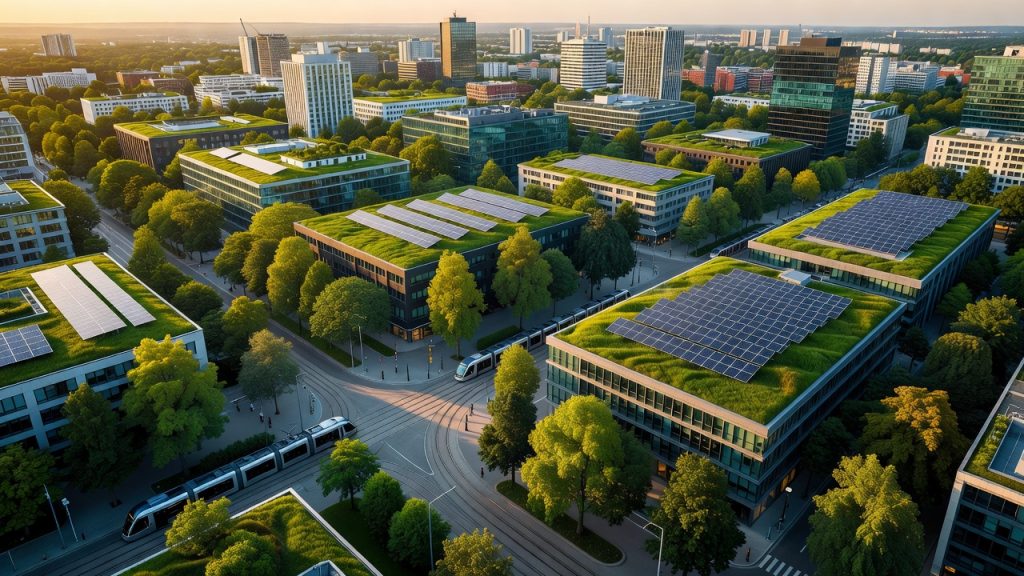
The European Green Deal — the EU’s sweeping blueprint to reshape its economy around sustainability — has reached a significant milestone. According to the latest update from the EU Green Policy Tracker, monitored jointly by Sweden and Estonia, 168 initiatives have been proposed under the Green Deal framework, with 98 already formally adopted by the European Parliament and Council. At the same time, the European Commission is pressing forward with a legislative simplification drive and has cemented a 90% net greenhouse gas emissions reduction target by 2040 compared to 1990 levels. Together, these moves define what the next chapter of European climate policy will look like — and who will feel its effects most.
A Legally Binding Roadmap: From 2040 Targets to Zero-Emission Cars
The headline figure is the new 2040 climate target: a 90% net reduction in greenhouse gas emissions relative to 1990 levels. This intermediate goal is not aspirational — it is legally binding and sits firmly on the path to climate neutrality by 2050, as enshrined in the European Climate Law. For businesses, investors, and policymakers, this means long-term regulatory certainty, but also mounting pressure to accelerate decarbonisation across all major economic sectors.
One of the most tangible commitments already locked in concerns mobility. All new cars and vans registered in the EU must be zero-emission by 2035. As an intermediate step, average CO₂ emissions from new cars must fall by 55% by 2030, with vans required to cut emissions by 50% over the same period. These are not distant targets: automakers and supply chains are already restructuring around them.
Meanwhile, road transport will enter the EU Emissions Trading System (ETS) in 2027, placing a direct carbon price on fuel used by cars, trucks, and vans. This expansion of carbon markets is designed to internalise the true cost of pollution and redirect revenue toward cleaner technologies — a principle that underpins much of the Green Deal’s environmental regulation architecture.
Simplification Without Dilution: The Regulatory Balancing Act
Perhaps the most politically charged development is the Commission’s push to simplify key Green Deal regulations. Critics — particularly from industry and some member states — have long argued that the sheer volume and complexity of new rules creates compliance burdens that risk slowing, rather than accelerating, the transition. The Commission appears to be listening.
The simplification review targets overlapping reporting obligations, administrative bottlenecks, and inconsistencies across directives — including those touching on sustainability reporting and corporate due diligence. The Corporate Sustainability Reporting Directive (CSRD) and related frameworks are under scrutiny, with proposals to streamline requirements particularly for smaller businesses.
The critical question is whether simplification will reduce genuine bureaucratic friction or quietly weaken environmental ambition. Environmental advocates are watching closely, warning that any rollback of sustainability reporting standards could undermine transparency in carbon markets and erode investor confidence in ESG data. The Commission insists the 2040 and 2050 targets remain non-negotiable — simplification is about delivery, not direction.
The Social Dimension: €86 Billion to Leave No One Behind
One of the most consequential — and often underreported — elements of the updated Green Deal framework is the full operationalisation of the Social Climate Fund. With €65 billion from the EU budget and a total envelope exceeding €86 billion, the Fund is designed to cushion the impact of carbon pricing on vulnerable households and small businesses, particularly those facing higher energy and transport costs as fossil fuels become more expensive.
This is a direct response to the political tensions that have accompanied ambitious climate policy across Europe — from the gilets jaunes protests in France to rural backlash against fuel cost increases. The Social Climate Fund signals that the EU is attempting to build a genuinely inclusive green transition, not just a technocratic one.
What This Means for Citizens, Businesses, and Policymakers
For citizens, the practical implications range from the cars available in showrooms to energy bills and public transport investment. For businesses, the dual pressure of stricter environmental regulation and evolving sustainability reporting obligations demands strategic adaptation — even as simplification offers some relief. For policymakers at national and local level, the Green Deal’s 98 adopted measures are no longer proposals: they are law, requiring transposition and enforcement.
- 168 Green Deal initiatives proposed, 98 already adopted into EU law
- 90% emissions cut by 2040 — legally binding, sector-wide
- Zero-emission vehicles mandatory for all new registrations from 2035
- Road transport enters ETS in 2027, expanding carbon market coverage
- €86 billion Social Climate Fund to protect the most exposed communities
Key takeaway: The EU Green Deal is no longer a vision document — it is an operational legal framework. With 98 laws adopted, a binding 2040 climate target, and billions allocated for a just transition, Europe has built the most comprehensive climate policy architecture in the world. The next challenge is implementation: ensuring that simplification strengthens delivery without compromising ambition, and that the green transition is fast, fair, and enforceable.