Battery Storage, Green Hydrogen, and Offshore Wind: The Global Energy Transition Picks Up Speed
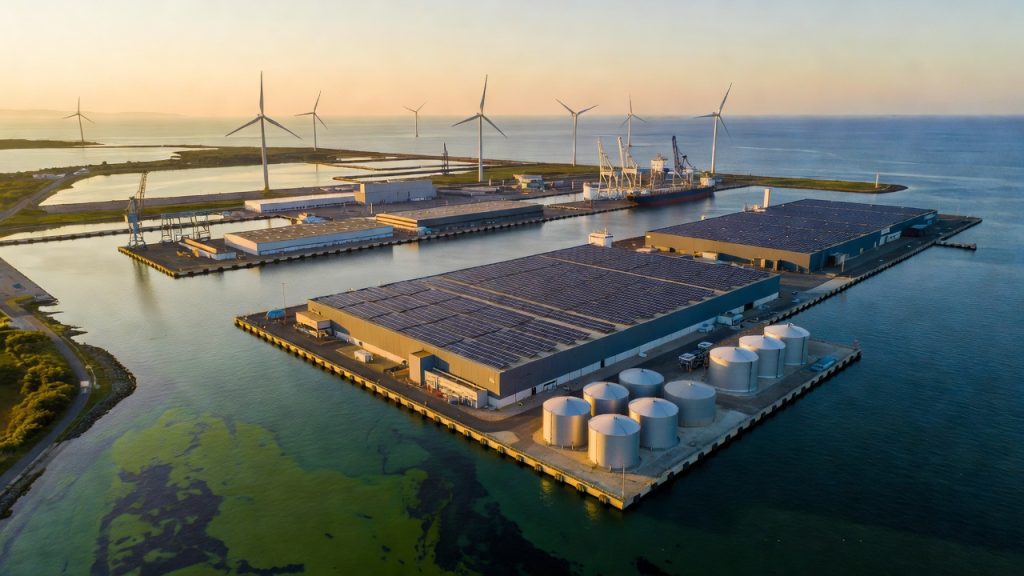
The global energy transition is no longer a distant ambition — it is being built, commissioned, and switched on. In the span of a few weeks, a series of landmark announcements across battery storage, green hydrogen, offshore wind, and solar policy have underscored just how rapidly the infrastructure of a cleaner energy system is taking shape. For European citizens, professionals, and policymakers, the signals are both encouraging and instructive.
Grid-Scale Battery Storage Comes of Age
The most striking headline comes from South Australia, where Finnish energy technology company Wärtsilä has brought a 150 MW / 300 MWh battery energy storage system (BESS) into commercial operation for Revera Energy. This facility is not a pilot project — it is a fully operational piece of critical grid infrastructure, designed to stabilise electricity supply and absorb surplus renewable energy generated by the region’s wind and solar farms.
South Australia has long been a global laboratory for renewable integration, having faced high-profile grid instability events in the past decade. The commissioning of this system represents a mature response: large-scale, dispatchable storage that can smooth out the intermittency inherent in wind and solar generation. For European grid operators grappling with similar challenges — particularly as offshore wind capacity expands across the North Sea — this is a model worth studying closely. Energy storage and resource management at this scale are no longer theoretical; they are operational realities.
Europe Accelerates: Hydrogen and Offshore Wind Take Centre Stage
Closer to home, two developments signal that Europe’s clean energy ambitions are moving from policy documents into concrete investment decisions.
French industrial gas giant Air Liquide has taken a final investment decision (FID) on a 200 MW electrolyser project in Rotterdam, with TotalEnergies secured as a major offtaker. This is a significant moment for green hydrogen production in Europe. Rotterdam, already the continent’s largest port, is positioning itself as a hydrogen hub — and projects of this scale, backed by the EU’s Net-Zero Industry Act, demonstrate that the regulatory framework is beginning to catalyse real capital. Green hydrogen, produced using renewable electricity to split water through electrolysis, is seen as essential for decarbonising hard-to-abate sectors such as steel, chemicals, and heavy transport.
Meanwhile, Skyborn Renewables has acquired 100% of the Nordergründe offshore wind farm in Germany, consolidating its ownership and strengthening its foothold in the German offshore wind market. This consolidation trend — where developers move to sole ownership of assets — reflects growing investor confidence in offshore wind as a long-term, bankable asset class. With Germany targeting 30 GW of offshore wind capacity by 2030, transactions like this are part of the structural build-out that will define European energy for decades.
On the manufacturing side, Nordex SE reported a 31 million EUR net profit for Q2 2026, reaffirming its full-year forecast despite global market volatility. For a European wind turbine manufacturer to post solid earnings amid supply chain pressures and geopolitical uncertainty is a reassuring sign of sectoral resilience.
Policy Deadlines Are Shaping Investment — For Better and Worse
Across the Atlantic, the U.S. solar industry is experiencing a policy-driven investment rush, with developers scrambling to secure federal subsidies for large-scale projects ahead of a July 4 deadline that could otherwise trigger sharp increases in renewable energy costs. The episode is a reminder that policy design matters enormously: well-structured incentives can unlock billions in private capital, while abrupt changes or uncertainty can stall deployment just as quickly.
Europe has its own lessons to draw here. The Net-Zero Industry Act and the revised Renewable Energy Directive provide a legislative backbone, but implementation speed and permitting bottlenecks remain persistent obstacles. The contrast with the urgency visible in the U.S. solar market should serve as a prompt for European regulators to maintain momentum.
What This Means Going Forward
Taken together, these developments paint a picture of an energy sector in genuine transformation:
- Battery storage is proving its value at grid scale, enabling higher shares of wind and solar without sacrificing reliability.
- Green hydrogen is crossing the threshold from demonstration to industrial deployment, supported by offtake agreements and EU policy.
- Offshore wind consolidation reflects maturing markets and long-term investor commitment in Europe.
- Policy design remains a critical lever — both an accelerator and a potential brake on renewable investment.
The energy transition is not happening uniformly or without friction. But the infrastructure being built today — from battery farms in Australia to electrolysers in Rotterdam — will determine the resilience and sustainability of our energy systems for generations to come.
Key takeaway: The convergence of large-scale storage, hydrogen investment, and offshore wind consolidation signals that the clean energy transition has entered an irreversible operational phase. European decision-makers must ensure that permitting, policy, and public investment keep pace with the private capital already moving in this direction.