Net-Zero Gets Serious: China’s 50% Clean Energy Target and New Corporate Standards Reshape the Global Sustainability Landscape
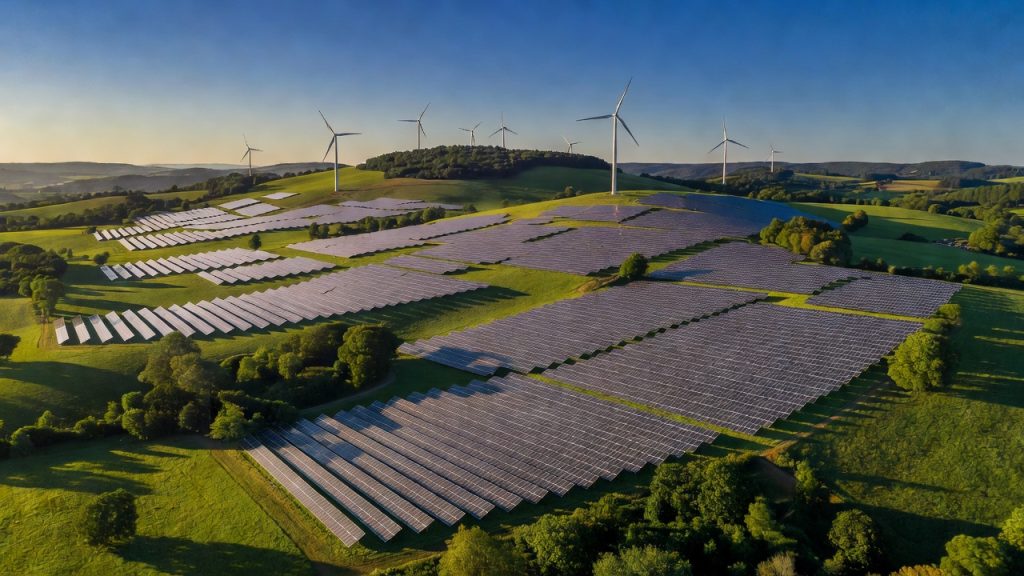
The global sustainability agenda is shifting into a higher gear. In the span of just a few weeks, China has unveiled a sweeping upgrade to its national energy plan, two major standard-setting bodies have released long-awaited frameworks for corporate net-zero commitments, and a US company has begun commercial-scale production of sustainable aviation fuel. Taken together, these developments signal that the transition to a low-carbon economy is no longer a distant aspiration — it is becoming a structured, measurable, and increasingly enforceable reality for governments and businesses alike.
China’s Energy Ambition Raises the Global Bar
China’s updated five-year energy plan, reported by Reuters, sets a bold new target: 50% of electricity from non-fossil sources by 2030, up significantly from the previous goal of 42.3% by 2025. For the world’s largest emitter of greenhouse gases, this is not a symbolic gesture. It represents a concrete policy commitment that will drive hundreds of billions of euros in renewable energy infrastructure investment — in solar, wind, nuclear, and hydropower — and reshape global supply chains for clean technology components.
For European businesses and policymakers, the implications are profound. China’s accelerated decarbonization will intensify competition in renewable manufacturing, particularly in solar panels and battery storage, where Chinese producers already dominate. At the same time, it creates new opportunities for international climate cooperation and technology exchange. The EU’s own REPowerEU targets — aiming for 42.5% renewables in the energy mix by 2030 — now sit in a context where the world’s largest energy consumer is moving with comparable urgency.
A New Architecture for Corporate Net-Zero Claims
On the ESG and corporate responsibility front, two parallel developments are set to fundamentally change how companies communicate and deliver on their climate commitments.
The Science Based Targets initiative (SBTi) has finalized Version 2 of its Corporate Net-Zero Standard, providing companies with a rigorous, science-aligned framework for setting emissions reduction targets and achieving verified net-zero status by 2027. Meanwhile, the International Organization for Standardization (ISO) has released a draft net-zero standard for public consultation, offering a complementary global reference point for credible transition planning.
These frameworks arrive at a critical moment. Greenwashing has become a major liability — regulatory, reputational, and financial — for companies across Europe and beyond. The EU’s Green Claims Directive, currently advancing through the legislative process, will require substantiation of environmental claims, and standards like those from SBTi and ISO provide exactly the kind of third-party credibility that regulators and investors are demanding. For sustainability professionals and ESG officers, adopting these frameworks is quickly moving from best practice to business necessity.
Circular Economy Innovation Takes Flight
A quieter but equally significant development comes from the sustainable aviation sector. US-based e-fuel developer Twelve has announced commercial-scale production of sustainable aviation fuel (SAF) at its Moses Lake facility in Washington State, using a process that combines captured CO₂, water, and renewable electricity to synthesise jet fuel. This approach — known as power-to-liquid — is a textbook example of circular economy principles applied to one of the hardest-to-abate sectors in the global economy.
Aviation accounts for roughly 2.5% of global CO₂ emissions, but its overall climate impact is estimated to be two to four times higher when non-CO₂ effects are included. Europe’s ReFuelEU Aviation regulation mandates increasing SAF blending ratios from 2% in 2025 to 70% by 2050, creating a significant and growing market. Commercial-scale production milestones like Twelve’s are essential proof points that the technology can scale — and that sustainable finance flowing into this space is not misplaced.
Implications for European Businesses and Investors
Across all three of these developments, a common thread emerges: the infrastructure of accountability for green business is being built, brick by brick. For European companies navigating the Corporate Sustainability Reporting Directive (CSRD) and the EU Taxonomy, the convergence of tighter standards, bolder national policies, and maturing clean technologies creates both pressure and opportunity.
- Investors now have clearer benchmarks to assess the credibility of corporate net-zero claims, reducing the risk of sustainable finance being misdirected.
- Corporations face a narrowing window to align transition plans with SBTi and ISO standards before regulatory requirements make it mandatory.
- Policymakers can draw confidence from China’s ambition and from private-sector innovation to set more ambitious national targets.
Key takeaway: The global sustainability landscape is consolidating around credible standards, ambitious policy targets, and scalable clean technologies. For any organisation serious about its climate commitments, the message is clear — the era of vague net-zero pledges is ending, and the era of verified, structured, and investable sustainability is beginning.