Europe Bets on Batteries and Hydrogen to Power Its Clean Energy Future
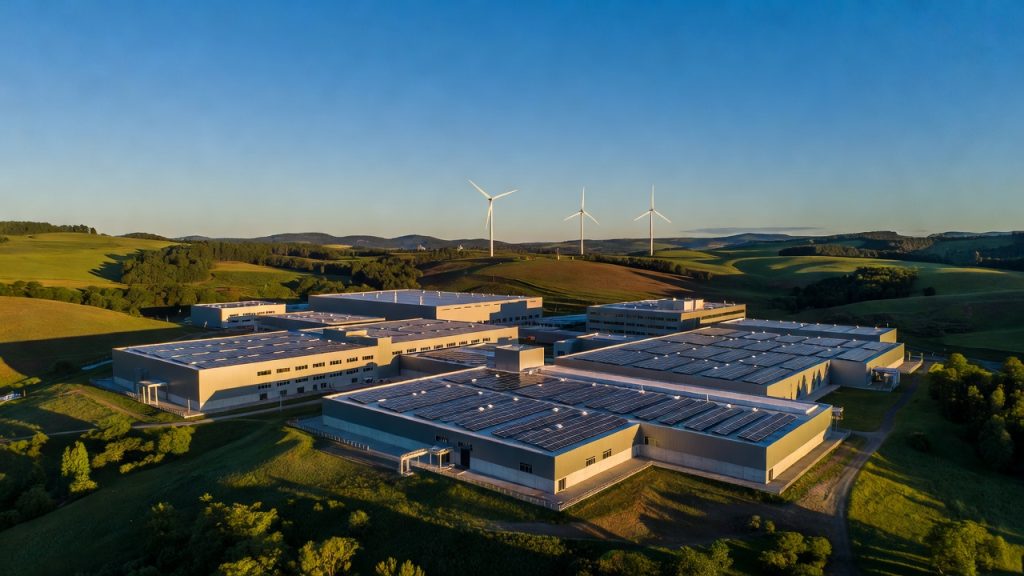
Europe’s energy transition is moving from ambition to assembly line. In a significant signal of industrial intent, the European Union has awarded strategic project status under the Net-Zero Industry Act to a fully integrated battery energy storage system manufacturing plant in Bulgaria, operated by International Power Supply. Meanwhile, Air Liquide has reached a final investment decision on a 200-MW electrolyzer in Rotterdam, with TotalEnergies signed on as a major offtaker. Together, these developments paint a clear picture: Europe is not just consuming clean energy — it is building the infrastructure to produce and store it at scale.
Why the Bulgarian Battery Plant Is a Bigger Deal Than It Sounds
At first glance, a manufacturing facility in Bulgaria might seem like a regional story. In reality, it reflects a deliberate shift in European industrial policy. The Net-Zero Industry Act, which came into force in 2024, was designed precisely to accelerate domestic manufacturing of clean technologies — batteries, solar panels, wind components, heat pumps, and electrolyzers — reducing Europe’s dependence on imports, particularly from China.
Strategic project status under the Act is not a symbolic honour. It unlocks tangible benefits:
- Faster permitting — administrative processes are streamlined and time-limited
- Improved access to financing — including potential support from the European Investment Bank and national promotional banks
- Supply chain integration — projects are embedded in broader European value chains, reducing vulnerability to external shocks
For citizens, the implications are equally concrete. Grid-scale battery storage is a critical enabler of renewable energy integration. As solar and wind capacity grows — and the IEA projects that both wind and solar generation will each surpass nuclear output by 2026 — storage becomes the glue that holds the system together, smoothing out the variability that has historically been renewables’ Achilles heel. More storage means greater grid reliability, fewer curtailments of clean power, and ultimately lower and more stable electricity prices.
Hydrogen’s Moment: Rotterdam as a Blueprint
The Air Liquide electrolyzer project in Rotterdam represents a different but complementary pillar of Europe’s clean energy strategy. At 200 megawatts, it is one of the largest green hydrogen investments to reach final investment decision in Europe, and the involvement of TotalEnergies as a committed offtaker addresses one of the sector’s persistent challenges: demand certainty.
Hydrogen has long been discussed as a solution for hard-to-decarbonise sectors — heavy industry, shipping, long-haul transport, and chemical production. But projects have repeatedly stalled at the financing stage, partly because buyers were reluctant to commit before infrastructure existed, and infrastructure developers were reluctant to build without committed buyers. The Rotterdam deal breaks that deadlock with a clear offtake agreement, providing the revenue visibility needed to unlock investment.
Rotterdam is also symbolically important. As Europe’s largest port and a historic hub of fossil fuel refining, its pivot toward low-carbon hydrogen supply chains signals a genuine industrial transformation, not just a policy aspiration. Effective resource management — including the significant volumes of water required for electrolysis — will be a key operational consideration as the project scales.
The Global Backdrop: Renewables Are Winning
These European developments do not exist in isolation. The IEA’s latest projections confirm that renewables-based electricity is expected to overtake coal globally in 2025, a milestone that would have seemed improbable a decade ago. The cost trajectories for solar photovoltaics, wind, and battery storage continue to fall, making clean energy the economically rational choice in a growing number of markets — not just the environmentally responsible one.
For Europe, the strategic imperative is to ensure that this global momentum translates into domestic industrial capacity. The risk, without deliberate policy intervention, is that European demand for clean technology hardware is met by imports while manufacturing jobs and value chains are created elsewhere. The Net-Zero Industry Act, and projects like the Bulgarian battery plant and the Rotterdam electrolyzer, are Europe’s answer to that challenge.
What This Means for Businesses and Citizens
For businesses operating in the energy, manufacturing, or infrastructure sectors, the message is clear: European industrial policy is actively creating opportunities for companies that align with clean-tech supply chains. Strategic project status, accelerated permitting, and financing support are real competitive advantages worth pursuing.
For citizens, the transition being built today — in Bulgarian factories and Rotterdam port terminals — is the foundation of a more resilient, affordable, and sustainable energy system. Greater storage capacity means more solar and wind on the grid. More domestic hydrogen production means less exposure to volatile fossil fuel markets.
Key takeaway: Europe’s clean energy transition is entering an industrial phase. The policy tools are in place, the investment decisions are being made, and the manufacturing base is being built. The pace of that build-out — and how equitably its benefits are distributed — will define Europe’s energy landscape for decades to come.