From CRISPR Wheat to Seaweed Feed: The Technologies Reshaping Sustainable Agriculture in 2025
A quiet but consequential revolution is unfolding across global food systems. From South America to Scandinavia, a wave of regulatory decisions, corporate partnerships, and scientific breakthroughs is redefining what sustainable agriculture looks like in practice. This week’s developments offer a vivid snapshot of both the promise and the complexity ahead.
Chile’s CRISPR Ruling: A Regulatory Turning Point for Plant-Based Innovation
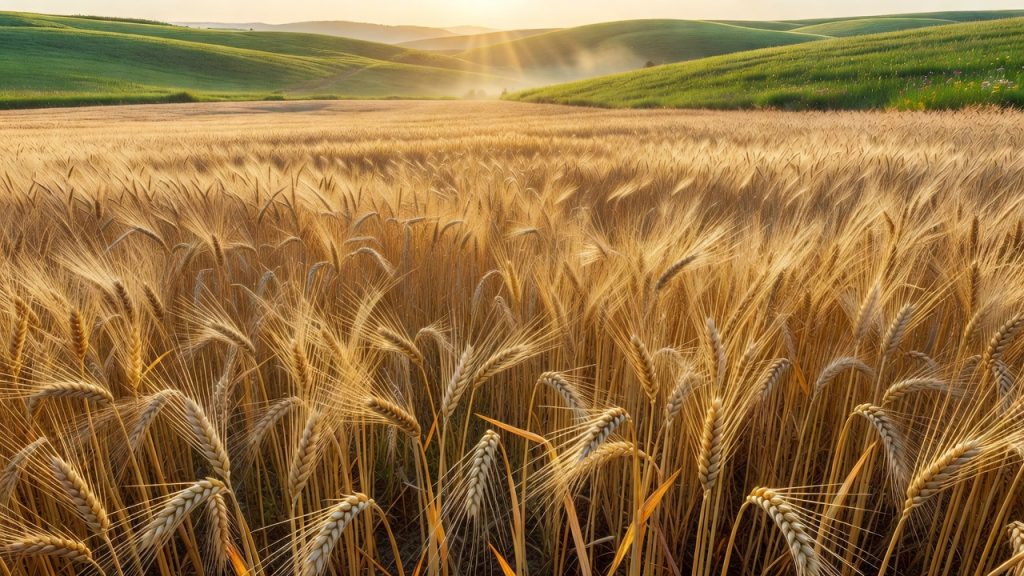
On July 25, 2025, Chile’s Agricultural and Livestock Service (SAG) made history by officially confirming that CRISPR gene-edited wheat lines do not qualify as GMOs under national law — making Chile the first country in the Americas to clear such crops for field cultivation without the traditional regulatory burden applied to genetically modified organisms. The wheat in question carries a remarkable trait: five to ten times higher dietary fiber than conventional varieties, a development with significant implications for public health and plant-based food supply chains.
This decision is not just a Chilean milestone. It sends a direct signal to regulators in Brussels and Washington, where debates over gene-edited crop frameworks remain unresolved. The European Union has been inching toward a revised regulatory approach for New Genomic Techniques (NGTs) since 2023, but legislative progress has been slow and politically fraught. Chile’s pragmatic stance — distinguishing precision editing from transgenic modification — may accelerate that conversation. For European food producers and agroecology advocates, the question is no longer whether gene editing will enter the supply chain, but under what conditions and with what transparency.
Regenerative Agriculture Scales Up — With Corporate Backing
Meanwhile, in Europe, regenerative agriculture is moving from niche practice to mainstream strategy. PepsiCo has announced a partnership with Soil Capital to expand regenerative farming practices across the UK, France, and Belgium — three countries that together represent a substantial share of European cereal and potato production. The collaboration aims to embed soil health, biodiversity, and carbon sequestration directly into PepsiCo’s agricultural supply chain sustainability commitments.
At the same time, Norwegian agtech firm Kilter has secured $8.6 million in Series A funding to scale its AX-1 autonomous weeding robot, a machine capable of reducing herbicide use by up to 95%. Designed for row crops, the AX-1 represents the kind of precision, low-input farming that sits at the heart of both the EU’s Farm to Fork Strategy and broader agroecology principles. As labour shortages and input costs continue to pressure European farmers, autonomous solutions like this are shifting from experimental to essential.
Yet a sobering counterpoint arrives from academia: a new study from the University of Toronto Scarborough warns that global crop diversity is declining as large-scale agriculture increasingly concentrates on fewer varieties. This homogenisation undermines the very resilience that regenerative and agroecological approaches are meant to build. Scaling up sustainable practices while simultaneously narrowing the genetic base of our food supply is a contradiction that policymakers and supply chain actors cannot afford to ignore.
Cutting Livestock Emissions: Seaweed Enters the Feed Chain
On the livestock front, a striking development is gaining traction. UPL Global has partnered with CH4 Global to distribute Methane Tamer™, a seaweed-based feed supplement derived from Asparagopsis that can reduce enteric methane emissions from cattle by up to 90%. Livestock agriculture accounts for roughly 14.5% of global greenhouse gas emissions according to the FAO, with enteric fermentation — essentially, cow burps — representing the single largest source within that sector.
For European farmers navigating increasingly strict emissions targets under the EU’s Common Agricultural Policy reform and national climate laws, a feed additive with this level of efficacy could prove transformative. The challenge now lies in scaling production, ensuring supply chain traceability, and building farmer trust — familiar hurdles for any agri-innovation entering a conservative sector.
What This Means for Europe’s Food Future
Taken together, these developments sketch an emerging landscape where sustainable food systems are being built through a combination of biotechnology, precision machinery, regenerative practices, and biological inputs. No single solution is sufficient. The real work lies in integrating these tools within coherent policy frameworks that reward biodiversity, penalise emissions, and maintain public trust.
- Regulators must move faster on gene-editing frameworks before innovation outpaces governance.
- Corporations scaling regenerative agriculture must ensure commitments are measurable and third-party verified.
- Farmers need accessible, affordable access to technologies like autonomous weeding and methane-reducing supplements.
- Citizens deserve transparent labelling and honest communication about how their food is grown.
Key takeaway: The tools to transform agriculture sustainably already exist. What’s missing is the policy coherence and systemic investment to deploy them at scale — before declining crop diversity and rising emissions narrow our options further.