Solar Caution in India, Storage Surge in Europe: How Clean Energy Capital Is Being Redirected
The global clean energy transition is entering a more disciplined phase. In the past 48 hours, two contrasting signals have emerged from opposite ends of the world — and together they tell a revealing story about where renewable energy investment is heading, and why.
India’s clean energy ministry has advised financial institutions to exercise caution when financing new solar photovoltaic module manufacturing capacity, a move that could tighten project finance for manufacturers and cool speculative expansion in the solar supply chain. Meanwhile, across Europe, fresh capital is flowing not into new generation capacity, but into the infrastructure needed to make existing renewables work smarter: battery storage and green hydrogen.
From Build-Out to Balance: Europe Bets on Storage and Hydrogen
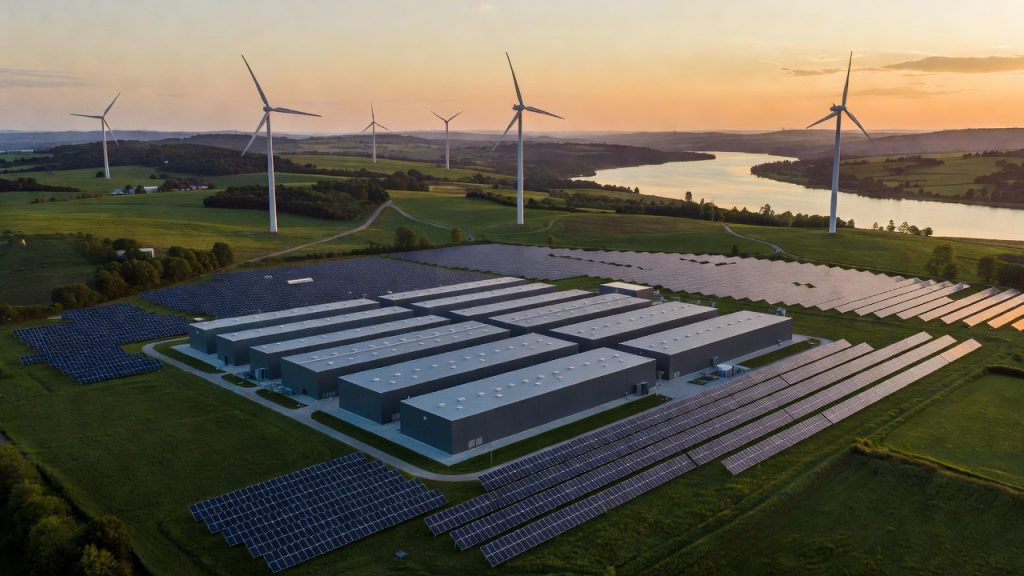
The clearest sign of Europe’s strategic pivot came from two major announcements. Allianz Global Investors confirmed it is acquiring a 50% stake in 11 battery storage projects currently under construction in Germany — a direct bet on grid flexibility as wind and solar penetration deepens. When renewable generation is intermittent by nature, storage assets become the connective tissue of a reliable electricity system. For consumers and grid operators alike, this kind of investment is what turns a green grid into a dependable one.
On the hydrogen front, French industrial gases giant Air Liquide took a final investment decision on a 200-MW electrolyser project in Rotterdam, with TotalEnergies signed on as a major offtaker. This is significant not just for its scale, but for its structure: it is a contracted, bankable project — not speculative infrastructure. Green hydrogen is maturing from a promising concept into industrial-grade, project-financed reality, anchored by long-term agreements that give lenders the confidence to commit.
Together, these moves reflect a broader European trend: capital discipline is replacing capacity-at-all-costs thinking. The priority is now integrating what has already been built, and doing it reliably.
India’s Warning Signal and the Solar Supply Chain
India’s advisory to financial institutions may seem like a domestic regulatory note, but its implications ripple outward. The country has seen rapid — and in some cases speculative — expansion of solar PV module manufacturing capacity in recent years, partly driven by industrial policy ambitions to compete with Chinese dominance in the supply chain.
By urging lenders to be cautious, the ministry is signalling that not all manufacturing capacity will be commercially viable, and that overleveraged projects pose financial risk. For European developers and procurement teams who source modules globally, this could affect supply chain dynamics, pricing, and the reliability of certain suppliers over the medium term.
It is a reminder that the energy transition is not immune to the same financial cycles that affect any industrial sector — and that resource management and capital allocation matter as much as megawatts installed.
Water, Drought, and the Hidden Link to Energy Resilience
One of the most underreported dimensions of the current energy moment is the deepening connection between water scarcity and renewable energy strategy. Two data points stand out:
- Colombia is on track to close 2025 with 2,685 MW of renewable generation capacity — a 49.2% increase from end-2024 — driven in part by the need to reduce dependence on hydropower amid prolonged droughts.
- Morocco aims to raise desalinated seawater’s share of drinking water from 25% to 60% by 2030, a direct response to years of severe drought. Desalination at that scale requires enormous amounts of electricity — making affordable, reliable renewable energy a matter of water security, not just climate policy.
These examples underscore a growing reality: energy efficiency and resource management are inseparable. Governments that fail to integrate water stress into their energy planning risk compounding crises.
What This Means for Citizens, Investors, and Policymakers
For investors and lenders, the message is clear: scrutiny is increasing across the clean energy value chain. Battery storage and contracted hydrogen projects offer more bankable structures than speculative manufacturing capacity.
For policymakers — particularly in Europe — the priority must shift toward grid flexibility, long-term offtake frameworks, and cross-sector planning that links energy, water, and industrial policy.
For citizens, these developments ultimately affect electricity reliability and bills. A grid backed by storage is a more resilient grid. And a clean energy system that accounts for water stress is one built to last.
The clean energy transition is not slowing down — it is growing up. The era of building fast and asking questions later is giving way to a more strategic, integrated approach. Europe, for all its challenges, appears to be leading that shift.