EU Green Deal at a Crossroads: From Climate Ambition to Industrial Reality
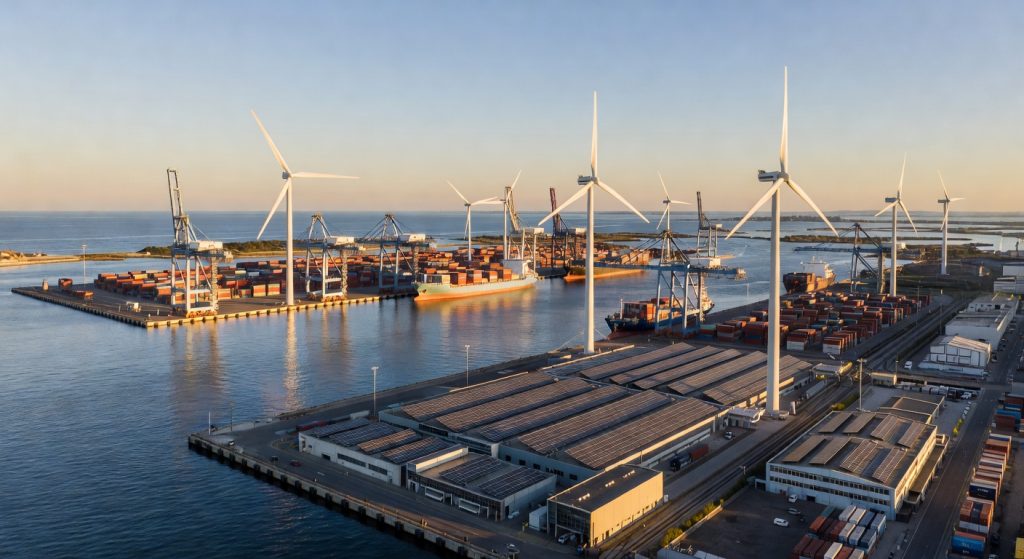
The EU Green Deal was never going to be a straight road. Launched in 2019 as Europe’s most ambitious climate framework, it set out to reshape an entire continent’s economy around sustainability. Now, halfway through the decade that matters most for climate action, the Green Deal has entered a more turbulent — and arguably more consequential — phase. The European Commission is doubling down on implementation and industrial competitiveness, even as political headwinds have grown stronger following the 2024 European Parliament elections.
Core Targets Hold, But Delivery Is the New Battleground
The headline commitments remain firmly in place. The EU Climate Law makes carbon neutrality by 2050 legally binding, and the Fit for 55 package mandates at least a 55% reduction in greenhouse gas emissions by 2030 compared to 1990 levels. These are not negotiable footnotes — they are enforceable legal obligations that shape everything from energy infrastructure investment to corporate sustainability reporting.
What has changed is where the friction lies. According to policy tracking data, 168 Green Deal initiatives have been proposed, but only 98 have been formally adopted, with 37 still under active negotiation. The bottleneck is no longer ambition — it is execution. Translating broad climate targets into sector-specific rules, enforcement mechanisms, and market incentives is proving far harder than writing them into law.
For businesses and citizens alike, this gap matters. Delayed regulations create uncertainty for investment decisions. Companies planning capital expenditure in clean technology, energy efficiency, or low-carbon manufacturing need regulatory clarity to commit. And for citizens, the pace of implementation directly affects everything from home energy bills to air quality in urban areas.
Industrial Competitiveness and Carbon Management Move Centre Stage
One of the most significant shifts in the current phase of the Green Deal is the explicit embrace of industrial competitiveness as a climate policy goal — not a trade-off against it. The European Commission has made clear that decarbonization and economic strength must advance together, particularly as competition from the United States (via the Inflation Reduction Act) and China intensifies in clean technology markets.
Central to this strategy is the Industrial Carbon Management Strategy, which aims to scale up infrastructure for carbon capture, transport, storage, and reuse across Europe. This is a significant policy signal: carbon capture and storage (CCS), once a contested and peripheral technology, is now embedded in the EU’s official industrial decarbonisation roadmap. For hard-to-abate sectors — cement, steel, chemicals — this opens new compliance pathways and investment opportunities.
The strategy also reflects a broader European bet: that leading in clean-tech manufacturing and carbon management infrastructure will create long-term economic advantage, not just environmental benefit. Whether that bet pays off depends heavily on how quickly the regulatory and financial architecture can be built around it.
Carbon Markets and CBAM: The Price Signal at the Heart of the Transition
Market-based instruments remain the backbone of EU climate policy. The EU Emissions Trading System (ETS) continues to put a price on carbon across power generation and heavy industry, and its scope is expanding. Alongside it, the Carbon Border Adjustment Mechanism (CBAM) — now in its transitional phase — is designed to prevent carbon leakage by pricing the embedded emissions of imports in sectors like steel, aluminium, cement, and fertilisers.
CBAM is particularly significant from a global perspective. It effectively exports a carbon price signal beyond EU borders, incentivising trading partners to strengthen their own environmental regulation or face tariff-equivalent charges. This makes it one of the most consequential trade-climate policy instruments currently in operation anywhere in the world.
For European companies, updated energy efficiency rules and revised land-use and climate regulations are also already adopted or in final negotiation, adding further layers to an increasingly complex compliance landscape.
What This Means for Businesses, Citizens, and Policymakers
The current phase of the Green Deal has concrete implications across stakeholder groups:
- Businesses face rising compliance costs but also expanding access to low-carbon markets, public procurement opportunities, and EU funding instruments tied to the green transition.
- Citizens will see the effects through cleaner air, lower energy consumption in buildings, and the broader pace of the energy transition — including how quickly fossil fuel dependence is reduced.
- Policymakers at national and regional level must now focus on transposing EU directives into domestic law and building the administrative capacity to enforce them.
- Investors should pay close attention to sustainability reporting obligations under frameworks like the CSRD, which are tightening the link between climate data and financial disclosure.
Key Takeaway
The EU Green Deal is not retreating — it is consolidating. The political landscape has become more contested, but the legal architecture is largely in place and the Commission is pushing forward on industrial decarbonisation, carbon markets, and clean-tech competitiveness. The defining challenge of the next five years will not be setting more ambitious targets, but delivering on the ones already written into law. For anyone operating in or with Europe, understanding this shift from ambition to implementation is no longer optional — it is essential.