Green Technology in 2025: The Five Innovation Fronts Reshaping Europe’s Energy Future
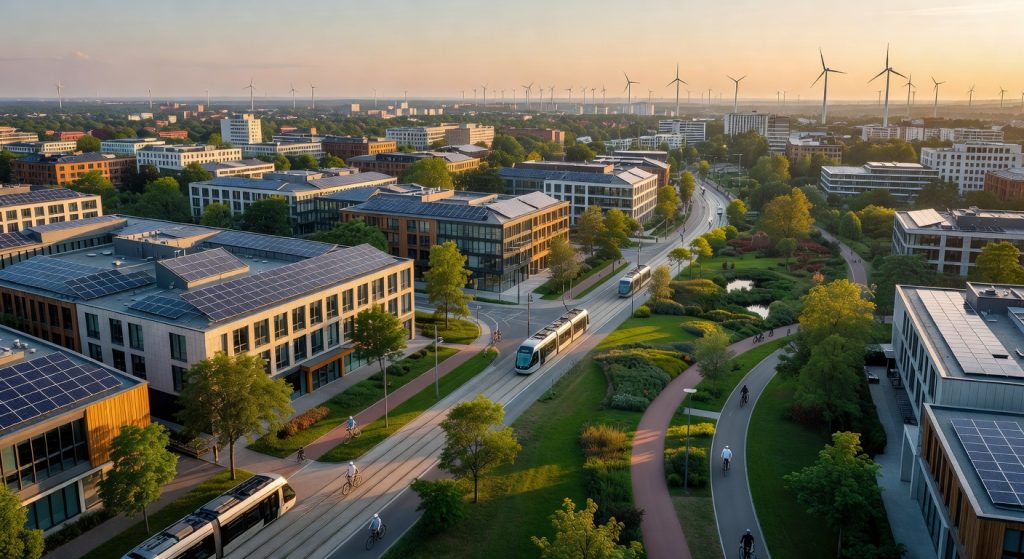
Europe’s push toward climate neutrality is no longer a distant ambition — it is an engineering challenge being solved in real time. Across laboratories, factory floors, and city planning offices, green technology is advancing on multiple fronts simultaneously, compressing decades of incremental progress into a single transformative decade. Understanding where innovation is concentrating — and why — matters for citizens, investors, and policymakers alike.
Energy Storage and Grid Flexibility: The Missing Piece of the Puzzle
Renewable electricity generation has grown dramatically across the EU, with solar and wind now accounting for roughly 26% of the bloc’s electricity mix according to Ember’s 2024 European Electricity Review. Yet generation alone does not guarantee a stable grid. The central challenge of the energy transition is storing surplus power and releasing it precisely when demand peaks — a problem that has elevated long-duration energy storage (LDES) to the top of the cleantech agenda.
Technologies such as iron-air batteries, compressed air energy storage, and gravity-based systems are moving from pilot projects toward early commercial deployment. Meanwhile, smart microgrids — localized energy networks that can operate independently or in coordination with the main grid — are being tested in cities from Amsterdam to Barcelona. These systems use AI-driven prediction tools to anticipate demand, balance loads, and integrate distributed renewable sources with unprecedented precision. The European Commission’s Net-Zero Industry Act explicitly identifies grid flexibility as a strategic priority, signalling sustained public investment in this space through the end of the decade.
Hydrogen and Electric Mobility: Two Paths, One Destination
Electric mobility continues its rapid expansion across Europe, with EV registrations surpassing 3 million units annually and charging infrastructure scaling up under the EU’s Alternative Fuels Infrastructure Regulation (AFIR), which mandates fast-charging points every 60 kilometres on major corridors by 2025. But electrification is not the only decarbonisation pathway in transport.
Green hydrogen — produced via electrolysis powered by renewable electricity — is emerging as a credible solution for sectors where batteries remain impractical: heavy freight, shipping, and aviation. The EU’s hydrogen strategy targets 10 million tonnes of domestic green hydrogen production by 2030, supported by the European Hydrogen Bank and cross-border pipeline projects connecting North Africa, Norway, and Central Europe. In parallel, hydrogen fuel-cell trucks are entering commercial fleets in Germany and the Netherlands, while port authorities in Rotterdam and Antwerp are investing heavily in hydrogen bunkering infrastructure.
The two technologies — electric and hydrogen — are increasingly seen as complementary rather than competing. Short-haul passenger transport electrifies; long-haul heavy industry decarbonises through hydrogen. Together, they form the backbone of a post-fossil transport system.
Circular Economy and Low-Carbon Materials: Building the Next Generation
The construction sector accounts for nearly 40% of global energy consumption and roughly 11% of direct CO₂ emissions from materials alone. This makes low-carbon construction a critical frontier for green innovation. Across Europe, architects and engineers are pioneering the use of mass timber, recycled steel, bio-based insulation, and low-clinker cement to dramatically reduce the embodied carbon of new buildings.
Equally significant is the rise of smart cities designed around circular principles: buildings that generate their own energy, districts that recover and reuse water and heat, and urban logistics networks optimised to eliminate waste. Biodegradable electronics — components designed to decompose safely at end of life — represent a quieter but important frontier, addressing the growing crisis of e-waste, which reached a record 62 million tonnes globally in 2022 according to the UN’s Global E-waste Monitor.
Implications for Policy and Investment
The convergence of these innovation streams carries clear implications. For policymakers, the challenge is creating regulatory frameworks that reward early movers without locking in immature technologies. For investors, the breadth of the cleantech opportunity — spanning energy, mobility, construction, and materials — demands diversified portfolios and long time horizons. For citizens, these shifts translate into tangible changes: lower energy bills from self-sufficient buildings, cleaner air from electrified transport, and more resilient local grids.
- Energy storage unlocks the full value of renewable generation already installed.
- Green hydrogen decarbonises industries that electricity alone cannot reach.
- Circular materials reduce the carbon cost of the built environment we inhabit every day.
Key Takeaway
Green technology in 2025 is not a single breakthrough but a portfolio of converging solutions, each addressing a different bottleneck in the energy transition. Europe is well-positioned to lead — provided that public investment, regulatory clarity, and industrial ambition continue to move in the same direction. The innovation is ready. The question is whether the systems around it can keep pace.