EU Green Deal at a Crossroads: Progress, Gaps, and What Comes Next for Climate Policy
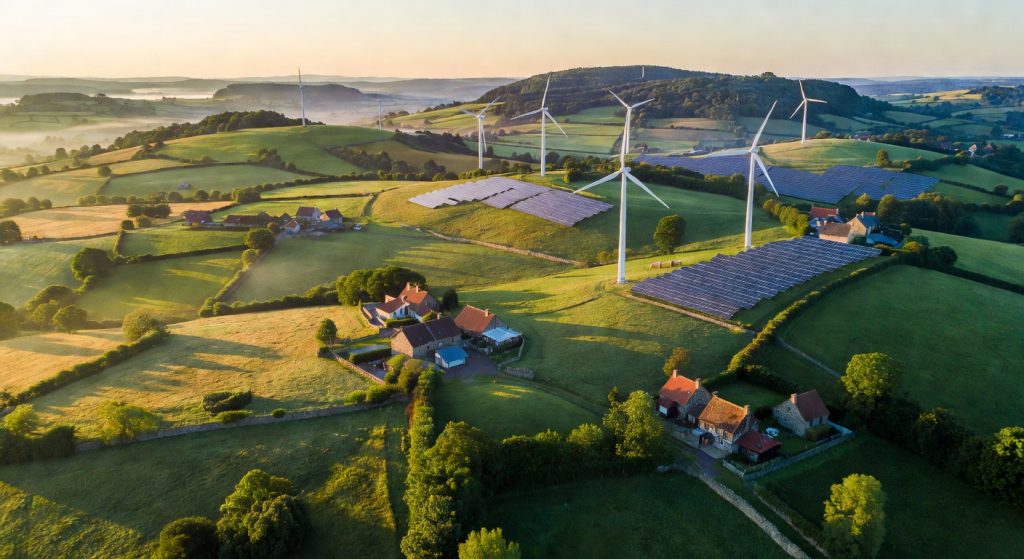
The EU Green Deal was launched with historic ambition: transform Europe into the world’s first climate-neutral continent by 2050, cut greenhouse gas emissions by at least 55% by 2030, and reshape entire sectors of the economy along the way. Five years into this journey, the picture is more complex than the headlines suggest. A 2025 assessment by the Joint Research Centre (JRC) confirms that while the policy architecture is largely in place, delivery is uneven — and for some targets, the needle is barely moving.
For citizens, businesses, and policymakers alike, understanding where the Green Deal stands today is not just an academic exercise. The regulatory and financial consequences are real, immediate, and accelerating.
A Framework Built to Last — But Implementation Is Lagging
The EU Green Deal remains the most comprehensive climate policy framework ever adopted by a major economy. It spans energy, transport, industry, agriculture, biodiversity, and finance, binding together dozens of legislative instruments under a single strategic roof. Key milestones include the revised Energy Efficiency Directive, updated LULUCF rules governing land use and forestry carbon accounting, and the landmark Carbon Border Adjustment Mechanism (CBAM), which began its transitional phase in 2023.
Yet the JRC’s 2025 progress assessment delivers a sobering verdict: many of the Green Deal’s sectoral goals require significant acceleration, and some indicators are either stagnant or moving in the wrong direction. Energy efficiency improvements, for instance, have not kept pace with the revised targets. Biodiversity commitments under the Nature Restoration Law face political headwinds in several member states. And while renewable energy capacity has expanded rapidly, grid infrastructure and storage investment remain bottlenecks.
The gap between ambition and delivery is not a failure of the framework itself — it reflects the structural difficulty of coordinating 27 national economies, each with different industrial bases, energy mixes, and political priorities.
Carbon Markets and Compliance: The Pressure Is Real
For industry, the most tangible dimension of environmental regulation right now is carbon pricing. The EU Emissions Trading System (ETS) has been significantly tightened under the Fit for 55 package, with free allowances being phased out for key sectors and the scope extended to include maritime shipping and, from 2027, buildings and road transport through a new ETS II.
Simultaneously, carbon markets are being reshaped by CBAM, which will impose a carbon cost on imports of steel, cement, aluminium, fertilisers, hydrogen, and electricity from countries without equivalent carbon pricing. By 2026, when CBAM enters its definitive phase, European importers will need to purchase certificates reflecting the embedded carbon of their goods. This is not only a trade measure — it is a signal that the EU intends to export its climate standards globally, or at least prevent carbon leakage from undermining domestic efforts.
For multinationals and SMEs alike, compliance exposure is growing. Understanding carbon costs, supply chain emissions, and regulatory timelines is no longer optional — it is a core business risk.
Sustainability Reporting and the Finance Dimension
One of the less visible but highly consequential pillars of the Green Deal is its push to embed sustainability reporting into the corporate mainstream. The Corporate Sustainability Reporting Directive (CSRD) requires thousands of European companies — and non-EU firms with significant EU revenues — to disclose detailed environmental, social, and governance data under standardised European Sustainability Reporting Standards (ESRS).
This data infrastructure is designed to feed into the EU Taxonomy, which classifies economic activities as sustainable or not, and ultimately to redirect capital flows toward the Just Transition Fund and clean technology investment. The logic is clear: you cannot finance the transition without knowing where emissions and risks actually sit.
However, implementation timelines have already been adjusted, with the Commission proposing phased rollouts and simplifications in response to business concerns about reporting burdens — a sign that even well-designed policy must adapt to real-world capacity constraints.
What This Means for You
Whether you are a citizen, a company director, or an elected official, the EU Green Deal is shaping decisions that will affect your costs, your options, and your obligations for decades. The policy framework is robust. The challenge is delivery. Key implications include:
- Businesses must map their exposure to carbon costs, CBAM obligations, and CSRD reporting requirements now — not when deadlines arrive.
- Investors should treat Green Deal compliance as a material risk factor and opportunity lens for portfolio decisions.
- Citizens will see the transition reflected in energy bills, product prices, and public infrastructure investment — the Just Transition Fund exists precisely to cushion the most vulnerable communities.
- Policymakers at national level hold the implementation keys: EU law sets the direction, but member states determine the pace.
Key takeaway: The EU Green Deal is not a distant aspiration — it is an active regulatory and financial reality. The 2025 JRC assessment is a wake-up call: ambition without acceleration is just a plan. The next two years will be decisive in determining whether Europe’s climate targets remain credible or become cautionary tales about the gap between policy design and political will.